BLOG

We regularly update articles related to the manufacturing industry.

odm vs oem

OEM vs ODM: Which Manufacturing Model Fits Your Business?

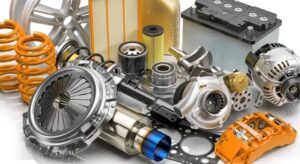
OEM stands for Original Equipment Manufacturer, and ODM means Original Design Manufacturer. OEM focuses on producing items based on a buyer’s design. ODM, on the other hand, develops products from its designs and sells them under another company’s brand. Both approaches help businesses bring ideas to market, but differ in control, cost, and flexibility.
Read More »
True Position

True Position in GD&T: What It Means in Real Production

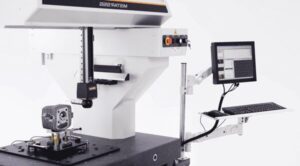
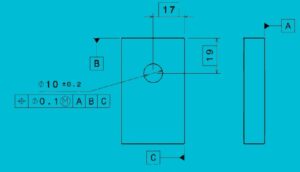
True Position is the exact location of a feature, such as a hole, pin, or slot, as defined concerning datums. Simply, it tells us where a feature should be placed on a part. Instead of focusing on the exact X and Y values, it defines a zone—usually a circle or cylinder—within which the center of the feature must fall.

Read More »
how to dimension sheet metal drawings (1)

Sheet Metal Drawings: Quote, Build, and Inspect Parts

Sheet metal drawings are technical documents that show a part’s size, shape, and key features. They often list material type, thickness, and finish requirements. Depending on the project, these drawings can be in 2D or 3D. They provide precise cutting, bending, welding, and finishing instructions.

Read More »
dfm design for manufacturing

What is Design for Manufacturing (DFM)?

Design for Manufacturing (DFM) means designing products that are easy and cost-effective to make. The goal is to reduce costs, speed up production, and avoid problems later. DFM looks at every detail of a design and checks if it fits the tools, machines, and materials used in the factory.

Read More »
salt spray test

Salt Spray Testing Methods, Standards, and What the Results Tell You

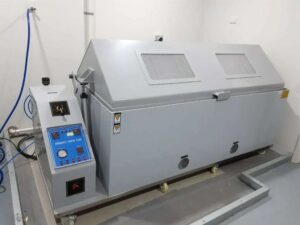
Salt spray testing, also known as salt fog testing, is a method used for corrosion testing. It exposes metal parts to a fine mist of saltwater solution inside a controlled chamber. The goal is to create an accelerated corrosive environment. This test helps evaluate how coatings, platings, and surface treatments withstand harsh conditions.

Read More »
What is Low Volume CNC Machining

Low-Volume CNC Machining: Cost, Quality, and Batch Size

Low-volume CNC machining is a manufacturing strategy used to produce small batches of custom parts, typically ranging from 10 to 1,000 units. It eliminates expensive tooling costs, making it ideal for functional prototyping, bridge production, and specialized end-use components that do not justify mass-production molds.

Read More »
cnc mill cost

How Much Does CNC Milling Cost: Key Factors to Know

CNC milling costs vary based on material type, part design, quantity, machine time, and labor. On average, prices range from $50 to $150 per hour. Simpler aluminum parts cost less, while complex stainless steel parts or prototypes cost more. Knowing what affects the price helps you control it.

Read More »
minimum bend radius sheet metal (1)

Sheet Metal Bend Radius Guidelines for Perfect Results

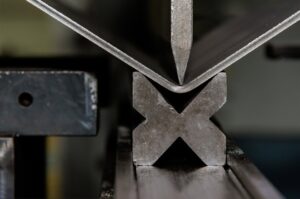
The bend radius is the distance from the center of a bend to the inside surface of the metal. It measures how tight or wide the bend is. A small radius makes a sharper bend. A large radius makes a smoother one. This value is based on the inside of the bend, not the outer edge.

Read More »
what is cast aluminum

Cast Aluminum: Process Selection, DFM and Production Limits

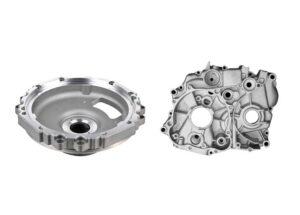
Cast aluminum involves pouring molten aluminum alloys into precision molds to produce complex, near-net-shape components. Highly valued for its exceptional strength-to-weight ratio and thermal conductivity, this process minimizes post-machining costs while delivering lightweight, corrosion-resistant parts for automotive and aerospace sectors.

Read More »
types of joints in sheet metal

Sheet Metal Joints: Design Rules, Strength and Cost

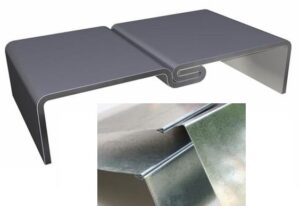
Sheet metal joints are specialized techniques used to connect two or more pieces of sheet metal into structural assemblies. Selection prioritizes material thickness, mechanical load, and production costs. Standard methods range from permanent thermal welding and mechanical fasteners (rivets, bolts) to interlocking configurations like seams and folds.

Read More »
How Rapid Tooling Works

Rapid Tooling 101: What You Need to Know

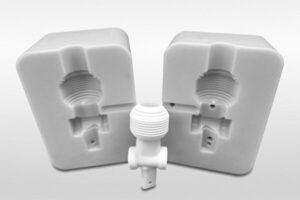
Rapid tooling is the quick creation of molds, dies, or tools used in manufacturing. Modern methods like 3D printing, CNC machining, or additive manufacturing are used.

Traditional tooling can take weeks or even months to complete. In contrast, rapid tooling speeds up this process, allowing for much faster production. This is especially helpful when quick changes or adjustments are needed, such as during prototype development or small production runs.

Read More »

Ask For A Quick Quote

We will contact you within 1 working day, please pay attention to the email with the suffix”@goodsheetmetal.com”

Didn't Find What You Want? Talk to Our Director Directly!