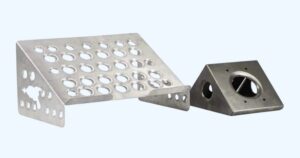
Hole Design for Sheet Metal Parts: DFM Rules to Reduce Fabrication Cost
A single hole might seem minor, yet in sheet-metal fabrication it can decide the entire production pace. One misplaced or undersized hole can distort a

A single hole might seem minor, yet in sheet-metal fabrication it can decide the entire production pace. One misplaced or undersized hole can distort a
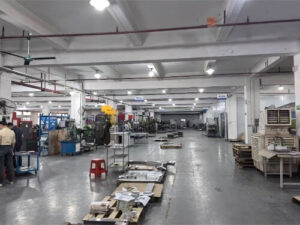
Every engineer and purchasing manager knows the story — the drawings are perfect, the quote looks fine, but the parts arrive late or off-spec. In
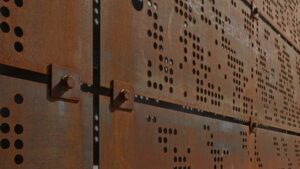
Every year, corrosion costs manufacturers billions in lost productivity, replacements, and warranty claims. For sheet metal products, the problem starts small — a rust spot,
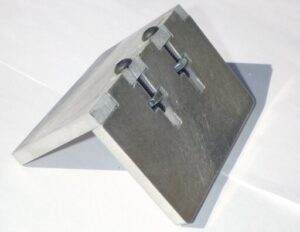
Slots and tabs are now one of the most reliable methods for making sheet metal parts fit together. These small interlocking features guide each piece

Bridge production is a method that falls between prototyping and mass production. The factory utilizes a range of flexible tools, including laser cutting, CNC punching, bending, and welding. The factory does not use stamping dies or progressive dies at this stage.
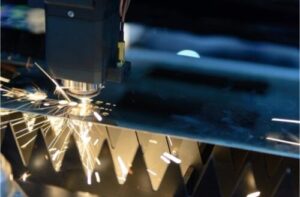
Laser cutting is one of the most accurate and flexible methods in today’s manufacturing. It gives clean edges, steady quality, and supports complex shapes. However,

Sheet metal bending looks straightforward, but the metal goes through a complex mix of tension and compression. If these forces shift even slightly, the part
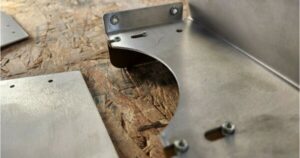
Why Hardware Integration Matters From Day One? Hardware is often a small detail in a sheet metal assembly, yet it influences almost everything: mechanical strength,
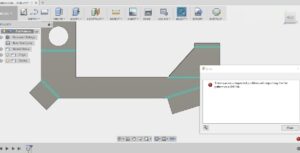
Every engineer knows that moment — when a perfect 3D model just won’t unfold. What looks great on the screen suddenly turns into a real

ISO 9001:2015 is a global standard that defines how a company builds and manages its Quality Management System (QMS). Its main goal is to ensure that every product and service consistently meets customer and regulatory expectations.
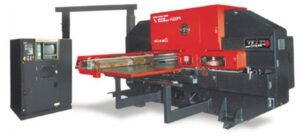
The 3:1 rule is a simple guideline that defines how high a feature can be formed without damaging the sheet metal. It means the height of a formed feature should not exceed three times the sheet’s thickness. For example, if the sheet is 1 mm thick, the formed height should stay within 3 mm.
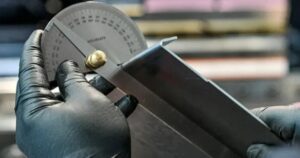
Precision makes the difference between a prototype that fits perfectly and one that fails during assembly. In sheet metal fabrication, even a slight deviation can
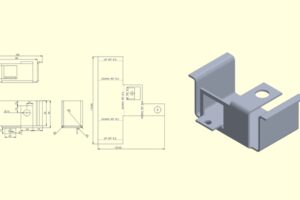
Modern sheet metal prototyping depends on a close link between design and manufacturing. 3D CAD file compatibility is at the center of this process. It
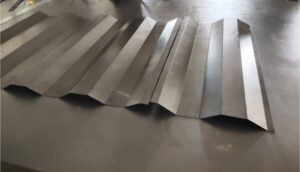
Cracks are visible splits or separations on the metal surface that occur when the sheet is unable to withstand the stress applied to it. They often appear during bending, stretching, or deep drawing. When the strain limit is exceeded, the metal tears instead of deforming smoothly.

In sheet metal fabrication, MOQ stands for Minimum Order Quantity — the smallest number of parts a factory will produce in one order. It marks the point where production becomes practical and cost-efficient. MOQ is more than just a factory policy. It reflects the balance between efficiency, pricing, and material use.
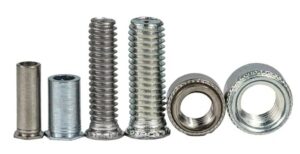
Sheet metal hardware problems may seem small, but they often cause the most significant delays on the production floor. A loose screw, a stripped thread,