Sheet Metal Manufacturing Blog

Practical insights, technical guides and industry knowledge to help you design better parts and manufacture with confidence.

Browse Manufacturing Topics

Explore our in-depth resources by topic and find the information you need.

Fabrication

Cutting, bending, welding and assembly processes.

CNC

CNC machining, milling, turning and best practices.

Enclosures

Design and manufacturing of metal enclosures.

Materials

Metals, alloys and material selection guides.

Finishing

Surface treatment, coating and finishing options.

DFM

Design for manufacturability tips and guidelines.

Applications

Real-world applications across different industries.

Latest Manufacturing Articles

In-depth guides to help you make better design and manufacturing decisions.

what is grit blasting

What is Grit Blasting and How Does It Work?

Grit blasting is a way to clean and prepare surfaces. It works by shooting abrasive particles at high speed against a workpiece. These particles remove unwanted layers and create a specific surface texture. The process uses compressed air or special blasting equipment.

Read More »
Sheet Metal welding

Fabrication vs Machining: What is the Difference?

Fabrication joins and shapes metal parts using cutting, bending, and welding methods. Machining removes material from a solid block using tools like mills or lathes. Fabrication works well for large or complex assemblies, while machining is better for small, precise parts. Sometimes, the two methods overlap, but each has its own strengths.

Read More »
What is Zinc Machining

Zinc Machining: Grades, Machinability, and Applications

Zinc machining is the process of cutting, shaping, or finishing zinc materials into the necessary components. Engineers often use common operations like CNC milling, drilling, or turning to make precise parts. Zinc can come as sheets, castings, or billets, which are then machined for specific purposes.

Read More »
Sheet Metal Defect

Sheet Metal Defects: Identification, Causes, and Solutions

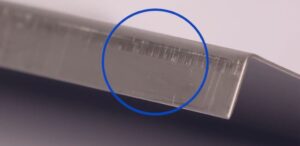
Sheet metal defects are common, but they can be identified and traced to their causes. With the right approach, these problems can be fixed. By knowing what to look for, you can reduce scrap, improve part quality, and keep production running smoothly. Using proper equipment and following consistent processes makes solutions more effective.

Read More »
What is Angular Milling

What is Angular Milling? A Comprehensive Guide

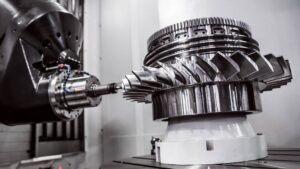
Angular milling is a method of machining in which the cutter removes material at an angle to its axis. The cutter is set to the desired angle and moves across the workpiece, allowing it to create angled surfaces such as chamfers, grooves, slots, and V-shaped cuts.

Read More »
brass 360 vs 260

Brass 260 vs 360: Understanding Their Differences

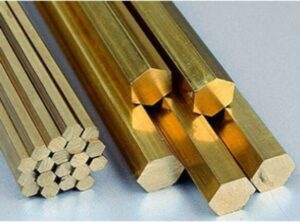
Brass 260 is strong and resistant to corrosion. It is often used for drawn parts such as tubes and cartridges. Brass 360, on the other hand, is popular because of its excellent machinability. It works best for machined parts like valves, fittings, and hardware. The choice depends on how the part is made, the needed mechanical properties, and the project’s budget.

Read More »
3D Laser Cutting Process

3D Laser Cutting: Principles, Process, and Applications

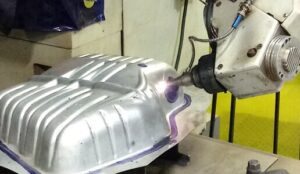
3D laser cutting is a method that uses a focused laser beam to cut, trim, or shape metal parts in three dimensions. Unlike flat laser cutting, which works only on sheet materials, 3D laser cutting can handle curved surfaces, tubes, formed parts, and welded assemblies. The laser beam targets a small spot, producing heat that melts or vaporizes the material. A stream of gas then blows away the molten metal, leaving a smooth and precise edge.

Read More »
Straight Turning Process

Straight Turning 101: A Complete Guide for Precision Machining

Straight turning is a cutting method used on a lathe. In this process, the workpiece spins around its axis while a fixed tool moves in a straight line along the same axis. The tool slowly cuts away material and reduces the diameter, forming a smooth and even cylinder across the length of the part. The focus is on keeping the surface straight and uniform, without any taper or curve.

Read More »
laser cutter projects

How to Master Laser Cutting Design for Sheet Metal Parts?

The best way to design sheet metal parts for laser cutting is to keep shapes simple, add proper spacing between features, and match thickness to the design needs. Corners should have radii instead of sharp edges. Holes should be large enough to cut cleanly. Designs should also consider how the part will be bent or welded later.

Read More »

Get Your Free Custom Quote Today

Expert engineering support for your next project

Fast Response

Quote within 24 hours

DFM Support

Design To Make

Quality Assured

ISO 9001:2015 certified

No Minimum Order

From prototype to production

No commitment required • 100% Free consultation

Ask For A Quick Quote

We will contact you within 1 working day, please pay attention to the email with the suffix”@goodsheetmetal.com”

Didn't Find What You Want? Talk to Our Director Directly!