BLOG

We regularly update articles related to the manufacturing industry.

CNC lathe (1)

Turning to Lathe for Parts with Cylindrical Features

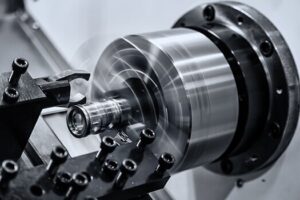
A lathe is a machine that shapes material by spinning the workpiece while a fixed cutting tool removes material. The main goal is to form smooth, even, and perfectly round shapes around a central axis. This process is ideal for creating parts such as shafts, tubes, and bushings with high precision.
Read More »
5 Axis CNC Machining

How a Digital Approach to CNC Machining Enables Speed?

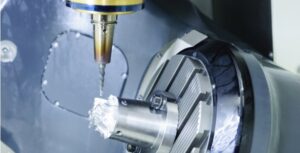
A digital approach changes that. With automation, innovative software, and real-time data, digital CNC machining streamlines complex production into a seamless, efficient process. It links every stage—from design to machining—so teams can eliminate delays, prevent mistakes, and enhance output.

Read More »
CNC Turning

Types of Turning Operations: How to Pick the Right One

The best turning operation depends on your part’s shape, the surface finish you need, and the production volume. Rough turning removes a lot of material quickly. Finishing turning makes the surface smooth. Taper turning, contour turning, and threading create specific shapes. Boring and grooving handle internal and external cuts. Each type has a clear purpose.

Read More »
CNC milling (1)

Types of Milling Operations: Tips for High-Precision Machining

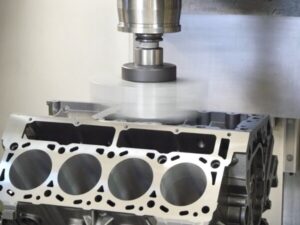
Milling operations describe how a machine cuts, shapes, and finishes materials. Each type has its own use and benefits. Common operations include face milling, peripheral milling, slotting, and using a mill for drilling. Some operations focus on surface finishing, while others remove material quickly or shape parts.

Read More »
how to use a manual milling machine

Manual Milling: Techniques, Tools, and Applications

Manual milling is the process of shaping a workpiece with a milling machine operated by hand. The machine uses a rotating cutter to remove material and form flat surfaces, slots, holes, or more complex shapes. Unlike CNC milling, which follows computer programs, manual milling relies on the machinist’s skill and adjustments.

Read More »
Different Types of Lathes

Types of Lathes: Functions, Advantages, and Uses

Lathes come in different types, each with a specific role. Engine lathes handle general cutting, while turret lathes improve speed for repeated parts. CNC lathes bring precision and automation. Specialized lathes, such as toolroom or vertical lathes, handle unique tasks. Each type serves different production needs and part sizes.

Read More »
What Is Ultra Precision Machining

Ultra Precision Machining: What You Need to Know

Ultra precision machining is a process that produces parts with extremely tight tolerances, often in the micron or even sub-micron range. To put this in perspective, a micron is one thousandth of a millimeter. Traditional machining allows for small deviations, but ultra-precision machining keeps these deviations almost nonexistent. This ensures parts fit perfectly, move smoothly, and perform reliably.

Read More »
Sheet Metal welding

Fabrication vs Machining: What is the Difference?

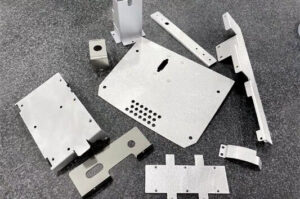
Fabrication joins and shapes metal parts using cutting, bending, and welding methods. Machining removes material from a solid block using tools like mills or lathes. Fabrication works well for large or complex assemblies, while machining is better for small, precise parts. Sometimes, the two methods overlap, but each has its own strengths.

Read More »
What is Zinc Machining

Zinc Machining: Grades, Machinability, and Applications

Zinc machining is the process of cutting, shaping, or finishing zinc materials into the necessary components. Engineers often use common operations like CNC milling, drilling, or turning to make precise parts. Zinc can come as sheets, castings, or billets, which are then machined for specific purposes.

Read More »
What is Angular Milling

What is Angular Milling? A Comprehensive Guide

Angular milling is a method of machining in which the cutter removes material at an angle to its axis. The cutter is set to the desired angle and moves across the workpiece, allowing it to create angled surfaces such as chamfers, grooves, slots, and V-shaped cuts.

Read More »
Straight Turning Process

Straight Turning 101: A Complete Guide for Precision Machining

Straight turning is a cutting method used on a lathe. In this process, the workpiece spins around its axis while a fixed tool moves in a straight line along the same axis. The tool slowly cuts away material and reduces the diameter, forming a smooth and even cylinder across the length of the part. The focus is on keeping the surface straight and uniform, without any taper or curve.

Read More »
lapping vs honing

Honing vs Lapping: What’s the Differences

Honing uses abrasive stones to remove small amounts of material and improve surface finish, while lapping relies on abrasive slurry between surfaces for high precision. Honing is better for cylindrical parts with tight tolerances. Lapping is better for flat surfaces or when extreme accuracy is needed. Both processes reduce friction, improve durability, and support high-performance parts.

Read More »

Ask For A Quick Quote

We will contact you within 1 working day, please pay attention to the email with the suffix”@goodsheetmetal.com”

Didn't Find What You Want? Talk to Our Director Directly!