
Sheet Metal Manufacturing Blog

Practical insights, technical guides and industry knowledge to help you design better parts and manufacture with confidence.

Browse Manufacturing Topics

Explore our in-depth resources by topic and find the information you need.

Fabrication

Cutting, bending, welding and assembly processes.

CNC

CNC machining, milling, turning and best practices.

Enclosures

Design and manufacturing of metal enclosures.

Materials

Metals, alloys and material selection guides.

Finishing

Surface treatment, coating and finishing options.

DFM

Design for manufacturability tips and guidelines.

Applications

Real-world applications across different industries.

Latest Manufacturing Articles

In-depth guides to help you make better design and manufacturing decisions.

What Is Ultra Precision Machining

Ultra Precision Machining: What You Need to Know

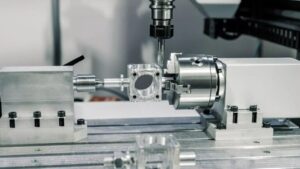
Ultra precision machining is a process that produces parts with extremely tight tolerances, often in the micron or even sub-micron range. To put this in perspective, a micron is one thousandth of a millimeter. Traditional machining allows for small deviations, but ultra-precision machining keeps these deviations almost nonexistent. This ensures parts fit perfectly, move smoothly, and perform reliably.

Read More »
What is Metal Coining

Metal Coining: Process, Applications, and Benefits

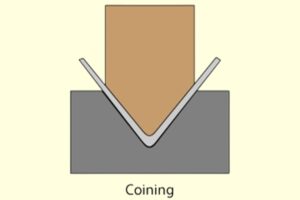
Metal coining is a forming process that uses high pressure to press metal into a die. The pressure makes the material flow into the die’s minor details, accurately capturing shapes, edges, and surface patterns. Since the process is below the metal’s recrystallization temperature, strain hardening strengthens the part.

Read More »
what is precision welding

Precision Welding: Techniques, Applications, and Benefits

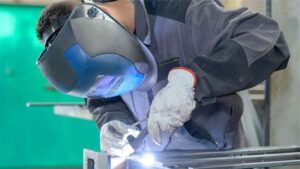
Precision welding creates fine and accurate joints in metal parts. Unlike regular welding, it uses advanced tools and controlled heat to deliver exact results. The main goal is to make welds that meet tight tolerances in strength and appearance. This allows delicate parts to be joined without harming nearby material.

Read More »
Stainless Steel Electrolytic Corrosion

Electrolytic Corrosion Stainless Steel: Causes, Prevention, and Solutions

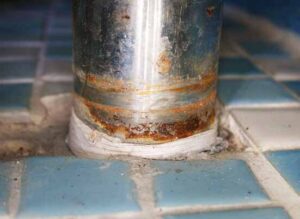
Electrolytic corrosion happens when stainless steel breaks down under an electrical current in a wet or conductive setting. The current can come from contact with other metals, stray electricity, or charged particles in the environment. When this occurs, electrons move between different areas on the metal, creating an anode and a cathode. The anode loses material, which shows up as pits, cracks, or surface thinning.

Read More »
stainless steel vs brass

Brass vs Stainless Steel: What is the Difference?

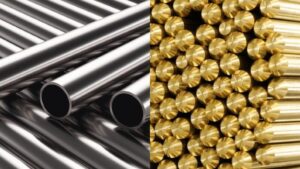
Brass is a copper-zinc alloy well known for its easy machinability and natural resistance to corrosion. Because of these qualities, it is widely used in plumbing parts, decorative pieces, and electrical fittings. On the other hand, stainless steel is an iron-based alloy with chromium. It provides high strength, excellent durability, and strong resistance to rust and chemicals.

Read More »
ultimate tensile stress

Tensile Stress 101: Key Concepts Every Engineer Should Know

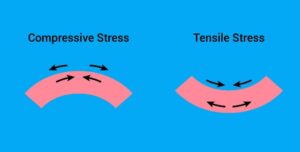
Tensile stress is the force applied to a material divided by its cross-sectional area. It shows how much pulling force acts on each unit of area. The standard units are pounds per square inch (psi) or megapascals (MPa). When the stress reaches a material’s tensile strength, the material will break.

Read More »
how does fiber laser welding work

Fiber Laser Welding: Technology, Applications, and Advantages

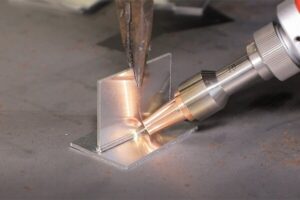
Fiber laser welding uses a powerful laser beam to melt and join metal parts. The laser comes from optical fibers, which keep the beam stable and energy efficient. The focused beam makes deep, narrow welds with little effect on the surrounding metal. This differs from arc welding, which often creates broad heat zones and requires more finishing work.

Read More »
What Is Laser Welding Copper

Laser Welding Copper: Techniques, Challenges, and Applications

Laser welding copper uses a focused light beam to heat and melt a small metal area. This energy fuses the material along the weld line. Unlike traditional welding, which spreads heat over a larger area, laser welding targets energy precisely. This helps reduce distortion and allows for accurate welding, even on small or delicate parts.

Read More »
how deep can laser engraving go

Deep Laser Engraving: Techniques, Materials, and Applications

Deep laser engraving is a process where a focused laser beam removes layers of material to create a mark below the surface. The laser generates heat, vaporizing the material and cutting deeper with each pass. Depending on the material and settings, the engraving can range from a few microns to several millimeters deep.

Read More »

Get Your Free Custom Quote Today

Expert engineering support for your next project

Fast Response

Quote within 24 hours

DFM Support

Design To Make

Quality Assured

ISO 9001:2015 certified

No Minimum Order

From prototype to production

No commitment required • 100% Free consultation

Ask For A Quick Quote

We will contact you within 1 working day, please pay attention to the email with the suffix”@goodsheetmetal.com”

Didn't Find What You Want? Talk to Our Director Directly!