Sheet Metal Manufacturing Blog

Practical insights, technical guides and industry knowledge to help you design better parts and manufacture with confidence.

Browse Manufacturing Topics

Explore our in-depth resources by topic and find the information you need.

Fabrication

Cutting, bending, welding and assembly processes.

CNC

CNC machining, milling, turning and best practices.

Enclosures

Design and manufacturing of metal enclosures.

Materials

Metals, alloys and material selection guides.

Finishing

Surface treatment, coating and finishing options.

DFM

Design for manufacturability tips and guidelines.

Applications

Real-world applications across different industries.

Latest Manufacturing Articles

In-depth guides to help you make better design and manufacturing decisions.

Sheet Metal Welding (1)

Laser Welding vs TIG Welding: A Comprehensive Comparison

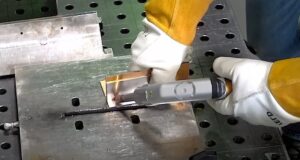
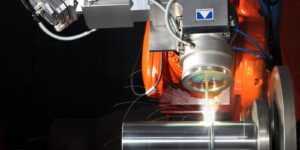
Laser welding uses a focused beam of light to melt and join metal. TIG welding uses a tungsten electrode and gas to form a weld. Laser welding is fast, clean, and suitable for automation. TIG welding is slow but precise and flexible. The best choice depends on the type of job, material, and the need for speed versus control.

Read More »
what is a 5 axis lathe

What Is a 5 Axis Lathe and How Does It Work?

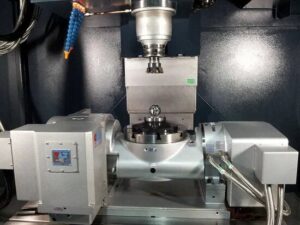
A 5-axis lathe is a CNC machine that rotates and moves the cutting tool along five axes. These include the usual X, Y, and Z linear axes, plus two rotary axes, often labeled as A and B or B and C. This setup allows the tool to approach the part from almost any angle.

Read More »
dfm design for manufacturing

What is Design for Manufacturing (DFM)?

Design for Manufacturing (DFM) means designing products that are easy and cost-effective to make. The goal is to reduce costs, speed up production, and avoid problems later. DFM looks at every detail of a design and checks if it fits the tools, machines, and materials used in the factory.

Read More »
mill vs lathe

Mill vs Lathe: What’s the Difference

A mill uses a spinning tool to cut and shape material, while a lathe spins the material and shapes it with a fixed tool. Mills are best for flat, complex, or angled parts, while lathes work better for round, cylindrical, or threaded shapes. Knowing when to use each machine can help you save time and avoid mistakes.

Read More »
How does the Black Phosphate Coating Process work

Black Phosphate Coating: Process, Properties, and Applications

Black phosphate coating is a chemical conversion process. It applies a thin, dark gray or black layer of crystalline phosphate to steel. This happens when the parts are dipped into a hot mixture of phosphoric acid and other added chemicals. The coating sticks to the metal and creates a protective surface that feels slightly rough.

Read More »
Continuous Casting Application

Continuous Casting: Definition,Process, and Benefits

Continuous casting is a process that turns molten metal into solid shapes without stopping. The metal is poured into a moving mold. As it touches the cold walls of the mold, it begins to cool and form a solid outer shell. Rollers then pull the partly solid metal downward as it continues to cool. Once fully solid, the metal is cut into fixed lengths.

Read More »

Get Your Free Custom Quote Today

Expert engineering support for your next project

Fast Response

Quote within 24 hours

DFM Support

Design To Make

Quality Assured

ISO 9001:2015 certified

No Minimum Order

From prototype to production

No commitment required • 100% Free consultation

Ask For A Quick Quote

We will contact you within 1 working day, please pay attention to the email with the suffix”@goodsheetmetal.com”

Didn't Find What You Want? Talk to Our Director Directly!