BLOG

We regularly update articles related to the manufacturing industry.

Spring Steel Stamping

Spring Steel Stamping: Processes, Challenges, and Applications

Spring steel stamping is a process that uses a press and a matched die set to cut and shape thin sheets or strips of spring steel. The die applies controlled pressure and movement to form the material. This process can perform several operations, including blanking, piercing, bending, coining, embossing, and drawing.

Read More »
blow molds

Blow Molding: Techniques, Applications, and Best Practices

Blow molding is a plastic-forming method. It starts with melting plastic and forming it into a hollow tube called a parison. This parison is then placed in a mold. Compressed air is then blown into the parison. The air pushes the plastic outward, and it takes the shape of the mold. Once cooled, the mold opens, and the part is removed.

Read More »
Fiber Laser Cutting

Laser Cutting Parameters: A Comprehensive Guide

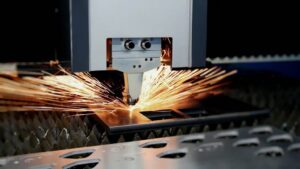
Laser cutting parameters are the adjustable settings on a laser machine. These include laser power, cutting speed, focus position, assist gas type, gas pressure, and nozzle distance. Each affects how the laser melts, burns, or vaporizes the material. The correct settings depend on the material type, thickness, and the desired edge quality.

Read More »
aluminum laser welding

Laser Welding Aluminum: Techniques, Parameters, and Advantages

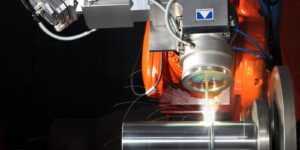
Laser welding aluminum melts and joins aluminum pieces with a focused laser beam. The heat is concentrated in a small area, creating a narrow, deep weld. Shielding gas, often argon or helium, protects the molten metal from air contamination. This process works well for both thin sheets and thicker sections, giving consistent and repeatable results.

Read More »
Sheet Metal Welding (1)

Laser Welding vs TIG Welding: A Comprehensive Comparison

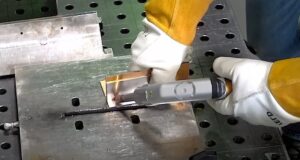
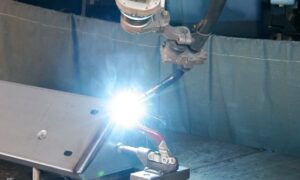
Laser welding uses a focused beam of light to melt and join metal. TIG welding uses a tungsten electrode and gas to form a weld. Laser welding is fast, clean, and suitable for automation. TIG welding is slow but precise and flexible. The best choice depends on the type of job, material, and the need for speed versus control.

Read More »
Continuous Casting Application

Continuous Casting: Definition,Process, and Benefits

Continuous casting is a process that turns molten metal into solid shapes without stopping. The metal is poured into a moving mold. As it touches the cold walls of the mold, it begins to cool and form a solid outer shell. Rollers then pull the partly solid metal downward as it continues to cool. Once fully solid, the metal is cut into fixed lengths.

Read More »
binder jetting metal

What Is Metal Binder Jetting and How Does It Work?

Metal Binder Jetting is an additive manufacturing process. It starts with a thin layer of metal powder spread across a build platform. A print head moves over the surface and deposits a liquid binder onto selected areas. This binder holds the powder together. Then another layer of powder is added, and the process repeats.

Read More »
oem sheet metal fabrication

OEM Metal Fabrication: What You Need to Know

OEM metal fabrication is the process of making custom metal parts or assemblies based on a company’s design. It includes steps like cutting, bending, welding, and finishing. These parts are used in products bearing the OEM’s brand name. The main goal is to turn a digital file into a real, working part that meets quality and performance needs.

Read More »
Wire Forms

What Is Wire Forming and How Does It Work?

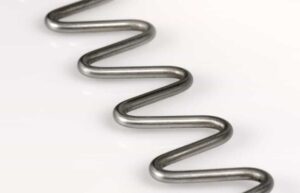
Wire forming is a process that bends, twists, or cuts metal wire into specific shapes and forms. The wire can be formed using tools like dies, presses, or CNC machines. Simple parts include hooks or rings. Complex shapes include spring clips, frames, or medical components. The shape depends on the tool, the method, and the material.

Read More »
what is infill in 3d printing (1)

What Is Infill in 3D Printing and Why Does It Matter?

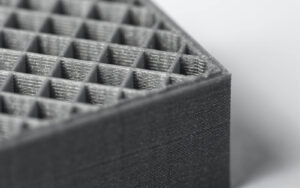
Infill refers to the internal structure within a 3D printed part. It supports the outer shell and gives the part its strength. Infill patterns, percentage, and orientation all affect how strong, heavy, or fast the part prints. Choosing the proper infill depends on your part’s use and requirements.

Read More »
Fourslide Stamping

What Is Fourslide Metal Stamping and How Does It Work?

Fourslide metal stamping is a forming method that uses four moving slides to shape metal. These slides sit around a central point and move in from four sides. Each one holds a tool that bends or cuts the metal strip. Sometimes, a vertical press head is added to facilitate additional shaping.

Read More »
embossed metal

What is Metal Embossing? Process, Applications, and Benefits

Metal embossing is a process that creates raised or recessed designs on metal sheets. It uses male and female dies to press the metal with force. This forms shapes like logos, textures, or warning signs without cutting or removing material. Embossing enhances both appearance and surface grip and can be used for decorative or functional purposes.

Read More »

Ask For A Quick Quote

We will contact you within 1 working day, please pay attention to the email with the suffix”@goodsheetmetal.com”

Didn't Find What You Want? Talk to Our Director Directly!