BLOG

We regularly update articles related to the manufacturing industry.

Low Volume Sheet Metal Manufacturing

Low-Volume Sheet Metal Manufacturing for Startups

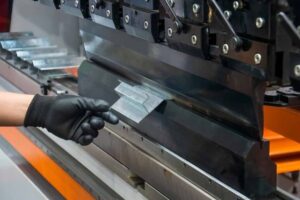
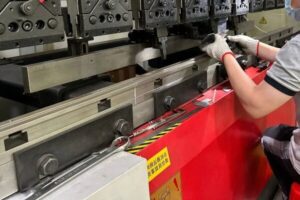
Low-volume manufacturing refers to the production of a small number of parts, typically ranging from a few dozen to a few thousand units. It serves as a bridge between prototyping and full-scale production. This process enables manufacturers to create genuine, usable parts without the significant investment or lengthy setup times typically required for mass production.
Read More »
Large Scale Sheet Metal Laser Cutting

Large-Scale Sheet Metal Laser Cutting Services

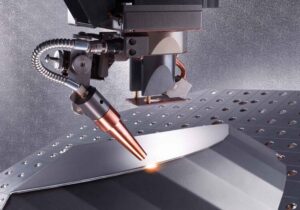
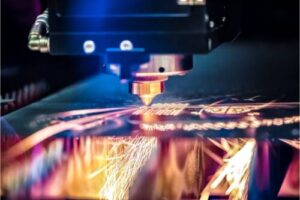
Large-format laser cutting utilizes machines specifically designed to handle huge metal sheets. Most models can process sheet sizes up to 3000mm × 1500mm, while advanced models can reach sizes of 6000mm × 2500mm or larger. These systems utilize high-power lasers, typically ranging from 6kW to 20kW, to cut through thick materials such as stainless steel, carbon steel, and aluminum.

Read More »
plasma transferred arc welding

Plasma Arc Welding: A Comprehensive Guide

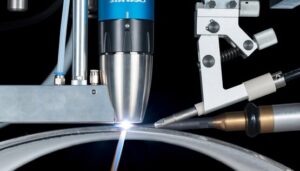
Plasma arc welding is a process that uses a focused arc to create a very hot plasma jet. This jet melts the metal and forms the weld. Depending on the setup, the arc forms between a tungsten electrode and the workpiece or between the electrode and a nozzle.

Read More »
medical device laser welding

Medical Welding: Techniques for Stronger, Safer Devices

Medical welding joins metal parts used in healthcare devices. It is very different from regular welding. The parts are smaller, and the demands are much stricter. The goal is to create strong, clean, and reliable joints. These joints must handle sterilization and, in many cases, direct contact with the human body.

Read More »
The Rubber Injection Molding Workflow

Rubber Injection Molding: Process, Applications, and Benefits

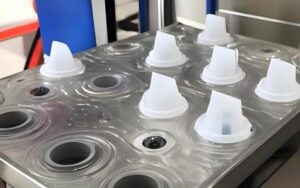
Rubber injection molding is a process that uses heat and pressure to shape rubber into finished parts. It starts with raw rubber, usually in strips or pellets. These are fed into an injection unit where they are heated until soft and pliable. Once ready, the rubber is injected into a closed mold under high pressure. The mold cavity is shaped to match the final part.

Read More »
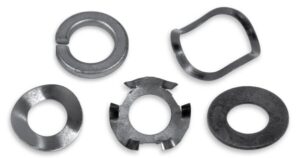
different types of washers

Different Types of Washers: Functions, Materials, and Uses

A washer is a small but essential part of mechanical assemblies. It is a thin, flat plate with a hole in the center that fits around a screw, bolt, or nut. Washers help fasteners connect surfaces more effectively. They spread out the force from tightening, reduce wear, and keep joints secure over time.

Read More »
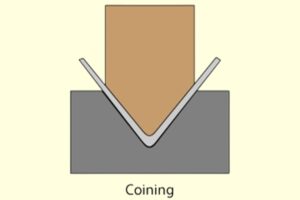
What is Metal Coining

Metal Coining: Process, Applications, and Benefits

Metal coining is a forming process that uses high pressure to press metal into a die. The pressure makes the material flow into the die’s minor details, accurately capturing shapes, edges, and surface patterns. Since the process is below the metal’s recrystallization temperature, strain hardening strengthens the part.

Read More »
what is precision welding

Precision Welding: Techniques, Applications, and Benefits

Precision welding creates fine and accurate joints in metal parts. Unlike regular welding, it uses advanced tools and controlled heat to deliver exact results. The main goal is to make welds that meet tight tolerances in strength and appearance. This allows delicate parts to be joined without harming nearby material.

Read More »
how does fiber laser welding work

Fiber Laser Welding: Technology, Applications, and Advantages

Fiber laser welding uses a powerful laser beam to melt and join metal parts. The laser comes from optical fibers, which keep the beam stable and energy efficient. The focused beam makes deep, narrow welds with little effect on the surrounding metal. This differs from arc welding, which often creates broad heat zones and requires more finishing work.

Read More »
What Is Laser Welding Copper

Laser Welding Copper: Techniques, Challenges, and Applications

Laser welding copper uses a focused light beam to heat and melt a small metal area. This energy fuses the material along the weld line. Unlike traditional welding, which spreads heat over a larger area, laser welding targets energy precisely. This helps reduce distortion and allows for accurate welding, even on small or delicate parts.

Read More »
3D Laser Cutting Process

3D Laser Cutting: Principles, Process, and Applications

3D laser cutting is a method that uses a focused laser beam to cut, trim, or shape metal parts in three dimensions. Unlike flat laser cutting, which works only on sheet materials, 3D laser cutting can handle curved surfaces, tubes, formed parts, and welded assemblies. The laser beam targets a small spot, producing heat that melts or vaporizes the material. A stream of gas then blows away the molten metal, leaving a smooth and precise edge.

Read More »
assembly and value added projects

Value Added Assembly: How OEMs Cut Costs and Boost Efficiency?

Value added assembly goes beyond simply putting parts together. It is a process that combines several steps into one service. Instead of sending parts to different vendors for sub-assembly, wiring, fastening, or packaging, one provider handles everything under the same roof. This reduces handoffs and keeps production flowing smoothly.

Read More »
contract manufacturing electronic assembly

What is Contract Assembly? A Comprehensive Guide

Contract assembly means working with an outside partner to assemble parts, subassemblies, or finished products. The client can supply the components or ask the provider to source them. The provider then follows the given instructions to assemble the product. This method helps companies control costs, lower risks, and focus on their primary business.

Read More »
aluminum roll

What is Aluminum Rolling? A Comprehensive Guide

Aluminum rolling is pressing aluminum ingots or slabs into thinner shapes using rotating rollers. Depending on the rolling method, the aluminum usually starts as large blocks that are either heated or kept at room temperature. As the rollers press down, they squeeze and stretch the metal, turning it into flat sheets with accurate thickness and size.

Read More »

Ask For A Quick Quote

We will contact you within 1 working day, please pay attention to the email with the suffix”@goodsheetmetal.com”

Didn't Find What You Want? Talk to Our Director Directly!