BLOG

We regularly update articles related to the manufacturing industry.

material 316l stainless steel

316L Stainless Steel: Properties, Fabrication, and Cost Guide

316L stainless steel is a low-carbon, molybdenum-bearing austenitic alloy designed for superior corrosion resistance and excellent weldability. The molybdenum protects against chlorides and pitting, while the maximum 0.03% carbon content prevents sensitization during welding, making it the standard choice for marine, pharmaceutical, and food processing applications.
Read More »
what is 201 stainless steel

201 Stainless Steel: Key Properties and Advantages Explained

201 stainless steel is part of the 200 series of austenitic stainless steels. It contains less nickel than 304 but adds more manganese and nitrogen to compensate. This change helps lower the cost while keeping much of the needed strength and ductility. The standard composition includes around 16–18% chromium, 3.5–5.5% manganese, 4–6% nickel, and small amounts of nitrogen and carbon.

Read More »
density of tungsten carbide

Density of Tungsten Explained: Data, Uses, and Real-World Impact

At room temperature (around 20°C or 68°F), tungsten has a standard density of 19.25 grams per cubic centimeter (g/cm³).

This makes tungsten nearly twice as dense as lead and almost four times as dense as aluminum. It remains stable at most working temperatures, meaning its density does not change significantly in typical environments.

Read More »
copper is a magnetic material

Is Copper Magnetic? Learn How Copper Reacts in a Magnetic Field

Copper is not magnetic. You can place a copper wire or pipe next to a magnet, and nothing will happen. It won’t stick, and it won’t move.

This is because copper doesn’t have the kind of atomic structure that supports magnetism. Its electrons do not line up to create a magnetic field. So, unlike iron or steel, copper shows no attraction to magnets in normal conditions.

Read More »
does zinc rust (1)

Does Zinc Rust? A Deep Dive into Zinc’s Corrosion Behavior

Zinc doesn’t rust in the same way that iron does. It doesn’t form the flaky, reddish-brown layer we usually associate with rust. Instead, zinc reacts with air and moisture to form a thin surface layer. This layer doesn’t damage the metal—it protects it.

But under certain conditions, zinc can still corrode over time. The way it reacts depends on the environment and the type of zinc coating used.

Read More »
heat sink parts

Aluminum vs Copper Heat Sink: Which One Performs Better?

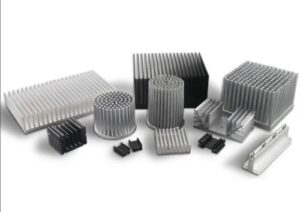
Aluminum heat sinks are a solid option for most cooling tasks. They are lighter than copper and cost less. Copper heat sinks transfer heat better, but they are heavier and more expensive. If you’re looking for a balance of cost, weight, and performance, aluminum is usually the better pick. However, if you require top-level cooling in a confined space, copper is the best option.

Read More »
Aluminum Series by Grade

Types of Aluminum: Applications, Grades and Benefits

Aluminum is a silver-colored metal. It is soft, lightweight, and has good corrosion resistance. Pure aluminum is rarely used for parts. It’s too weak for most load-bearing tasks. But it’s excellent for electrical wiring and chemical equipment because it resists corrosion and conducts electricity well.

Read More »
Composition of Low Alloy Steels

What is Low Alloy Steel:Composition, Properties, and Uses

Low alloy steel is a type of steel that has small amounts of added elements, usually between 1% and 8%. These elements are added to improve the steel’s strength, hardness, resistance to rust, and toughness. Common added elements include chromium, nickel, molybdenum, and vanadium. These make the steel stronger and more durable than regular carbon steel but without the high cost of stainless steel.

Read More »

Ask For A Quick Quote

We will contact you within 1 working day, please pay attention to the email with the suffix”@goodsheetmetal.com”

Didn't Find What You Want? Talk to Our Director Directly!