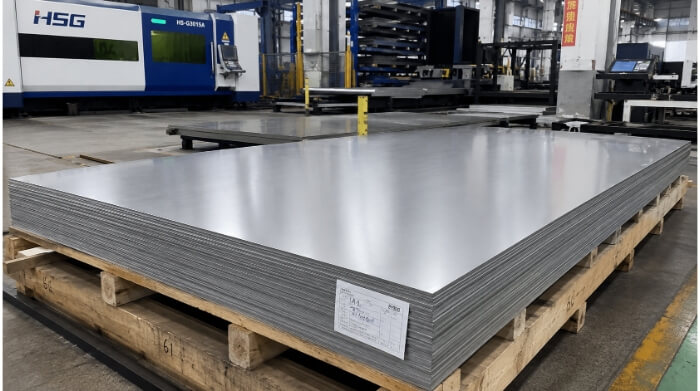
The 2B finish is the default surface condition for cold-rolled stainless steel sheet and coil. In North America, the characteristics of a 2B finish are typically defined under ASTM A480 standards for flat-rolled stainless steel. It presents a smooth, moderately reflective, grayish surface that serves as the baseline for many industrial applications.
Because it provides excellent corrosion resistance and flatness directly from the mill without additional processing costs, it is the most widely used stainless finish in sheet metal fabrication. This guide details the physical properties and fabrication behavior of the 2B finish, helping engineers and procurement managers determine if this material suits their specific production requirements.
What Is Stainless Steel 2B Finish?
2B is a general-purpose mill finish. In standard terminology, the “2” indicates that the material is cold-rolled, and the “B” stands for a bright, smooth surface—though it is not highly reflective like a mirror. It generally appears matte or semi-bright.
This finish provides a clean, consistent surface that works well for structural components, internal machine parts, and applications that do not require a high-end decorative appearance.
Manufacturing Process
The final surface properties of 2B are directly determined by the mill processing sequence. The standard production flow includes:
- Cold Rolling: Reduces the thickness of the steel.
- Annealing: Softens the material to restore ductility.
- Pickling: Uses an acid bath to remove scale and restore the chromium oxide passive layer.
- Skin Pass (Temper Rolling): The steel is given a final, light roll using highly polished steel rollers.
The skin pass is the critical step. It slightly compresses the metal, smoothing out the microscopic peaks left by the pickling acid. Besides creating the characteristic 2B surface, this final roll also ensures the sheet maintains tighter thickness tolerances, which is crucial for precision sheet metal fabrication.
Surface Roughness (Ra)
While the 2B finish looks smooth to the naked eye, it retains a specific micro-texture. The typical surface roughness (Ra) for a 2B finish ranges from 0.1 to 0.5 micrometers (μm), depending largely on the material thickness. Thinner sheets generally yield lower Ra values.
This microscopic texture is sufficient for standard industrial and food processing equipment. However, for strictly sterile environments like pharmaceutical fluid lines, this roughness can harbor bacteria. In those cases, the 2B surface is usually used as a starting point before further electropolishing (EP).
How Does 2B Finish Perform in Manufacturing?
A material’s specification only matters if it performs predictably on the shop floor. Here is how the 2B surface behaves during cutting, bending, forming, and welding operations.
Laser Cutting
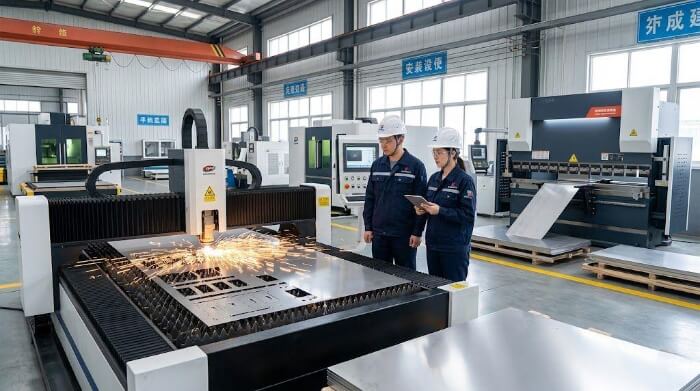
2B stainless steel is highly suitable for standard fiber laser cutting. Its matte, semi-reflective surface absorbs laser energy more efficiently than highly reflective finishes like BA (Bright Annealed) or No. 8 Mirror. This efficient energy coupling typically results in faster cutting speeds and cleaner edge quality, particularly in standard thicknesses ranging from 1mm to 3mm.
To prevent surface scratches during material handling, 2B sheets are usually supplied with a protective film. If you plan to use high-power fiber lasers, it is highly recommended to specify a laser-specific PE or PVC film during procurement. Standard films may melt and bubble along the cut edge, leaving a residue that is difficult to remove.
Bending
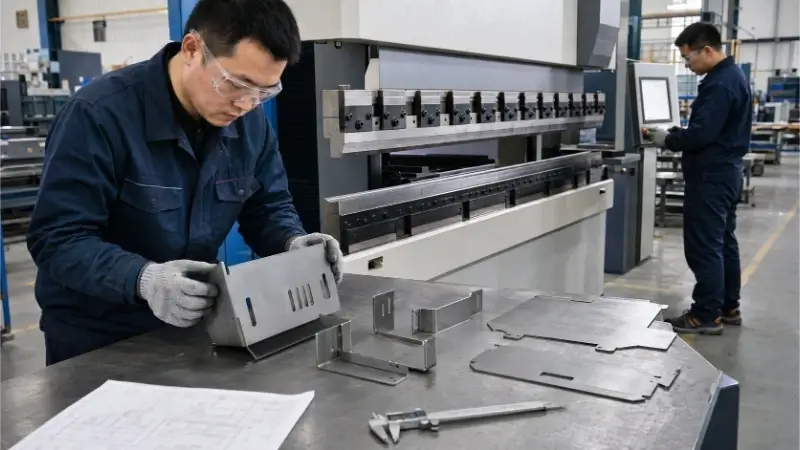
During press brake operations, the 2B surface behaves predictably. Because 2B lacks a strong visual grain like a No. 4 brushed finish, engineers often nest flat patterns based purely on material yield without worrying about matching visual orientations.
However, the mechanical rolling direction from the mill still exists. For bends that are pushed close to the material’s minimum bend radius, orienting the bend line perpendicular to the rolling direction remains a best practice to prevent micro-cracking on the outside radius. Additionally, standard press brake tooling may leave slight scuff marks on the 2B surface, which may require localized blending.
Stamping and Deep Drawing
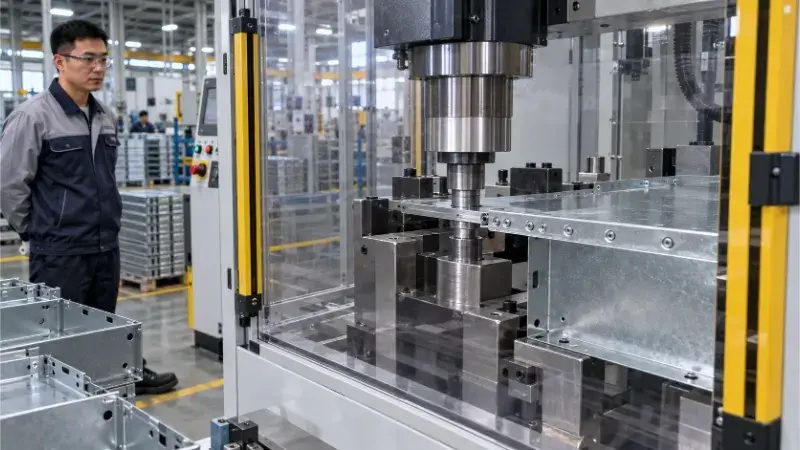
The 2B finish is often preferred for deep drawing and stamping operations. The microscopic roughness (the 0.1–0.5 μm Ra) actually helps retain forming lubricants on the surface of the sheet during the press stroke.
This retention reduces friction between the forming die and the workpiece, which minimizes tool wear and reduces the risk of galling. If the surface is too smooth, the lubricant can be wiped away during a deep draw, which may cause the material to tear.
Welding and Secondary Finishing
Standard TIG, MIG, and laser welding processes work well on 2B stainless steel. However, the heat from the welding process inevitably destroys the local finish and causes heat tint (oxidation). Because 2B is a uniform mill finish, it is practically impossible to manually polish a welded zone to perfectly match the surrounding raw 2B surface.
Therefore, if a unified cosmetic appearance is required after welding, the standard practice is to mechanically abrade the entire assembly, such as applying a No. 4 brushed finish. If the part is internal, the weld area is usually just electro-cleaned or chemically passivated to restore corrosion resistance, leaving the visual mismatch in place.
How Does 2B Compare with Other Stainless Steel Finishes?
Selecting the right surface finish balances aesthetics, secondary processing costs, and tooling wear. Compare 2B directly against other common finishes to optimize your material spend.
2B vs BA (Bright Annealed)
The primary difference between 2B and BA lies in the annealing environment. 2B is annealed in an open-air furnace and subsequently pickled, which slightly dulls the surface. BA is annealed in an oxygen-free, inert gas atmosphere. This prevents oxidation entirely, allowing BA to retain a highly reflective, mirror-like finish right out of the mill.
From a procurement standpoint, the choice depends on secondary operations. If a part requires a final high-gloss polish, starting with BA significantly reduces labor and abrasive costs. If the part will be hidden, painted, or heavily stamped, 2B is the standard, cost-effective choice.
2B vs No.4 (Brushed)
No. 4 is a mechanically applied finish, characterized by short, parallel polishing lines (typically achieved using 150 to 320 grit abrasive belts). Because of its directional grain, No. 4 hides fingerprints and daily scuffs well, making it the standard for visible commercial appliances and elevator doors.
However, there is a critical engineering trade-off. The mechanical abrasive process used to create No. 4 strips away the deep, factory-applied chromium oxide passive layer formed during the mill’s acid pickling stage. Consequently, raw 2B actually possesses slightly better baseline corrosion resistance than raw No. 4, unless the No. 4 material is chemically re-passivated after polishing.
2B vs Mirror (No.8)
A No. 8 mirror finish requires extensive mechanical polishing and buffing compounds to remove all grit lines, resulting in an extremely low Ra value. It carries a premium price tag and is strictly reserved for architectural accents, cleanrooms, or optical reflectors.
2B serves as the utilitarian opposite: a raw, functional surface specified where structural integrity and budget control matter more than aesthetics.
Finish Selection Matrix
| Finish | Appearance | Relative Cost | Impact on Tooling (Forming) | Best Used For |
|---|---|---|---|---|
| 2B | Matte / Semi-bright | Low (Base Cost) | Low wear; retains drawing lubricants well | Internal structural parts, tanks, brackets |
| BA | Highly reflective | Medium | Higher risk of galling in deep drawing | Appliance trims, reflectors, cookware |
| No. 4 | Brushed grain | Medium | Varies by grain direction | Visible enclosures, food service exteriors |
| No. 8 | Flawless mirror | High | Requires protective films; high friction | Architectural panels, cleanrooms |
Where Is 2B Finish Commonly Used?
You will find this versatile finish in countless industrial applications where function outweighs appearance. Explore the specific industries and components that rely on its cost-effective durability.
Food Processing Equipment
In the food processing industry, 2B is the standard for internal components that do not face the end consumer. Its smooth surface resists corrosion from food acids and standard cleaning chemicals, making it suitable for internal chutes, bulk storage bins, and structural support frames.
For external panels and prep tables, equipment manufacturers generally upgrade to a No. 4 finish because the brushed texture hides the scratches caused by daily abrasive cleaning pads.
Medical Components
For medical and pharmaceutical fluid-contact surfaces, industry standards like ASME BPE typically require a surface roughness of Ra < 0.38 µm (15 micro-inches). While thinner gauges of 2B can mathematically meet this Ra value, the microscopic grain boundary depressions inherent to the 2B finish can still harbor biological contaminants.
Therefore, 2B is rarely used raw in these environments. Instead, it serves as the base material. The formed and welded 2B assembly is subjected to electropolishing (EP), which strips away microscopic peaks and valleys, yielding a strictly sterile and compliant surface.
Sheet Metal Enclosures
2B works well for industrial enclosures, telecommunications boxes, and internal server chassis components where environmental protection and structural rigidity take priority over aesthetics.
A critical fabrication detail involves secondary coatings. If the enclosure requires powder coating, the raw 2B surface is often too smooth and lacks the micro-porosity needed for optimal mechanical adhesion. To prevent the powder coat from flaking over time, professional sheet metal shops will apply a light sweep blast or a chemical conversion coating to the 2B surface prior to painting.
Industrial Tanks and Equipment
Chemical storage tanks, water treatment vessels, and industrial heat exchangers consume large volumes of 2B stainless steel. In heavy tank fabrication, the cost savings of using 2B over mechanically polished plates becomes highly significant at volume.
The material provides excellent chemical stability at a baseline price, and its slightly textured surface provides a reliable substrate for applying industrial insulation or exterior protective cladding.
How to Specify, Inspect, and Select a 2B Finish?
Procurement errors inevitably lead to manufacturing delays and rejected batches. Use these practical guidelines to spot mill defects, verify quality, and specify the right material upfront.
Surface Defects
Because 2B is a mill finish produced in massive, continuous coils, surface inconsistencies can occur before the material even reaches a fabrication shop.
When evaluating 2B material, engineers and quality control teams should watch for roll marks (recurring mechanical scratches left by damaged skin-pass rollers) and pickling stains (blotchy, discolored areas caused by uneven acid washing or improper rinsing). Another common issue is chatter marks, which appear as subtle, parallel waves across the width of the sheet, potentially causing visual defects if the part is later mechanically polished.
Cost and Availability
2B is the baseline commodity of the stainless steel market. Because it exits the mill without requiring secondary mechanical polishing or specialized atmospheric controls, it remains the most cost-effective cold-rolled finish available.
It also offers the highest market availability. Service centers and steel distributors stock standard grades like 304/304L and 316/316L in a 2B finish across almost all standard sheet metal gauges (typically from 10-gauge down to 26-gauge). If your production requires short lead times and strict budget controls, 2B is usually the safest specification.
Inspection Checklist
When a batch of 2B stainless steel arrives at the receiving dock, the QA process should go beyond just checking the physical dimensions. A standard factory inspection for 2B sheet metal includes:
- MTR Verification: Ensure the heat numbers stamped on the sheet match the Mill Test Report (MTR) to guarantee alloy chemistry and yield strength.
- Gauge Tolerance: Verify the actual thickness with a micrometer. 2B sheets follow ASTM A480 thickness tolerances; do not assume a “16-gauge” sheet is exactly 0.0598 inches.
- Edge Condition: Check whether the material was supplied with a mill edge or a slit edge. Slit edges can occasionally have micro-burrs that may cause issues in automated stamping feeders or create safety hazards during manual handling.
- Film Type: If the sheet is masked, confirm whether the PVC film is standard or laser-rated. Cutting standard film with a high-power fiber laser may cause edge melting and complicate part cleaning.
- Visual Uniformity: Check for consistent gray color under bright shop lighting to rule out heavy pickling stains or oxidation stripes.
Selection Guidelines
Specifying the right finish prevents downstream manufacturing delays.
Specify 2B when:
- The component is internal, structural, or hidden from the end user.
- The part will undergo severe deep drawing or stamping (the micro-roughness retains forming lubricants).
- The component will be heavily welded, and post-weld aesthetics are not a priority.
- You plan to apply a secondary coating (such as powder coat), provided you add a sweep-blasting prep step.
Avoid 2B when:
- The part is a high-visibility consumer appliance exterior (specify No. 4 brushed instead).
- The application involves sterile pharmaceutical fluid paths (specify 2B as a base material, but mandate post-fabrication electropolishing).
Conclusion
The stainless steel 2B finish is the workhorse of the sheet metal industry. It provides a reliable, flat, and corrosion-resistant surface directly from the mill at the lowest possible cost. While it lacks the high-end aesthetic appeal of brushed or mirror finishes, its mechanical predictability and excellent forming behavior make it the default choice for industrial equipment, internal structural components, and high-volume stamping runs.
Material specification is just the first step in Design for Manufacturability (DFM). Shengen’s engineering team brings over 10 years of sheet metal fabrication experience to help you balance material finishes, tooling wear, and production speed. Whether you need rapid prototyping or high-volume stamping, submit your CAD files today for a practical manufacturability review and a direct, competitive quote.
FAQs
Is 2B finish stainless steel magnetic?
The magnetic properties depend entirely on the base alloy, not the 2B finish. A standard 304 2B stainless steel is austenitic and generally non-magnetic. However, heavy cold working (such as tight bending or deep drawing) can alter the local microstructure and make the formed areas slightly magnetic.
Can you polish a 2B finish to a mirror?
Yes, it is physically possible to mechanically polish a 2B surface up to a No. 8 mirror finish. However, it is highly inefficient. If your end goal is a mirror finish, it is much more cost-effective to purchase BA (Bright Annealed) steel, as it already possesses a highly reflective baseline, allowing you to skip several coarse polishing steps.
Does 2B finish rust easily?
No. The mill processing of a 2B finish includes an acid pickling step, which removes surface impurities and promotes the formation of a robust chromium oxide passive layer. It will typically only rust if the wrong base alloy is chosen for the environment (e.g., using 304 2B instead of 316 2B in a marine setting) or if the surface suffers from free iron contamination.
Hey, I'm Kevin Lee

For the past 10 years, I’ve been immersed in various forms of sheet metal fabrication, sharing cool insights here from my experiences across diverse workshops.
Get in touch
Kevin Lee
I have over ten years of professional experience in sheet metal fabrication, specializing in laser cutting, bending, welding, and surface treatment techniques. As the Technical Director at Shengen, I am committed to solving complex manufacturing challenges and driving innovation and quality in each project.