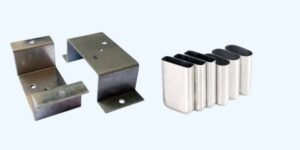
Deep Drawing vs Sheet Metal Stamping: Process, Cost, and Application
Deep drawing and sheet metal stamping are among the most widely used metal-forming processes in modern manufacturing. Both start with a flat sheet, but the

Deep drawing and sheet metal stamping are among the most widely used metal-forming processes in modern manufacturing. Both start with a flat sheet, but the
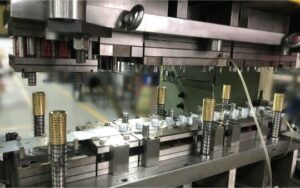
Stamping alone cannot make a part ready for use. Post-stamping work makes each piece safer to handle and easier to assemble. Deburring, threading, and coating improve smoothness, accuracy, and corrosion resistance.
Getting an accurate quote can save time, lower costs, and prevent delays in production. Many engineers, designers, and purchasing managers run into price changes because

Galvanized steel stamping is a process that shapes galvanized steel sheets into custom parts. Before stamping, the steel is coated with a thin layer of zinc, which forms a barrier that prevents rust and surface damage. The stamping process uses dies and presses to cut, bend, or create the steel into specific shapes.
Titanium stamping is the process of pressing flat titanium sheets or coils into specific shapes using dies and high-force presses. The stamping process can include steps like deep drawing, blanking, bending, embossing, or piercing, each helping shape the metal into the final part.
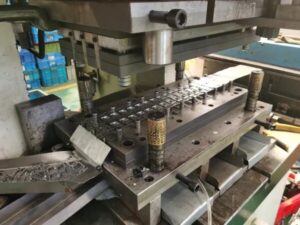
Spring steel stamping is a process that uses a press and a matched die set to cut and shape thin sheets or strips of spring steel. The die applies controlled pressure and movement to form the material. This process can perform several operations, including blanking, piercing, bending, coining, embossing, and drawing.
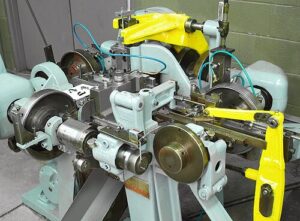
Fourslide metal stamping is a forming method that uses four moving slides to shape metal. These slides sit around a central point and move in from four sides. Each one holds a tool that bends or cuts the metal strip. Sometimes, a vertical press head is added to facilitate additional shaping.
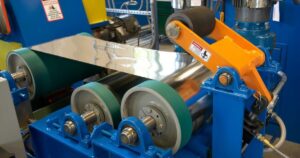
Cold rolled steel stamping forms metal parts by pressing steel sheets into specific shapes using a die. The process happens at room temperature. This gives better dimensional control and surface quality. The steel used is first cold rolled—passed through rollers to reduce thickness and improve strength.
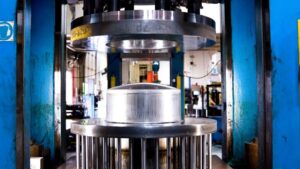
Deep draw metal stamping is a metal forming method. It uses a punch to push a sheet metal blank into a die. As the punch moves, the metal stretches and flows inward. This creates a part that has depth without splitting or thinning too much. The process is done cold, meaning no heat is applied.
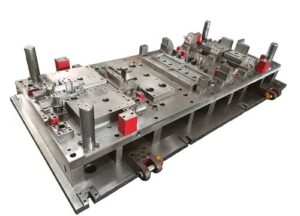
Long run metal stamping is a manufacturing process that creates high volumes of metal parts. It involves using dies and presses to shape metal sheets into precise components. This method is ideal for the automotive, aerospace, and electronics industries, where consistency, speed, and cost-effectiveness are critical.
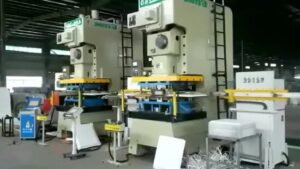
High-speed stamping is a metal forming process that uses specialized presses running at 300-1500 strokes per minute. These machines rapidly shape sheet metal into parts by cutting, bending, and forming. The process creates identical components in large quantities with minimal material waste.
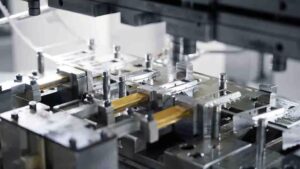
Industrial stamping is a metalworking process that uses dies and presses to form sheet metal into specific shapes. The process involves placing metal sheets between specially designed tools that create the desired form when pressure is applied.
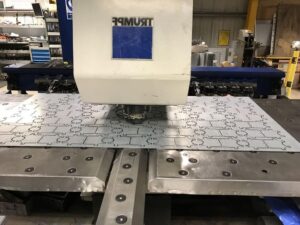
Aluminum punching refers to using a punch press to force a punch tool through an aluminum sheet, creating holes or specific shapes. This technique can be performed on single sheets and continuous rolls of aluminum, known as coil punching.
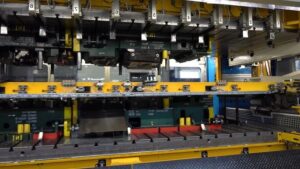
Aluminum blanking is a manufacturing process that involves cutting aluminum sheets into specific shapes using a die and a press. The process starts with feeding an aluminum coil into a blanking press, where it is stamped into predefined shapes known as blanks.
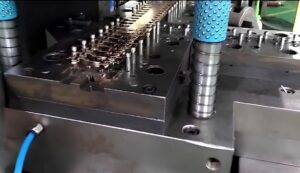
Copper stamping is a manufacturing technique that transforms flat sheets of copper into intricate shapes and designs. The process typically involves a stamping press equipped with a die that applies significant force to shape the metal. This method is widely utilized in various industries due to copper’s excellent conductivity, flexibility, and corrosion resistance.
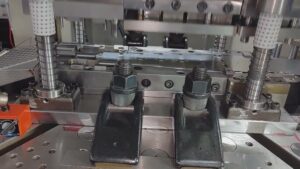
Deep drawing transforms flat stainless steel sheets into three-dimensional shapes without welding or joining. This technique creates seamless, durable parts for various industries. It excels in producing cylindrical, box-shaped, or irregularly formed components with exceptional precision and efficiency.