The main difference between steel and iron comes down to carbon content. Steel contains less than 2% carbon, making it highly ductile and ideal for CNC machining and sheet metal fabrication. Cast iron contains more than 2% carbon, making it exceptionally hard and vibration-absorbent, but too brittle for bending or stamping.
In our 10 years of reviewing technical drawings and manufacturing parts on the shop floor, the most common mistake we see is engineers choosing a material based on raw material price rather than manufacturing compatibility.
This guide skips the basic chemistry lesson. Instead, we are looking at how steel and iron behave in a real production environment. You will learn:
- How material selection directly impacts your shipping weight and total production cost.
- Why their machining behaviors and tool wear rates are completely different.
- The stark reality of welding steel versus welding cast iron.

What Makes Steel Different From Iron?
The distinction between these metals starts at the metallurgical level. A small shift in carbon content fundamentally changes how they are formed and processed.
Material Composition
At a fundamental level, iron is a naturally occurring chemical element, while steel is an alloy. Pure iron is rarely used in structural or industrial manufacturing because it is too soft for most mechanical applications.
To create a material suitable for production, iron is smelted and mixed with other elements. Steel is manufactured by alloying an iron base with carbon and often other elements like chromium, nickel, or manganese. Cast iron, on the other hand, retains a much higher percentage of carbon and silicon from the initial smelting process.
Carbon Content
Carbon content dictates the physical and manufacturing properties of the metal. In metallurgy, the 2% carbon mark serves as the standard boundary between the two materials.
Steel contains less than 2% carbon—usually ranging from 0.05% to 1.5%, depending on the specific grade (such as low-carbon structural steel or high-carbon tool steel). Cast iron contains more than 2% carbon, typically falling between 2% and 4%. This slight percentage shift fundamentally alters how the metal reacts to heat treatment, mechanical stress, and cutting tools.
Graphite Structure
Beyond the percentage of carbon, the physical form the carbon takes within the metal matrix drives material behavior. In cast iron, the excess carbon typically forms graphite flakes or nodules, which interrupt the continuity of the iron lattice.
In steel, the lower carbon volume binds more uniformly with the iron to form cementite (iron carbide) or dissolves directly into the matrix without forming free graphite. The presence or absence of this internal graphite network is what gives cast iron its distinct brittle characteristics compared to the continuous, uniform structure of carbon steel.
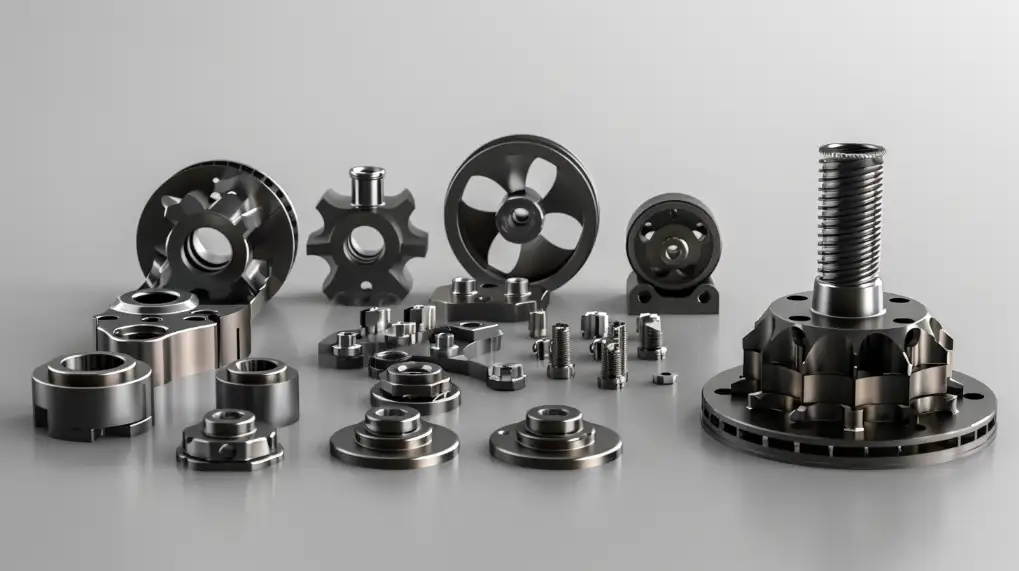
Why Steel and Iron Perform Differently Under Load?
Material behavior under stress dictates industrial safety and performance. Understanding these mechanical limits ensures you select the right metal for heavy loads or structural bending.
Tensile and Compressive Strength
Engineers specify materials based on how they handle different directional forces. Steel generally provides high tensile strength, meaning it resists pulling, bending, and stretching forces effectively. This makes steel the standard choice for load-bearing structures, hardware locks, and sheet metal components.
Cast iron has lower tensile strength but offers excellent compressive strength. It resists being crushed under heavy, static loads. This is why cast iron is usually specified for heavy equipment frames, pump housings, and large pipe fittings rather than fabricated steel.
Hardness and Ductility
Hardness measures a material’s resistance to surface indentation, while ductility indicates its ability to deform under tensile stress without fracturing. Steel is highly ductile. It can be stamped, bent, and drawn during fabrication without breaking, making it the primary material for rapid prototyping and mass sheet metal production.
Cast iron is generally harder but notably brittle. When a cast iron component reaches its stress limit, it does not bend; it fractures or cracks. This brittleness means iron is not recommended for parts that must absorb sudden impacts or undergo plastic deformation.
Vibration Damping and Stability
One specific area where cast iron performs exceptionally well is vibration damping. The internal graphite flakes in cast iron act as natural shock absorbers, dissipating vibrational energy efficiently.
This is why heavy CNC machine bases, industrial gearboxes, and engine blocks are traditionally cast from iron rather than welded from steel assemblies. Steel tends to transmit vibration, which can cause resonance issues or reduce accuracy in precision machining environments, whereas cast iron maintains rigid dimensional stability.
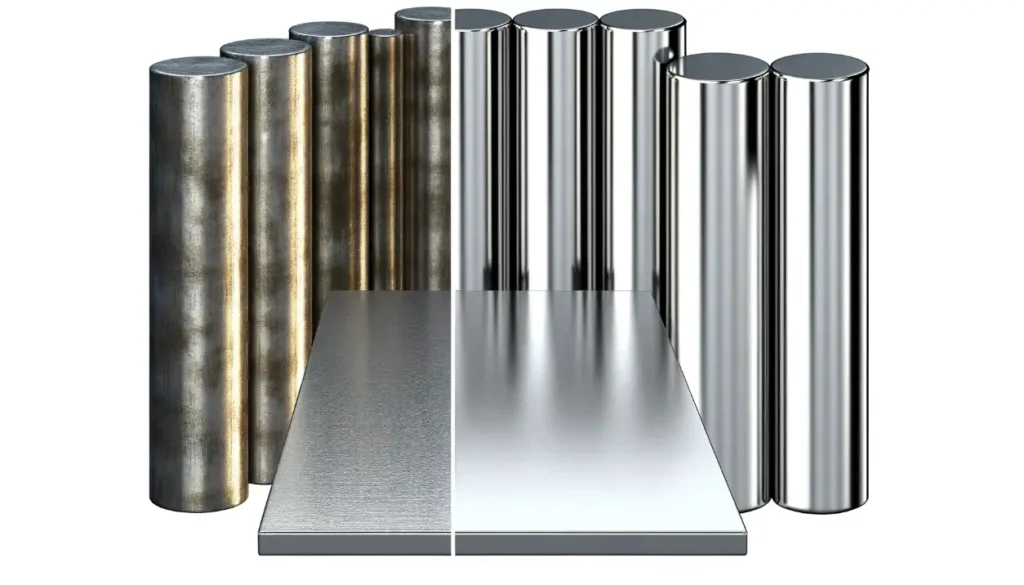
How Steel and Iron Behave in Manufacturing?
Shop floor realities expose the true differences between these metals. Their unique structures directly dictate your machining speeds, tool wear, and available fabrication methods.
CNC Machining and Tool Wear
In CNC machining, steel and iron interact very differently with cutting tools. Steel typically produces continuous, stringy chips during milling and turning. This requires proper chip evacuation strategies, such as high-pressure coolant, to prevent material from tangling around the spindle or scratching the machined surface.
Cast iron behaves differently due to its internal graphite structure. It produces short, powdery chips rather than long strings. While the graphite acts as a natural solid lubricant—making iron relatively easy to cut—the resulting fine dust can act as an abrasive on machine ways and may contaminate the coolant system if not properly filtered. Additionally, the hard chilled spots occasionally found in iron castings can cause sudden chipping on standard carbide inserts.
Welding and Thermal Cracking
Steel is generally highly weldable. Standard fabrication processes like TIG, MIG, and laser welding work predictably well for most carbon steel assemblies. This flexibility allows engineers to design complex, multi-part fabrications that can be easily joined on the shop floor.
Cast iron is notoriously difficult to weld. The higher carbon content makes the heat-affected zone (HAZ) extremely brittle when it cools. Welding cast iron usually requires strict pre-heating, slow and controlled cooling, and specialized nickel-based filler rods to prevent thermal cracking. For this reason, iron components are almost always cast as single pieces rather than welded.
Forming, Stamping and Casting
The ductility of steel makes it the standard material for sheet metal processing. It can be laser-cut, bent on a press brake (accounting for predictable springback), and stamped into complex geometries without fracturing. This flexibility makes steel ideal for both rapid prototyping and high-volume mass production.
Cast iron lacks this ductility entirely; it will simply crack or shatter if subjected to bending, stamping, or drawing. Therefore, iron must be poured into molds in a molten state. Sand casting or investment casting are the primary methods for shaping iron, which makes it highly effective for thick, heavy blocks but entirely unsuitable for thin-walled or formed enclosures.
How Material Choice Affects Production Cost?
Raw material price is only a fraction of your total expenditure. Real manufacturing costs emerge when evaluating machining time, surface finishing, and long-term shipping weight.
Raw Material and Scrap Cost
At the initial purchasing stage, cast iron is generally cheaper per pound than carbon steel. The lower melting point and less refined alloying process help keep the baseline raw material cost down for heavy components.
However, raw material price is only part of the equation. Steel has a highly efficient and standardized recycling market. In sheet metal processing, even with optimized laser cutting nesting, the scrap steel generated from skeletons or CNC chips retains significant value and is often recycled to help offset the overall production costs.
Machining and Tooling Cost
Cast iron components are usually formed near their final shape through casting, meaning they require less raw material removal during the CNC phase. However, the abrasive surface scale left behind from sand casting can cause rapid wear on cutting inserts, which drives up tooling costs and machine downtime.
Steel parts are often machined from solid billets or fabricated from flat plates. While standard low-carbon steel is predictable and efficient to machine, specifying harder steel alloys or tool steels will slow down feed rates and increase the frequency of tool replacements. This directly impacts the hourly machining rate and total part cost.
Shipping Weight and Surface Finishing
Steel’s high tensile strength allows engineers to design parts with thinner walls while maintaining structural integrity. This weight reduction directly translates to lower freight and shipping costs, which becomes highly cost-effective at volume. Cast iron parts must maintain thicker cross-sections to prevent cracking, adding significant weight to the final assembly and increasing international logistics costs.
Surface finishing costs also vary significantly. Steel provides a relatively smooth baseline that readily accepts standard powder coating, plating, and passivation processes. Cast iron is naturally porous and rougher; it often requires shot blasting, extensive grinding, and thick primer coats to achieve a cosmetically acceptable finish, which drives up manual labor costs in the finishing department.

Where Steel and Iron Work Best?
Selecting the optimal metal prevents premature part failure and budget overruns. Here is how these materials align with specific industrial applications and modern fabrication techniques.
Structural and Sheet Metal Parts
For thin-walled enclosures, custom brackets, stainless steel kitchen sinks, and structural frames, steel is the standard choice. Its high tensile strength and ductility allow it to be laser-cut, bent, and welded into complex assemblies without fracturing.
This makes sheet metal fabrication highly efficient for both rapid prototyping and large-scale production. Cast iron is never used in these applications because it cannot be plastically deformed, meaning it will snap if subjected to a press brake or stamping die.
Machine Bases and Heavy Equipment
When a project requires massive compressive strength and vibration damping, cast iron performs exceptionally well. It is usually specified for CNC machine beds, heavy engine blocks, and large industrial pump housings.
The graphite structure within the iron absorbs dynamic vibrations, ensuring heavy equipment maintains precision and dimensional stability under continuous operation. Attempting to use welded steel for these heavy bases often leads to structural resonance issues and requires complex internal ribbing to match iron’s rigidity.
Automotive and Industrial Components
Material selection for mechanical components strictly depends on the expected load condition and wear requirements. Steel is highly preferred for body panels, exhaust systems, and load-bearing drive shafts due to its impact resistance and formability.
Conversely, cast iron is frequently selected for brake rotors, engine cylinders, and gearboxes. These specific parts benefit from iron’s excellent wear resistance and thermal conductivity—the internal graphite acts as a natural heat sink, making it ideal for high-friction applications like braking systems.
Material Compatibility and Selection Guide
To simplify the decision-making process, engineers and buyers can use this quick reference chart to evaluate which material aligns with their production needs:
| Evaluation Criteria | Carbon/Stainless Steel | Cast Iron |
|---|---|---|
| Primary Manufacturing Method | Laser cutting, stamping, bending, CNC machining | Sand casting, investment casting |
| Tensile Strength (Stretching/Bending) | High (Yields and bends before breaking) | Low (Brittle, fractures under tension) |
| Vibration Damping | Low (Transmits vibration) | High (Graphite absorbs shock) |
| Weldability | Excellent (Standard MIG/TIG processes) | Poor (Requires strict pre-heating, prone to HAZ cracking) |
| Surface Finishing | Easy (Readily accepts powder coating, zinc plating) | Requires extra prep (Shot blasting, heavy primer needed) |
Conclusion
Steel clearly dominates modern sheet metal fabrication and structural manufacturing. Its excellent ductility, weldability, and high strength-to-weight ratio make it highly adaptable for everything from precision brackets to automotive frames.
However, cast iron still performs well in applications requiring heavy compressive load bearing and vibration damping. Ultimately, material selection should depend on your intended manufacturing method, specific load conditions, and the total production cost, including machining time and shipping weight.
If you are evaluating materials for an upcoming sheet metal or CNC project, the engineering team at Shengen can help. With over 10 years of experience in rapid prototyping and mass manufacturing, we help clients optimize part designs for manufacturability, control costs, and ensure reliable production. Contact us to review your technical drawings and material requirements.
FAQs
Does steel rust faster than cast iron?
Both standard carbon steel and cast iron will oxidize when exposed to moisture. However, steel provides a much smoother surface for protective treatments like powder coating, zinc plating, or black oxide. Additionally, steel can be alloyed with chromium to create stainless steel, which inherently resists corrosion—an option not available for standard cast iron.
Can you weld cast iron to steel?
While technically possible, joining cast iron to steel is extremely difficult and highly prone to failure. The drastic differences in carbon content and thermal expansion rates usually cause the cast iron to crack as the weld cools. It requires precise pre-heating, slow cooling, and specialized nickel-alloy filler metals. In production environments, it is usually avoided.
Is cast iron always cheaper than steel?
Cast iron is generally cheaper per pound at the raw material stage, but the manufacturing method dictates the final price. Casting iron requires creating molds or patterns, which adds upfront tooling costs. Steel sheet metal fabrication (like laser cutting and bending) requires zero upfront tooling, making it much more cost-effective for low-to-medium volume production.
Hey, I'm Kevin Lee

For the past 10 years, I’ve been immersed in various forms of sheet metal fabrication, sharing cool insights here from my experiences across diverse workshops.
Get in touch
Kevin Lee
I have over ten years of professional experience in sheet metal fabrication, specializing in laser cutting, bending, welding, and surface treatment techniques. As the Technical Director at Shengen, I am committed to solving complex manufacturing challenges and driving innovation and quality in each project.