
If you are sourcing fabricated metal parts from Asia, Q235 is already on your desk. You send a print, and the quote comes back with Q235 steel specified as the default material. Accepting that quote without knowing how the material behaves on the shop floor is a fast track to delayed assemblies, deflected brackets, and premature rust.
This isn’t a textbook definition. This is the ground truth from the factory floor—what Q235 actually is, why manufacturers push it, where it will bite you, and how using it correctly can slash your raw material costs by up to 20%.
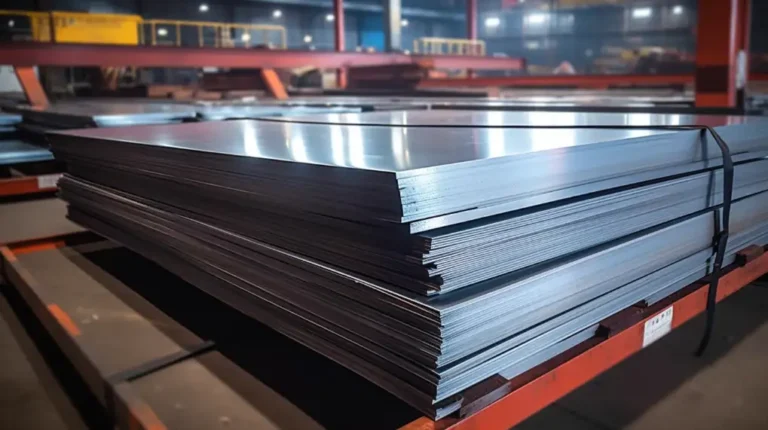
Why Overseas Suppliers Always Quote Q235 First?
When you specify ASTM A36 on a drawing sent to an Asian manufacturer, they will almost always request a substitution to Q235. This is not a bait-and-switch to increase margins; it is a hard supply chain reality:
- The ASTM A36 Reality: Demanding certified, imported A36 for a mid-volume run often triggers a 5-ton Minimum Order Quantity (MOQ) and a 3-week lead time just to secure the material.
- The Q235 Reality: As the local standard, Q235 is heavily stocked. We can pull a single sheet from local inventory and start laser cutting in 2 hours. Whether you need rapid prototypes for a custom GPU server chassis or are moving straight into mass manufacturing, Q235 keeps lead times drastically short.
Beyond availability, we quote it because it is highly predictable. Our welders prefer Q235 because it requires no pre-heating (even on 10mm plates), eliminating hours of setup time. It machines cleanly on CNC mills and handles deep press brake bends without tearing.
What Q235 Steel Actually Means?
Q235 is a Chinese standard (GB/T 700) plain carbon structural steel. The name gives you the exact engineering baseline:
- “Q” stands for Qu Fu (Yield).
- “235” is the minimum yield strength: 235 MPa (roughly 34,000 psi).
Capped at a low carbon content (under 0.22%), Q235 offers excellent ductility and weldability. It does not harden significantly during rapid heating and cooling cycles, making it incredibly stable for structural welding.
However, here is the detail many engineers miss: That 235 MPa yield strength only applies to material under 16mm thick.
If your design calls for a 20mm or 25mm thick base plate, that yield strength drops. This happens due to the steel rolling process—thicker plates cool slower during manufacturing, leading to a larger, weaker grain structure. Do not design a heavy load-bearing component assuming a flat 235 MPa across the board, or your part will deflect under load.
Can Q235 Replace A36, S235JR, or SS400?
Purchasing managers love a clean 1:1 material swap. It makes cross-border procurement easy. Q235 is constantly marketed as the exact equivalent to ASTM A36 (US), S235JR (Europe), and SS400 (Japan).
Chemically, they are in the same neighborhood. Structurally, they are similar, but they are not identical. If your factory substitutes these grades without an engineering review, you are absorbing hidden liabilities.
Here is the technical reality behind the cross-reference charts:
| Material Grade | Origin Standard | Min. Yield Strength | Difference vs. Q235 | Interchangeability for General Fab |
|---|---|---|---|---|
| Q235 | China (GB/T 700) | 235 MPa (~34,000 psi) | - | - |
| ASTM A36 | USA (ASTM) | 250 MPa (~36,000 psi) | Q235 is ~6% weaker | High (with engineering review) |
| S235JR | Europe (EN) | 235 MPa (~34,000 psi) | Identical yield | Very High |
| SS400 | Japan (JIS) | 245 MPa (~35,500 psi) | Q235 is ~4% weaker | High |
The 6% Rule: When to Swap and When to Stop
Notice the gap between A36 and Q235. Q235 is about 6% weaker in yield strength. If you are designing sheet metal enclosures, or control cabinets, this 6% drop is structurally irrelevant, and the cost savings of using local Q235 are absolutely worth the swap.
However, if your part is a load-bearing lifting lug stamped by a US Professional Engineer (PE), a blind swap to Q235 violates the spec and eats into your safety factor. Never write “A36 or equivalent” on a drawing and walk away. Review your FEA: if a 6% reduction pushes your design past its limit, reject the substitution.
🚨 Field Report: The “Equivalent” Disaster
Last year, a client came to us with cracked equipment frames after another supplier blindly swapped specified A36 for uncertified Q235A to cut costs. The lower yield strength combined with high impurities caused the welds to fail. A quick FEA review and a switch to certified Q235B solved the structural integrity issue instantly—while still keeping their raw material costs 15% lower than importing A36.
The Quality Grade Trap: Q235A vs. Q235B vs. Q235C vs. Q235D
Q235 is not a single material; it is a family divided into four quality grades: A, B, C, and D. The letter dictates the steel’s purity and its impact toughness at specific temperatures. Omitting the letter is like giving a blank check to a supplier optimizing for rock-bottom pricing.
Why Sulfur and Phosphorus Matter?
The grade suffix primarily controls two impurities: Sulfur and Phosphorus. High sulfur causes “hot shortness” (cracking during welding), and high phosphorus causes “cold shortness” (brittleness during press brake bending). The further down the alphabet you go, the cleaner and tougher the steel gets.
Which Grade Should You Specify?
| Grade | Impact Test Temp | Impurity Control | Relative Cost Index | Practical Shop Floor Application |
|---|---|---|---|---|
| Q235A | No test required | Lowest | ~0.95x | Avoid. Prone to cracking during complex bending; poor weld integrity. The 5% savings is not worth the scrap rate. |
| Q235B | 20°C (68°F) | Strict | 1.0x (Baseline) | The Industry Standard. Best balance of cost and performance. Excellent for CNC machining, deep bending, and clean welds. |
| Q235C | 0°C (32°F) | Stricter | ~1.15x | Specialized. Use only if your equipment will be deployed in freezing outdoor environments. |
| Q235D | -20°C (-4°F) | Strictest | ~1.30x+ | Extreme Cold. Premium cost; reserved for severe sub-zero operations. |
The Takeaway: If your print requires Q235 for general fabrication, it should explicitly read “Q235B”. This forces the steel mill to control impurities, ensuring your parts survive aggressive bending and heavy welding without micro-fractures, while keeping your purchasing budget squarely on target.
How Q235 Actually Behaves on the Shop Floor?
Q235 is universally billed as “easy to process,” but that broad label hides several manufacturing realities. If your engineering team doesn’t design around these specific behaviors, your supplier will struggle to maintain tight tolerances and your costs will creep up.
Here is the unvarnished truth of how Q235 performs across core fabrication processes:
Laser Cutting & Punching
Q235 is highly receptive to thermal cutting. Fiber lasers can slice through it at incredibly high feed rates, keeping your machine-hour costs very low.
- The Engineering Catch: For plates thicker than 12mm, laser cutting generates a significant Heat-Affected Zone (HAZ) along the cut edge. This hardened edge can destroy tooling if you plan to tap threads or CNC machine that edge afterward.
- Pro-Tip: If secondary machining is required on thick Q235 plates, specify waterjet cutting, or ensure your supplier leaves a 2mm machining allowance to mill away the HAZ.
CNC Machining
Because Q235 is a low-carbon, relatively soft steel, it does not chip nicely like alloy steels or cast iron.
- The Shop Floor Reality: During aggressive CNC milling or turning, Q235 tends to get “gummy.” It can smear and create a Built-Up Edge (BUE) on the cutting tool, leading to a torn, unacceptable surface finish.
- Pro-Tip: Do not expect a mirror-like Ra 0.8 surface finish on Q235 unless your machining partner optimizes coolant pressure and uses sharp, positive-rake carbide inserts to break the chips cleanly.
Press Brake Bending & Stamping
This is where Q235 truly shines. Its high ductility means it handles deep bends and complex forming with ease. Springback is minimal and highly predictable compared to stainless steel or high-strength alloys.
- The Mass Manufacturing Advantage: For mass production, Q235’s high ductility significantly extends stamping die life compared to higher-carbon steels. This makes it the ultimate cost-saver for high-volume custom brackets, chassis parts, and enclosures.
- Pro-Tip: You can confidently design sheet metal components with tight bend radii (often 1x material thickness) without fear of micro-cracking on the outer radius.
Welding
Q235 offers textbook weldability. It readily accepts MIG, TIG, and Stick welding with standard ER70S-6 filler wire, and it almost never requires pre-heating.
- The Engineering Catch: Heat travels fast in Q235. When welding thin sheet metal components (1.5mm to 3mm thick), the intense local heat of the welding arc causes aggressive thermal distortion (warpage).
- Pro-Tip: For thin-gauge Q235 assemblies (like server chassis or control boxes), design the parts to be joined via spot welding, rivets, or slot-and-tab configurations to minimize continuous seam welding and keep the assembly dimensionally flat.

The True Cost of Q235: How Finishing Drives Up the Final Price
A low raw material price makes Q235 look like the obvious budget choice. But finished-part cost depends on much more than the bare steel.
The Achilles Heel of Q235 is that it has absolutely zero corrosion resistance. If left untreated, it will begin to flash-rust within hours in a humid factory environment. You must apply a surface treatment.
However, you are not just paying for the powder coating; you are paying for the labor to degrease, deburr, and acid-wash the raw steel before the coating even touches it. Skipping this prep work guarantees your paint will peel in six months. Before you approve a Q235 design, you must calculate the “fully burdened” cost of the finished part.
Surface Treatment Cost Matrix
| Finishing Process | Best Application | Shop Floor Reality & Risks | Estimated Cost Premium |
|---|---|---|---|
| Raw / Oiled | Internal machine parts | Will rust in transit. Requires messy cosmoline/oil packing. | Baseline (1.0x) |
| Powder Coating | Enclosures, brackets | Excellent coverage. Requires strict chemical pre-treatment (acid wash/degreasing). | + 15% to 20% |
| Electro-Galvanizing | Small internal components | Great rust prevention for indoor use. Very thin layer; does not alter thread tolerances. | + 10% to 15% |
| Hot-Dip Galvanizing | Outdoor structural frames | Extreme durability. Danger: The 450°C zinc bath will violently warp thin sheet metal. Requires re-tapping. | + 25% to 35% |
🚨 Field Report: The “Cheap” Material That Cost More
A client designed a complex outdoor sensor housing using Q235. To prevent rust, they specified Hot-Dip Galvanizing (HDG). However, the housing was made of 2mm thin sheet metal. When dipped into the molten zinc, the parts warped beyond repair. To fix the issue, we had to switch the material to 304 Stainless Steel (left bare). Even though 304 raw material was 3x more expensive than Q235, skipping the galvanizing process, the scrap rate, and the post-galvanizing thread-cleaning labor meant the Stainless Steel version was actually 12% cheaper per finished unit.
The Takeaway: Do not judge Q235 by the dollar-per-kilogram price of the steel. If your part has complex geometries, tight tapped holes, or requires heavy outdoor corrosion protection, the labor required to prep, coat, and clean Q235 might make a more expensive, corrosion-resistant material cheaper in the final tally.

Where Q235 Steel Works Well and Where It Does Not?
Q235 is a strategic material choice, not a universal cure-all. Specifying it correctly means knowing exactly where it excels and where it will fail catastrophically.
Here is the engineering cheat sheet for deploying Q235 in your product lines:
Where Q235 Excels?
When your primary goals are cost reduction, manufacturability, and structural rigidity without extreme dynamic loads, Q235 is the undisputed champion.
- Server Chassis and IT Enclosures: Q235’s excellent bending properties and low cost make it the global standard for 19-inch racks and custom data center hardware.
- Light Industrial & Building Frames: For warehouses, equipment platforms, and modular building structures, Q235 structural sections (like H-beams and channels) offer massive cost savings. As long as the design isn’t fighting high seismic loads, its flawless weldability and reliable yield strength make it the go-to standard for heavy static infrastructure.
- Static Machine Bases: For heavy industrial equipment frames that sit bolted to a concrete floor, Q235 provides massive rigidity at a fraction of the cost of alloy steel.
- Non-Critical Brackets & Mounting Hardware: If it simply holds a sensor, a conduit, or a static panel in place, there is absolutely no engineering justification to pay for higher-yield steel.
Where Q235 Fails?
If your design falls into any of these categories, crossing Q235 off your list immediately will save you from warranty claims and product recalls.
- High-Vibration / Fatigue Environments: Q235 is not designed to absorb endless dynamic fatigue. If the part is an engine mount, a suspension arm, or attached to a high-speed vibrating motor, the low yield strength will eventually lead to micro-fractures and catastrophic failure.
- Marine & Caustic Environments: Even with powder coating, Q235 is a liability in coastal or chemical-heavy environments. Any scratch in the coating will lead to aggressive, deep-pitting rust. Use 304 or 316L Stainless Steel instead.
- High-Pressure Applications: Q235 is strictly for structural applications. It should never be used for pressure vessels, heavy-duty hydraulic manifolds, or high-pressure gas lines.
- Extreme Load-Bearing Spans: For long bridge spans or heavy lifting equipment, the lower yield strength (especially on plates thicker than 16mm) requires you to use excessively thick Q235 material to meet safety factors, completely defeating the cost savings. Specify Q345 or A572 instead.
How to Specify Q235 More Clearly on Drawings and RFQs?
A massive percentage of cross-border manufacturing failures begin with a vague note on a drawing that simply says: “Material: Mild Steel / Q235”.
To a supplier optimizing for margin, that vague note is permission to use uncertified Q235A, skip surface pre-treatment, and ignore trace impurities. To protect your project, your RFQ (Request for Quote) and your engineering drawings must close these loopholes.
The 4-Point Q235 Procurement Checklist
Before you send a drawing out for quoting, ensure these four parameters are explicitly defined:
- Lock Down the Grade Suffix: Never write “Q235”. You must specify “GB/T 700 Q235B” (or C/D for cold environments). This legally binds the supplier to strict sulfur and phosphorus limits.
- Demand the MTC: Require an EN 10204 3.1 Material Test Certificate (MTC). This document proves the steel mill actually tested the chemical composition and yield strength of your specific batch. If a supplier balks at providing an MTC, walk away.
- Define the Pre-Treatment: Do not just specify the final color. You must specify the prep work. Use language like: “Parts must be thoroughly degreased and acid-washed/phosphated prior to powder coating.”
- Cap the Substitution: If you are allowing the supplier to swap your original A36 or S235JR for Q235, make it conditional. Require written approval for the swap to ensure your engineering team has reviewed the FEA.
Conclusion
Q235 is not a cheap compromise; it is a highly effective engineering material when deployed correctly. By understanding its physical limits, mastering the grade suffixes, and writing ironclad RFQs, you can leverage the Asian supply chain to slash your raw material costs—without ever sacrificing the integrity of your product.
Not sure whether Q235 steel is the right choice for your part? Share your drawing, material requirement, or RFQ with us. We can help you review the grade, compare possible substitutes, and suggest a practical manufacturing solution based on your project needs.
Hey, I'm Kevin Lee

For the past 10 years, I’ve been immersed in various forms of sheet metal fabrication, sharing cool insights here from my experiences across diverse workshops.
Get in touch
Kevin Lee
I have over ten years of professional experience in sheet metal fabrication, specializing in laser cutting, bending, welding, and surface treatment techniques. As the Technical Director at Shengen, I am committed to solving complex manufacturing challenges and driving innovation and quality in each project.