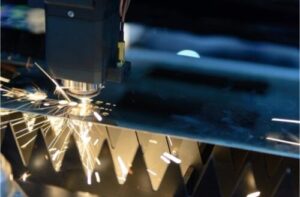
How to Minimize the Cost of Laser Cutting Services?
Laser cutting is one of the most accurate and flexible methods in today’s manufacturing. It gives clean edges, steady quality, and supports complex shapes. However,

Laser cutting is one of the most accurate and flexible methods in today’s manufacturing. It gives clean edges, steady quality, and supports complex shapes. However,
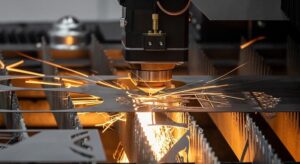
Laser cutting has become a key part of that process. Its accuracy and flexibility help transform creative concepts into real, functional parts with confidence. From small prototypes to complex finished assemblies, laser cutting bridges the gap between imagination and production.
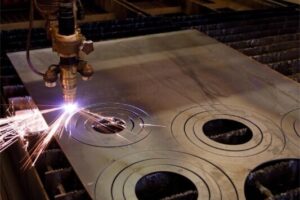
Laser cutting is a method that uses a focused light beam to cut metal sheets with high precision. The laser’s energy melts or vaporizes the material along a set path, creating clean, smooth edges. A computer-controlled system moves the beam based on your CAD file, enabling the accurate production of even complex shapes, fine holes, and sharp corners.
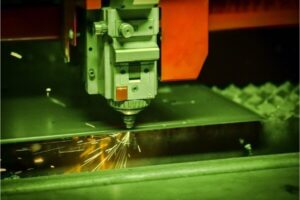
Laser cutting is one of the most precise and versatile methods for creating metal parts. However, even the best machine requires a well-designed file to
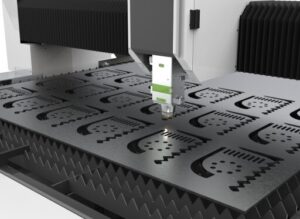
Many engineers and designers today face the same challenge: making parts with complex and detailed shapes that remain accurate during production. As designs get smaller
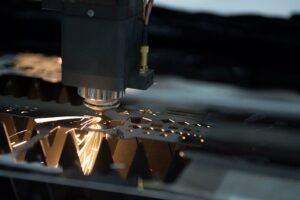
Many small manufacturers wonder whether bulk laser cutting is a smart move for their business. It’s an understandable concern. Producing in larger quantities can feel
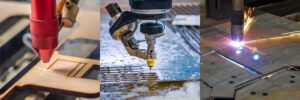
Many people often ask, “Which cutting method should I choose — laser, waterjet, or plasma?” It’s a reasonable question. Each method cuts metal, but they
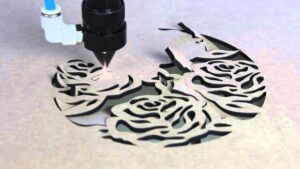
Every product starts with an idea — a shape, a pattern, or a small detail that defines how it looks and feels. For many designers
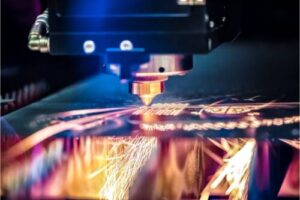
Large-format laser cutting utilizes machines specifically designed to handle huge metal sheets. Most models can process sheet sizes up to 3000mm × 1500mm, while advanced models can reach sizes of 6000mm × 2500mm or larger. These systems utilize high-power lasers, typically ranging from 6kW to 20kW, to cut through thick materials such as stainless steel, carbon steel, and aluminum.
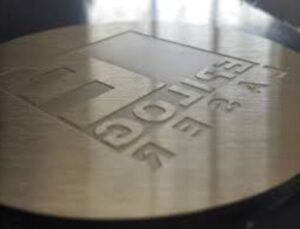
Deep laser engraving is a process where a focused laser beam removes layers of material to create a mark below the surface. The laser generates heat, vaporizing the material and cutting deeper with each pass. Depending on the material and settings, the engraving can range from a few microns to several millimeters deep.
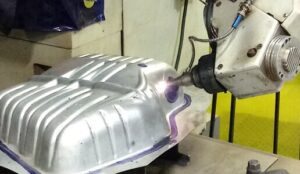
3D laser cutting is a method that uses a focused laser beam to cut, trim, or shape metal parts in three dimensions. Unlike flat laser cutting, which works only on sheet materials, 3D laser cutting can handle curved surfaces, tubes, formed parts, and welded assemblies. The laser beam targets a small spot, producing heat that melts or vaporizes the material. A stream of gas then blows away the molten metal, leaving a smooth and precise edge.
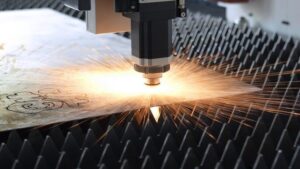
The best way to design sheet metal parts for laser cutting is to keep shapes simple, add proper spacing between features, and match thickness to the design needs. Corners should have radii instead of sharp edges. Holes should be large enough to cut cleanly. Designs should also consider how the part will be bent or welded later.
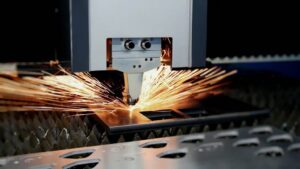
Laser cutting parameters are the adjustable settings on a laser machine. These include laser power, cutting speed, focus position, assist gas type, gas pressure, and nozzle distance. Each affects how the laser melts, burns, or vaporizes the material. The correct settings depend on the material type, thickness, and the desired edge quality.
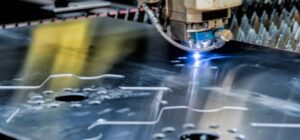
Laser Beam Machining (LBM) is a non-contact process that uses a focused beam of light to remove material. The laser heats a small area of the workpiece. The material melts or vaporizes. The beam can cut, drill, or engrave depending on the settings.
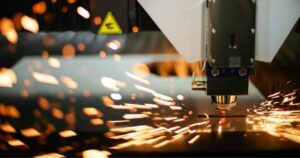
Nitrogen laser cutting uses high-pressure nitrogen gas to blow away molten material while preventing oxidation. This results in smooth, burr-free edges with no discoloration. It’s ideal for cutting stainless steel, aluminum, and other metals where appearance and precision matter. Unlike oxygen-assisted cuts, it produces cleaner finishes and helps prevent the need for secondary treatments.
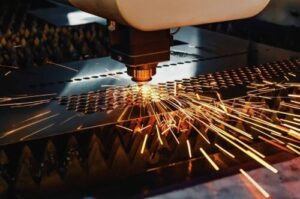
Most metals, plastics, wood, and paper-based products can be laser cut. However, some materials like PVC, polycarbonate, or reflective metals should be avoided. These can damage the machine or release harmful gases. Choosing the right material depends on your part’s function, thickness, and edge quality needs.