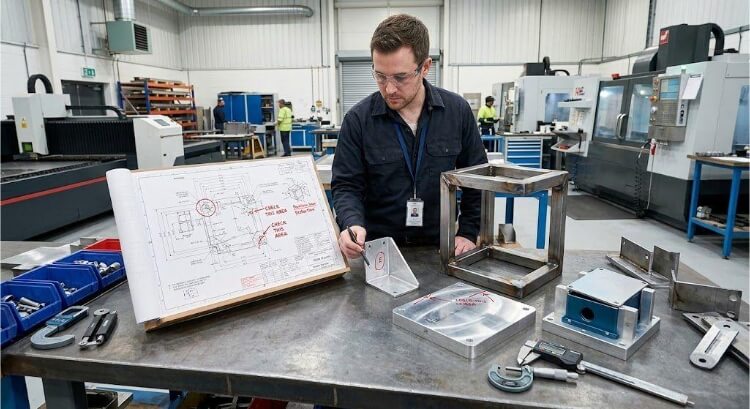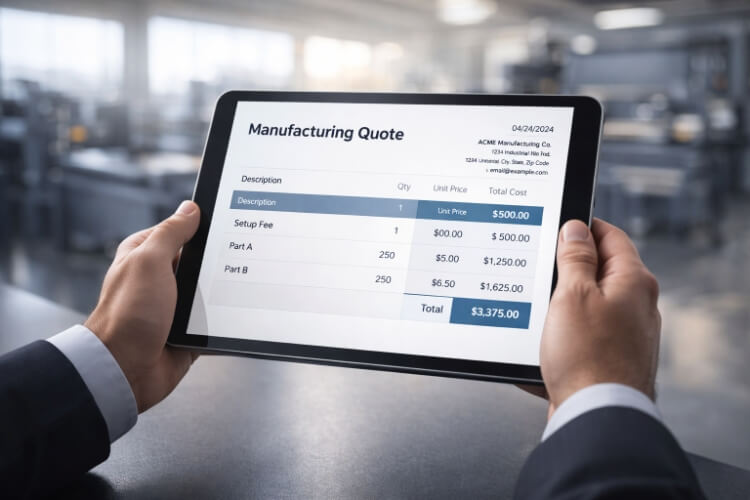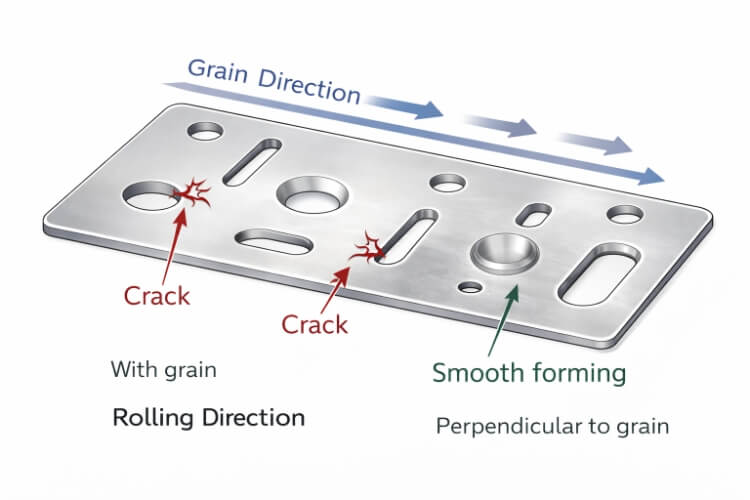
The days of “set it and forget it” production runs are largely behind us. For most of the industry, the reality has shifted to High-Mix/Low-Volume (HMLV). Customers are demanding tighter tolerances, shorter lead times, and bespoke configurations. They want the specificity of a custom job shop with the pricing structure of mass production.
This shift has exposed a critical operational gap. Many manufacturers have attempted to close this gap by investing heavily in faster fiber lasers or automated bending cells. While necessary, capital equipment is only part of the equation.
True agility isn’t just about machine speed; it is about system architecture. To survive this shift, we need to build a Modular Ecosystem—a strategic alignment where Product Design, Tooling, and Machine Architecture work as a unified system. We begin where the cost structure is actually defined: the engineering phase.
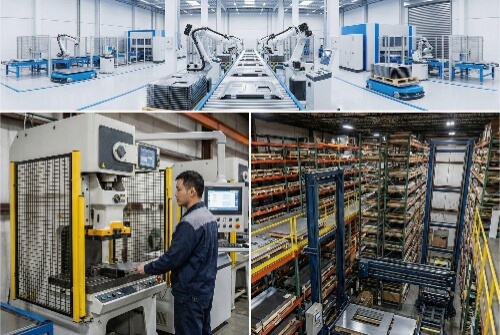
Modular Product Architecture
In the industry, we often refer to highly customized, one-off orders as “Snowflakes.”
From a sales perspective, “Snowflakes” are great—they solve a specific customer problem. But from an operational perspective, they are difficult to scale. They defy standardization, requiring unique CAM programming, non-standard setups, and often, unique troubleshooting on the floor.
The challenge for modern fabricators is to satisfy the market’s need for customization without turning the shop floor into a chaotic prototyping lab.
Shifting from Products to Platforms
The most efficient manufacturers are moving away from designing unique end-products and toward designing configurable platforms.
Consider a product line of industrial electrical enclosures. While the external dimensions (height, width, depth) may vary by contract, the functional DNA of the product rarely changes.
- Corner joints and structural rigidity requirements are consistent.
- Hinge mounting patterns are repeatable.
- Ventilation louver geometries are standard.
By decomposing these complex assemblies into standardized sub-modules, engineering teams can essentially “configure” a new order rather than “create” one. The customer receives a bespoke solution, but the shop floor produces it using standard, proven geometries that have already been validated for production.
“Standardize to Liberate” (The DFMA Approach)
There is often a concern among engineering teams that strict standardization stifles creativity. However, in a production environment, standardization actually liberates engineers from low-value decision-making.
This is where Design for Manufacture and Assembly (DFMA) moves from a textbook theory to a profit driver.
Let’s look at a common friction point: Hole Specifications. In a non-standardized environment, an engineer might specify a 0.12” mounting hole for one bracket and a 0.14” hole for another, perhaps driven by minor aesthetic preferences or legacy CAD files.
- The Operational Cost: On the floor, this variance forces the turret punch operator to stop the run, index the turret, or physically swap tools. It introduces unnecessary downtime for zero functional gain.
- The Modular Approach: By enforcing a standard library—for example, mandating that all rivets of a certain class use a 0.15” hole—we eliminate the variable. The design decision is made once, and the machine keeps running.
The Downstream Impact: Purchasing and Inventory
The value of modular architecture extends well beyond the fabrication cell. It has a direct, stabilizing effect on the supply chain.
When engineering standardizes material gauges, bend radii, and hardware interfaces, the complexity of inventory management drops significantly. Instead of managing safety stock for 50 distinct SKUs of fasteners or ten different sheet thicknesses to accommodate “Snowflake” designs, the purchasing department can focus on optimizing volume pricing for a core set of standard materials.
Navigating the Manufacturing “Middle Ground”
Once the design architecture is stabilized, we face a purely economic question: How do we manufacture this efficiently at mid-volume?
This is where many fabrication strategies encounter friction.
The industry has optimized the extremes. For prototypes (1–50 parts), we have lasers and press brakes. They are flexible and require zero tooling investment. For high-volume production (100,000+ parts), we have progressive dies and stamping presses. They are capital-intensive but offer the lowest piece price.
But the High-Mix/Low-Volume (HMLV) market lives in the “Middle Ground”—typically batches of 500 to 20,000 parts per year.

The Limitations of Traditional Tooling
When scaling up from a prototype, the conventional instinct is often to invest in a dedicated hard die (Class A tooling). While effective for stability, this approach carries two significant risks in the modern market:
- Capital Exposure: A progressive die represents a substantial upfront sunk cost. If the product lifecycle is short, amortizing that cost becomes difficult.
- Design Rigidity: In an agile market, engineering changes are frequent. If a design revision occurs after a hard tool is cut, that tool often becomes scrap metal. The cost of modification is high, and the lead time for a new tool can push projects off schedule.
The Modular Stamping Strategy
Modular stamping offers a calculated compromise. It provides the speed and repeatability of hard tooling without the massive commitment of a dedicated die.
The concept functions similarly to a heavy-duty industrial socket set:
- The Master Die Set: This is a standardized base unit that remains in the press. It provides the guidance and force distribution.
- The Modular Inserts: These are specific cutting and forming components that mount into the master set.
When a job changes, the setup team doesn’t swap the entire heavy steel base; they simply swap the functional inserts.
The Economic Case: CapEx vs. OpEx
For a Purchasing Manager or Business Owner, the argument for modular tooling is primarily financial.
By utilizing a shared Master Die, the manufacturer avoids paying for the heavy steel base and die shoe for every new part number. We only invest in the specific geometry required to form the part.
- Cost Efficiency: Industry comparisons typically show that modular tooling costs 15% to 20% of a traditional progressive die. This dramatically lowers the barrier to entry for new product launches.
- Risk Mitigation: This is perhaps the more critical factor. If a customer updates a design six months into production, we aren’t scrapping a $20,000 tool. We are simply replacing a low-cost insert. We effectively convert a high-risk Capital Expenditure (CapEx) into a manageable Operational Expense (OpEx).
Precision and Throughput
There is a lingering misconception that “modular” implies “loose tolerances.” This is outdated thinking.
Modern modular tooling utilizes precision-ground components capable of maintaining tight tolerances comparable to dedicated tooling. Furthermore, for hole-intensive parts (such as electronics enclosures or perforated panels), a modular hard tool is exponentially faster than a laser or turret punch. Instead of tracing every hole individually, the tool hits once.
Winning in the “Middle Ground” isn’t about choosing between speed and cost; it’s about choosing the right vehicle for the volume. Modular tooling allows manufacturers to achieve stamping speeds and quality without being handcuffed by the cost and rigidity of traditional dies.
The Problem with “Monolithic” Equipment
Traditionally, machine tools were built as integrated, single-purpose monoliths. A dedicated stamping press or a standalone laser cutter is excellent at doing one thing. However, their capacity is fixed at the moment of installation.
The risk here is capacity mismatch.
- Scenario A: You buy a high-speed laser to handle a projected contract. The contract gets delayed. You now have an over-spec’d asset bleeding depreciation.
- Scenario B: You buy a basic machine to save cash. Volume explodes. You cannot upgrade the machine; you have to sell it (often at a loss) and buy a bigger one.

The Modular Machine Strategy
A modular equipment strategy mirrors the approach we took with product design: treat the machine as a base platform with interchangeable functional modules.
This manifests in two distinct ways on the shop floor:
1. Functional Modularity (The “Swiss Army” Approach)
In fabrication, we are seeing a rise in combination machines—punch/laser or punch/shear combos. The core architecture (motion system, frame, control) remains constant, but the “head” provides multi-process capability.
While these machines are not new, the strategy behind deploying them is changing. Instead of viewing them merely as “space savers,” insiders view them as load-balancing tools. If the laser cutting queue is backed up, the combo machine shifts to laser mode. If punching is the bottleneck, it shifts to punching. It creates a critical buffer against the variability of HMLV production.
2. Scalable Automation (The “Lego” Approach)
This is the more practical application for growing manufacturers. It solves the “Buy Now vs. Buy Later” dilemma.
A modular machine architecture allows you to purchase the base unit (e.g., a standalone press brake or laser) today, with pre-engineered interfaces for future automation.
- Phase 1 (Low Volume): Operator manually loads the machine. CapEx is kept low to protect cash flow.
- Phase 2 (Growth): Volume increases. Instead of buying a second machine, you bolt on a modular Automatic Tool Changer (ATC) or a Material Loading Tower.
- Phase 3 (High Volume): You integrate a robotic sorting arm and connect the machine to a central storage backbone.
The machine hasn’t been replaced; it has evolved. This approach protects cash flow in the early stages while ensuring the asset doesn’t become obsolete as the business scales.
The Digital Thread and The Competitive Edge
We have constructed a flexible physical reality. We have Product Platforms that simplify design, Modular Tooling that reduces risk, and Scalable Machines that adapt to volume.
But if we stop here, we risk creating a “Fragmented Factory.”
We see this scenario frequently: a shop possesses a state-of-the-art fiber laser and a brilliant design team, yet they operate in isolation. The design changes, but the tooling department doesn’t get the memo until the setup has already started. The potential speed of the modular hardware is wasted by the friction of manual communication.
The final piece of the ecosystem is the Digital Thread. It is the nervous system that ensures our three modular layers move in sync.
The Software Must Drive the Hardware
In a High-Mix/Low-Volume (HMLV) environment, the most expensive commodity is information. When we modularize our physical assets, the volume of data points explodes. We are no longer tracking a single finished part number; we are tracking multiple sub-modules, interchangeable tool inserts, and machine configurations.
To manage this, the software stack—ERP, MES, and CAD/CAM—must stop operating in silos.
The “Digital Twin” as an Operational Tool
“Digital Twin” is often thrown around as a marketing buzzword, but for the modular shop, it is a practical necessity.
Before a modular tool is assembled or a flexible line is reconfigured, we should be running it virtually.
- The Scenario: An engineer swaps a ventilation module in the product design.
- The Digital Response: The system automatically validates this change against the available tooling inventory. It simulates the bending sequence on the machine to check for collisions.
If the new module requires a tool we don’t have, the system flags it before the order hits the floor. This predictive capability is what separates a modern smart factory from a traditional job shop. It prevents the “stop-and-wait” scenarios that kill profitability.
Managing the Complexity of Inventory
There is a trade-off to modularity that we must acknowledge candidly: Inventory complexity increases.
When you move from dedicated products to configurable modules, you are managing more SKUs. You need to know exactly which die inserts are available, which machine heads are calibrated, and which sub-assemblies are in stock.
Standard inventory methods (simple Min/Max levels) often fail here. We need systems that track Capability, not just count.
- Old Question: “Do we have Part X in stock?”
- New Question: “Do we have the combination of modules required to configure Part X by Tuesday?”
Successful implementers use their ERP systems to drive this logic. They treat capacity and tooling availability as finite resources that are scheduled just like raw materials.
Conclusion
The shift to High-Mix/Low-Volume manufacturing is no longer a debate; it is the industry’s new reality. Trying to navigate this reality with rigid, legacy processes is a losing battle. By moving from monolithic structures to flexible modules, you stop merely reacting to market volatility and start turning it into a competitive advantage.
Reading about modular strategy is step one. Tailoring it to the specific realities of your shop floor is the challenge. Don’t let outdated processes or rigid equipment bottle neck your growth. Contact our engineering specialists today for a no-obligation Modular Workflow Assessment.
Hey, I'm Kevin Lee

For the past 10 years, I’ve been immersed in various forms of sheet metal fabrication, sharing cool insights here from my experiences across diverse workshops.
Get in touch
Kevin Lee
I have over ten years of professional experience in sheet metal fabrication, specializing in laser cutting, bending, welding, and surface treatment techniques. As the Technical Director at Shengen, I am committed to solving complex manufacturing challenges and driving innovation and quality in each project.
Related Resource
Fingerprint Resistant Stainless Steel: How It Works,and How to Choose