When you source parts or release a Bill of Materials (BOM), the terms “fabrication” and “manufacturing” are frequently treated as interchangeable synonyms. In real project execution, that confusion is expensive.
Sending a multi-level BOM to a traditional sheet metal shop often leads to misaligned expectations. It forces you to manage the gaps—sourcing your own fasteners, arranging third-party finishing, and absorbing the cost of extra shipping handoffs.
At a practical level, fabrication turns raw material into usable parts or subassemblies. Manufacturing takes those fabricated parts, integrates them with purchased components under strict process control, and turns them into a finished product.
This distinction dictates how you conduct an engineering review, how procurement structures a contract, and who ultimately owns the production risk. Here is how to draw the boundary and align your supply model with your actual project requirements.
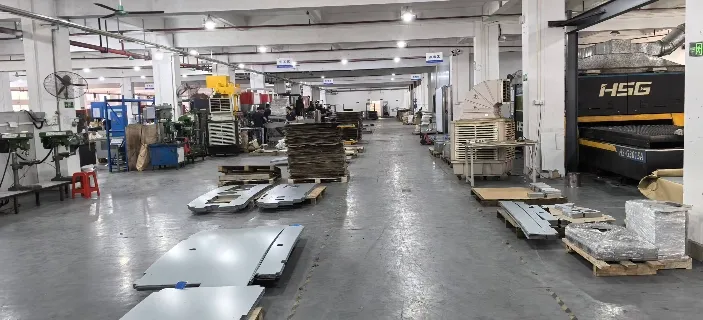
Fabrication vs Manufacturing: The Core Scope Difference
The difference starts with scope. One focuses on making parts, while the other carries the build further toward final delivery.
Fabrication as raw-material-to-part work
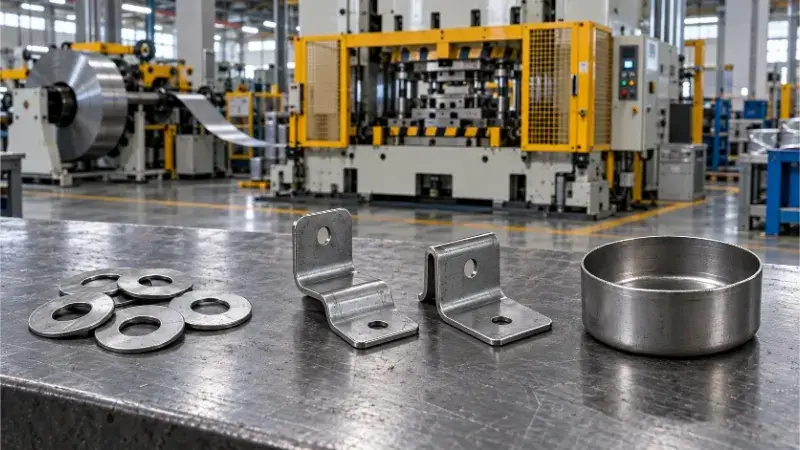
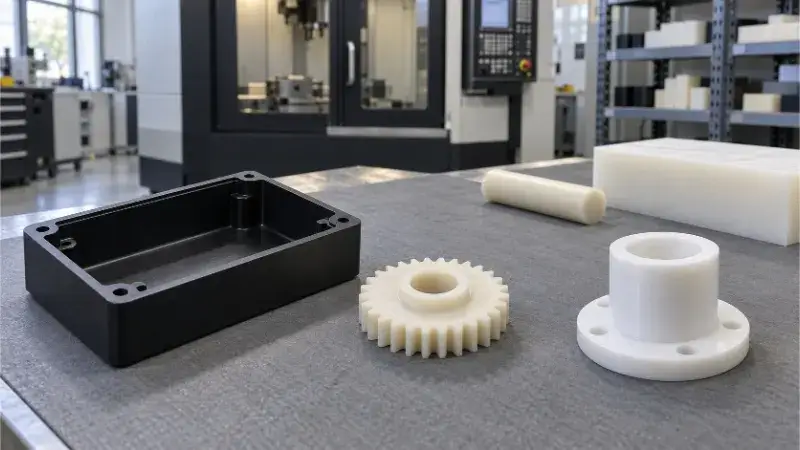
Fabrication is fundamentally about material transformation. The inputs on a fabrication floor are typically raw stock: sheet metal, solid bar, tube, plate, or raw plastic. Through various physical and thermal processes, the fabricator shapes this stock into a defined geometry.
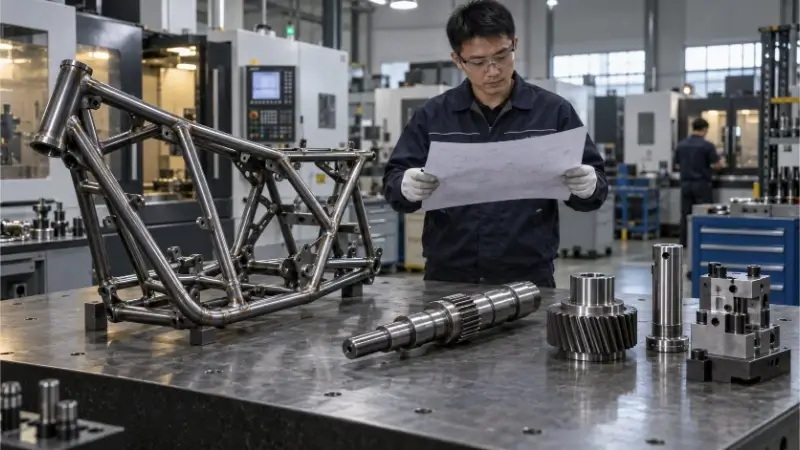
The standard outputs of a fabrication cycle are individual parts, welded frames, mounting brackets, enclosure panels, or structural subassemblies.
Manufacturing as part-to-product delivery
Manufacturing encompasses a much wider operational scope. While it relies heavily on fabricated parts, the inputs for manufacturing extend deep into supply chain management and vendor coordination.
A manufacturing process takes raw materials and fabricated components, but it also inputs purchased parts, electronics, fasteners, surface coatings, labels, packaging, and test resources. The final output is a ready-to-ship, market-ready product.
Inputs, outputs, and risk ownership
Fabrication and manufacturing are not opposing concepts. In fact, fabrication is almost always a critical subset of the broader manufacturing process. The real difference lies in the boundary of responsibility—specifically, which risks you are outsourcing.
A fabricator owns the geometry, the weld integrity, and the part-level quality. When you hire a fabricator, you are outsourcing material and tolerance risks.
A manufacturer owns the system-level function, the BOM coordination, and the final fit. When you hire a manufacturer, you are outsourcing supply chain and integration risks, paying for the guarantee that the completed assembly performs as intended out of the box.
| Feature / Aspect | Fabrication (The Part Maker) | Manufacturing (The Product Builder) |
|---|---|---|
| Core Scope | Material transformation (cutting, forming, welding, machining). | System integration (assembly, BOM coordination, testing). |
| Primary Inputs | Raw stock (sheet metal, tube, solid bar, raw plastic). | Fabricated parts, COTS hardware, electronics, packaging. |
| Primary Outputs | Individual parts, brackets, enclosures, structural subassemblies. | Fully tested, market-ready finished products or functional systems. |
| Risk Ownership | Material behavior and part-level tolerance risks. | Supply chain coordination and system integration risks. |
| Supply Chain Position | Tiered supplier or process specialist. | Product integrator, final assembler, or OEM partner. |
| DFM Focus | Part physics (bend feasibility, springback, tool reach). | System logic (assembly sequence, cable routing, serviceability). |
| Tolerance Strategy | Controlling specific dimensions to a single 2D print. | Managing tolerance stack-up across multiple mating components. |
| Quality Control (QC) | Geometry check (verifying physical dimensions against CAD). | Functional verification (end-of-line testing, electrical continuity, final yield). |
| Cost Driver | Machine cycle time, raw material weight, operator skill. | Supply chain overhead, line balancing, inventory holding, assembly labor. |
Where Fabrication Ends and Manufacturing Expands?
The line becomes clearer when you look at the work itself. Process steps, assembly depth, and delivery form all change the scope.
Cutting, forming, machining, and welding
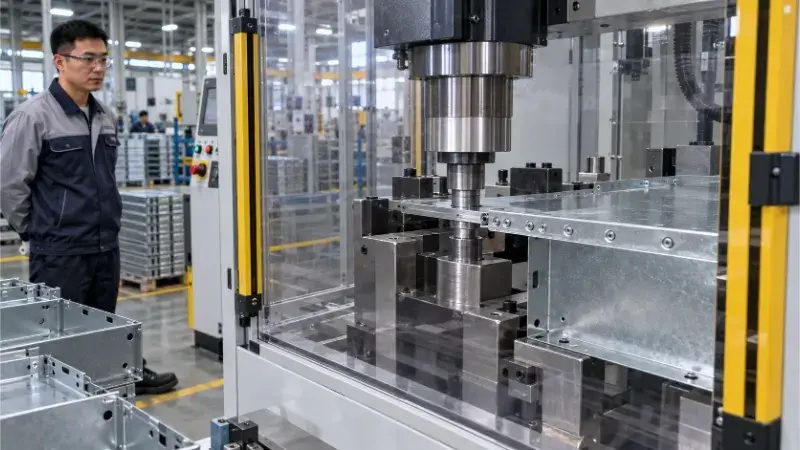
The fabrication scope is defined by the specific operations required to process raw stock. This includes laser cutting, turret punching, press brake bending, CNC machining, welding, and deburring.
It also covers basic surface preparation and hardware insertion, such as pressing in standoffs or installing blind nuts. If the work order is entirely focused on altering the shape or joining raw metal and plastics, it sits squarely in the fabrication category.
Subassemblies, assemblies, and product completion
The boundary begins to expand when individual parts must function together. While a fabricator might weld a frame together to create a structural subassembly, a manufacturer will take that frame and execute the mechanical assembly.
This mechanical assembly includes routing cables, electrical integration, installing moving mechanisms, and performing fit verification across mating components sourced from different vendors. Manufacturing is the process of resolving the physical interfaces between disparate parts.
Testing, packaging, and shipment readiness
A distinct marker of the manufacturing process is the validation and release phase. While fabrication involves checking part dimensions against a print, manufacturing requires functional validation, such as end-of-line testing, continuity checks, and software integration.
Once the unit is functionally verified, the manufacturing scope extends outward. This includes applying compliance labeling, securing the unit in custom packaging, and managing the logistics of shipment readiness.
Intermediate components versus finished goods
For engineers and buyers, the most reliable rule of thumb for drawing the boundary is looking at the final delivery state.
If the item arriving on your dock is a bare, welded steel server rack chassis, you are procuring fabrication. You still have work to do before it can be sold or used.
On the other hand, if the item arriving is that same chassis, powder-coated, populated with power distribution units (PDUs), cooling fans, and wiring harnesses, you have engaged a manufacturing scope. The unit is fully integrated and ready to deploy.
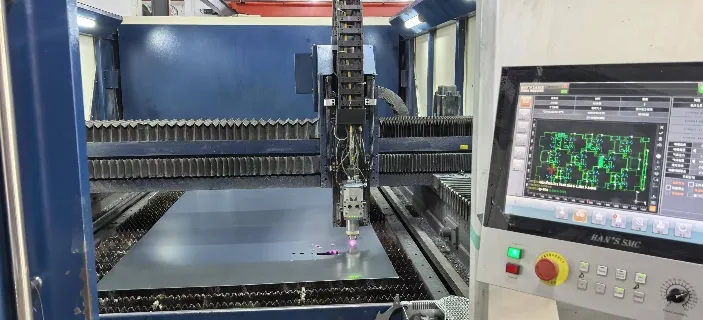
The Cost and Supply Chain Difference
Supplier scope affects more than process coverage. It also shapes handoff cost, schedule stability, and who owns the final result.
Prototype flexibility versus production scale
Fabrication processes are inherently built for flexibility and rapid iteration. When you need a dozen custom sheet metal enclosures or custom mounting brackets, a fabricator can pivot quickly to support short-run, low-volume structural work. They are optimized to help you prove out a physical design.
Manufacturing, however, is governed by scale and consistency. It shifts the focus from “making a part” to “managing a repeatable process.” A manufacturer prioritizes assembly line balance, rigorous supplier coordination, and comprehensive documentation to ensure that the ten-thousandth unit matches the approved first article perfectly.
Tiered suppliers versus product integrators
In the supply chain hierarchy, fabricators typically operate as tiered suppliers or process specialists. You hire them to execute specific physical operations, like precision 5-axis machining or heavy structural welding. They deliver a component to feed into someone else’s build.
Manufacturers act as product integrators or OEM partners. They manage the broader ecosystem, coordinating the flow of fabricated structural metal, off-the-shelf fasteners, printed circuit boards, and packaging into a single synchronized assembly line.
Handoff cost across multiple vendors
Procurement teams often chase a lower piece price by splitting a BOM across multiple specialized fabricators, planning to handle assembly internally or through another vendor. This approach almost always introduces massive hidden costs.
Every time a part moves between a laser cutter, a separate plating shop, and a final assembly facility, you bleed margin. You might save 5% on the raw metal, but you will lose 15% in administrative overhead, transit packaging, and rework loops. At that point, you are no longer managing a supply chain; you are just managing logistics.
Delay risk from split responsibility
The greatest threat of a fragmented supply chain is mixed accountability. When a mechanical assembly fails to fit together, the fabricator blames the 2D drawing, the finisher blames the material condition, and the assembly team blames everyone else.
When you source a full manufacturing scope, you centralize the risk. You are paying one supplier to own the final yield, eliminating the schedule slips and cost overruns caused by vendor finger-pointing.
What Engineers Need to Review at Each Stage?
The drawing is only part of the job. Engineering also needs to control fit, function, finish, and inspection across the full build.
DFM responsibility across the project
A fabrication Design for Manufacturability (DFM) review focuses strictly on the physics of the individual part. Engineers evaluate bend feasibility, material springback, tool reach for CNC milling, and weld torch access to ensure the part can be made without excessive scrap.
A manufacturing DFM review steps back to look at system integration. It challenges assembly sequencing, tool clearance on the production line, wire routing paths, and long-term serviceability for the end user. It asks whether two bolted parts should be redesigned into a single fabricated structure to save assembly time.
Tolerance control by function and fit
At the fabrication level, engineers focus on controlling part-level dimensions. The goal is to ensure the physical part—like the flatness of a steel plate or the diameter of a punched hole—matches the callouts on a specific drawing.
In the manufacturing phase, engineers must manage tolerance stack-up. They are responsible for ensuring that the cumulative variations of a fabricated panel, a machined standoff, and a purchased hinge still allow the final door to close smoothly. A fabricator rarely has the visibility to manage this system-level risk.
Finishing, appearance, and downstream assembly impact
Surface finishing is often treated as the final step of fabrication, but it is a critical variable in manufacturing assembly. A fabricator simply verifies that a powder coat or anodized finish meets cosmetic and thickness requirements on a standalone part.
A manufacturing engineer must look downstream. They must ensure proper masking is called out for electrical grounding points, evaluate how coating thickness impacts tight mating clearances, and plan how to prevent cosmetic damage when heavy components are bolted together during final assembly.
Inspection planning and quality ownership
Inspection at the fabrication stage is primarily a geometry check. The quality team inspects the physical part against the CAD model and the print, verifying hole locations, surface roughness, and bend angles.
Inspection at the manufacturing stage is a functional verification. The manufacturer must validate the entire build, proving out system function, electrical continuity, and compliance labeling. In fabrication, a bad part is a scrap cost. In manufacturing, a bad integration is a field failure and a blown delivery schedule. The manufacturer is ultimately responsible for the final yield of the assembled system.
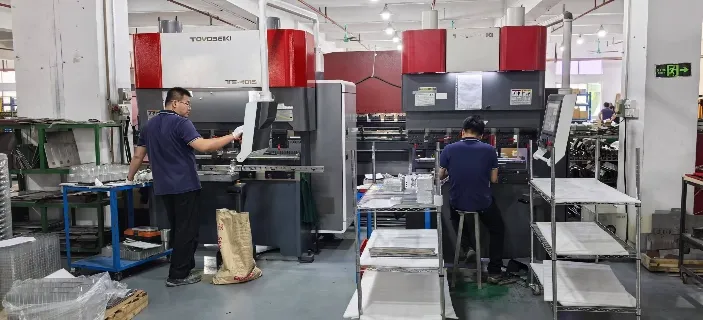
What Purchasing Teams Need to Decide Before Outsourcing?
In modern production, the line is not always clean. Some suppliers now cover both part-making and broader product delivery in one system.
BOM complexity and supplier fit
Procurement decisions should not be based on vendor marketing; they should be dictated by BOM complexity. When evaluating a sourcing strategy, look directly at the itemized list.
If your BOM is heavily weighted toward laser-cut sheet metal panels, custom stamped enclosures, or CNC machined brackets, a fabricator is likely the most direct and cost-effective choice. If the BOM includes complex subassemblies, commercial off-the-shelf (COTS) components, PCBAs, wire harnesses, and custom packaging, a broader manufacturing partner is required.
When a fabricator is enough?
A fabricator is the optimal choice for high-mix, low-volume structural work where the drawings are absolute and the assembly requirements are minimal.
In this scenario, you are essentially buying machine hours and operator skill. If you have the internal capacity to receive bare metal parts, perform the final mechanical assembly, and manage the quality control of the finished system, keeping the contract limited to fabrication prevents you from paying unnecessary markup.
When a full manufacturing partner adds value?
A full manufacturing partner becomes necessary when your project involves multi-process integration. If your product requires coordinating sheet metal, CNC machined components, injection-molded plastics, and electronic integration, managing that supply chain internally will drain your resources.
Here, you are paying for supply chain management and final yield. A manufacturer adds value by absorbing the coordination load, managing the inventory of hardware and electronics, and taking responsibility for the final fit and function of the system.
Audit points for fabricators and manufacturers
Do not audit a fabricator and a manufacturer using the same checklist. Your audit focus must align with the risks you are outsourcing.
For fabricators, audit the process physics: Check their machine calibration records, process stability, and tooling maintenance. Verify their material traceability (such as MTRs for steel) and inspect their weld quality and surface finish management.
For manufacturers, audit the system controls: Look at their ERP/MRP planning systems and how they manage sub-tier supplier quality. Review their assembly Standard Operating Procedures (SOPs), Engineering Change Order (ECO) routing, and their discipline in end-of-line (EOL) functional testing and shipment prep.
Where Fabrication and Manufacturing Start to Overlap
The right choice depends on what the project really needs. Scope, assembly level, and quality ownership usually make the answer clear.
Additive manufacturing and process overlap
While the boundary between making parts and building products is critical for sourcing, modern technology is beginning to blur that line. Additive manufacturing (3D printing) is a prime example.
Complex geometries that historically required multiple fabrication steps—cutting, bending, and welding individual pieces—can now be printed as a single consolidated component. This technological shift reduces assembly requirements, pushing what used to be a “manufacturing” assembly process back into a single “fabrication” step.
Vertically integrated suppliers
The most significant overlap exists within vertically integrated suppliers. Many top-tier modern suppliers no longer fit neatly into just one category.
A single facility may house automated laser cutters, stamping presses, and CNC machining centers on one side of the factory, while running an electromechanical assembly line on the other. This integration allows them to maintain strict quality standards and efficient production times, as parts do not have to be shipped across the country for surface finishing and final assembly. The same company acts as both the part fabricator and the product manufacturer.
Scope decisions in prototype-to-production programs
This vertical integration is highly strategic for New Product Introduction (NPI) and prototype-to-production programs. A supplier can act as a pure fabricator during the early alpha phases, delivering quick-turn custom brackets and prototype sheet metal housings.
Once the design stabilizes and moves into mass production, that same supplier can expand their scope to take on the full manufacturing and assembly responsibility. This eliminates the tech-transfer risks and delays associated with moving a mature product from a prototype shop to a mass-production factory.
Conclusion
At the factory level, the distinction is clear: fabrication is the physical process of turning raw materials into usable parts, while manufacturing is the operational process of combining parts, purchased components, and quality controls to deliver a complete product. Fabrication provides the structural foundation; manufacturing delivers the final, market-ready function.
When launching a new product or releasing a sourcing package, your supplier selection path should be straightforward. Look at your BOM and define the delivery state.
If you just need bare parts made to print, hire a fabricator. If you need a fully tested assembly, cross-vendor coordination, and strict ownership of final quality, you must partner with a manufacturer.
If you are planning a new project, the right supplier scope should be clear before quotation and sourcing begin. Send us your drawing, BOM, or sample, and our team will help you review the process route, production scope, and the best path from prototype to production.
Hey, I'm Kevin Lee

For the past 10 years, I’ve been immersed in various forms of sheet metal fabrication, sharing cool insights here from my experiences across diverse workshops.
Get in touch
Kevin Lee
I have over ten years of professional experience in sheet metal fabrication, specializing in laser cutting, bending, welding, and surface treatment techniques. As the Technical Director at Shengen, I am committed to solving complex manufacturing challenges and driving innovation and quality in each project.