ASTM A108 is a specification for cold-finished carbon and alloy steel bars designed for precision machining. Engineers typically choose it when dimensional consistency, predictable machining behavior, and repeatable production matter more than raw structural strength.
However, ASTM A108 is not a universal solution. Its cold-finishing process introduces residual stress, surface hardness variation, and welding limitations that can become serious risks if the material is selected blindly.
Use ASTM A108 when:
- You need tight tolerances without secondary grinding
- Parts are CNC-machined in medium to high volumes
- Process stability matters more than lowest material cost
Avoid ASTM A108 when:
- Heavy welding is required
- Parts experience high cyclic fatigue without stress relief
- Surface treatment or heat treatment is poorly controlled
This guide explains how engineers actually evaluate ASTM A108, not just what the standard says.
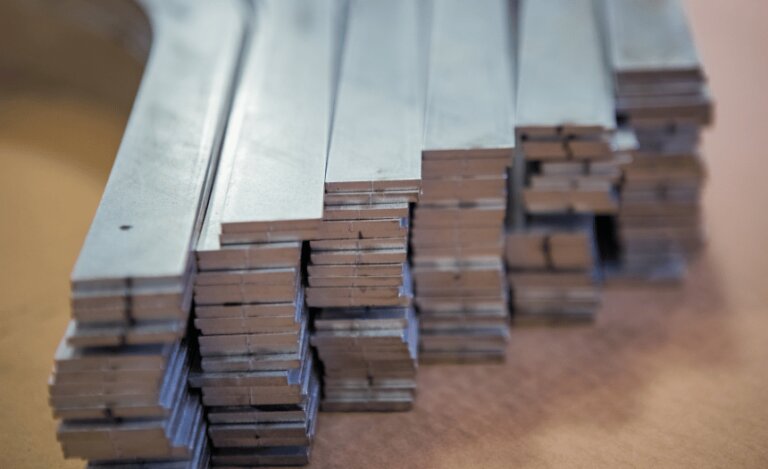
The Engineering Strategy of Cold-Finishing
In high-volume manufacturing, “cheap” material is often the most expensive variable. ASTM A108 represents the transition from raw structural steel to a machinable substrate. If you are still “skinning” hot-rolled bars to reach a diameter, you are losing money on every cycle.
Dimensional Integrity as a Production Asset
The primary engineering value of ASTM A108 isn’t just the chemistry; it’s the process tolerance.
- Bar-Feeder Ready: A108 bars are straight and consistent. In 24/7 “lights-out” manufacturing, this prevents the mechanical jams and vibration harmonics that kill tool life in hot-rolled stock.
- The “Skin” Advantage: The cold-drawing process increases the surface hardness. This “work-hardened” skin allows for cleaner chip breaking on the first pass, provided your tool engagement is deep enough to get under the surface.
The TCO (Total Cost of Ownership) Mindset
Procurement often looks at the $ / lb of 1018 vs. 12L14. As an engineer, your metric is Cost Per Finished Part.
| Grade | Machinability | Primary Trade-off | Strategic Use Case |
|---|---|---|---|
| 1018 | 70% | Gummy; prone to BUE (Built-Up Edge). | General parts requiring welding or carburizing. |
| 12L14 | 160% | Fatigue Risk. Lead additives reduce ductility. | High-speed, low-stress precision pins. |
| 1215 | 135% | Sustainable alternative to leaded steel. | Mass-produced fasteners and bushings. |
| 1045 | 55% | Harder on tools; abrasive. | Shafts and axles requiring induction hardening. |
| 1144 | 85% | Higher yield strength; brittle in shock loads. | High-stress gears without post-machining heat treat. |
Rules of Thumb for Material Selection
- The Welding Hard-Stop: If a part must be welded, strike 12L14 and 1215 from your list. The lead and sulfur content that makes them easy to machine will cause “hot shortness”—intergranular cracking—in the weld pool that no amount of pre-heating can fix.
- The Prototype Trap: Never prototype a high-speed part in 6061 Aluminum if the production intent is A108 steel. The tool pressures and chip dynamics are worlds apart. Establish your “Master Part” in A108 1018 or 12L14 from day one to ensure your CNC offsets translate to the production floor.
Strategic Guidance: When to Pivot
If your FEA (Finite Element Analysis) shows high cyclic stress at a sharp shoulder, pivot away from the free-machining grades. The very inclusions (Lead/Sulfur) that break your chips also act as microscopic stress risers. In these scenarios, a “slower” machining grade like 1018 Stress-Relieved will provide the fatigue ceiling your application requires.
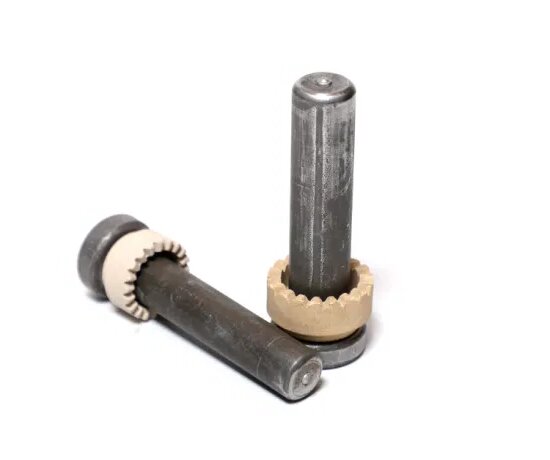
Composition and Properties of ASTM A108 Steel
While the “Cold-Finished” designation defines the process, the chemical and physical makeup of the steel defines its performance limits. ASTM A108 covers a wide range of carbon and alloy steels, each tuned for specific mechanical behaviors.
Chemical Composition of ASTM A108 Steel
The chemistry of A108 steel is primarily governed by carbon, manganese, phosphorus, and sulfur. However, the “Free-Machining” variants introduce specific additives that act as internal lubricants.
| Element | Standard Carbon (e.g., 1018) | Free-Machining (e.g., 12L14) | Role in the Alloy |
|---|---|---|---|
| Carbon (C) | 0.15% – 0.20% | 0.15% Max | Determines hardness and heat-treat response. |
| Manganese (Mn) | 0.60% – 0.90% | 0.85% – 1.15% | Increases strength and improves "hot workability." |
| Phosphorus (P) | 0.04% Max | 0.04% – 0.09% | Increases strength but can reduce ductility. |
| Sulfur (S) | 0.05% Max | 0.26% – 0.35% | Form sulfides that act as "chip breakers." |
| Lead (Pb) | None | 0.15% – 0.35% | (Optional) Significantly boosts machining speeds. |
Engineering Note: With the increasing focus on REACH and RoHS compliance, ensure that if you select 12L14, the lead content is permissible for your target market. If not, 1215 (lead-free) is the recommended sustainable alternative.
Physical Properties of ASTM A108 Steel
Physical properties remain relatively constant across the different carbon grades within the A108 specification. These constants are vital for calculating weight, thermal expansion, and electrical conductivity in precision assemblies.
- Density: 7.87 g/cm³
- Melting Point: Approximately 1425°C – 1540°C
- Modulus of Elasticity (E): 200 GPa (29,000 ksi).
- Thermal Conductivity: 51.9 W/m·K (varies slightly by grade).
- Coefficient of Thermal Expansion: 11.7 × 10⁻⁶ /°C (20°C to 100°C).
Mechanical Properties: Strength, Hardness, and Ductility
The cold-finishing process significantly “boosts” the mechanical properties of A108 compared to its hot-rolled state. Below is a comparison of typical values for the most common cold-drawn grades:
| Grade | Tensile Strength (min) | Yield Strength (min) | Hardness (HB) | Elongation (in 2") |
|---|---|---|---|---|
| 1018 | 440 MPa (64 ksi) | 370 MPa (54 ksi) | 126 | 15% |
| 1045 | 625 MPa (91 ksi) | 530 MPa (77 ksi) | 179 | 12% |
| 1144 | 690 MPa (100 ksi) | 550 MPa (80 ksi) | 197 | 10% |
| 12L14 | 540 MPa (78 ksi) | 415 MPa (60 ksi) | 163 | 10% |
Key Takeaways for Designers:
- Strength vs. Ductility: As you move from 1018 to 1144, the yield strength increases by nearly 50%, but elongation (ductility) drops. If your part needs to absorb impact or undergo secondary forming (like bending), 1018 is the safer choice.
- The “Hardness Skin”: The Brinell Hardness (HB) values listed above are for the bulk material. Due to the cold-drawing process, the surface “skin” can be 10-15% harder than the core, which helps with wear resistance but requires robust initial tool engagement.
Machining Dynamics & Stability Risks
In high-volume CNC production, the enemy isn’t the hardness of the steel—it is instability. ASTM A108 behaves predictably only if you respect the physics of cold-finished grain structures. If you treat an A108 bar like a stress-relieved casting, you will face dimensional “walking” and unpredictable tool failure.
The Residual Stress Trap: Why Parts “Walk”
Cold drawing forces steel through a die at room temperature, which creates a high-energy surface layer. This “stored energy” is your biggest risk during material removal.
- The Phenomenon: When you perform heavy milling on one side of an A108 bar, you unbalance the internal stresses. The bar will bow away from the machined surface.
- The Engineering Fix: * Balanced Removal: If you are machining a flat on a long 1018 shaft, machine 50% from one side, flip it, and machine the other 50%.
- Stress Relief (SR): For ultra-precision spindles, specify ASTM A108 Stress-Relieved. This thermal cycle (approx. 540°C) “relaxes” the grain structure without sacrificing the hardness gained from cold-working.
Solving the “Gummy” 1018 vs. The “Brittle” 12L14
Material behavior dictates your tool path strategy. You cannot use the same chip-breaker geometry for all A108 grades.
- 1018 (Low Carbon/Gummy): Prone to Built-Up Edge (BUE). The steel microscopically welds to the carbide tip, eventually tearing away and taking part of the tool with it.
- The Fix: Increase your Surface Footage (SFM). High heat in the shear zone actually helps 1018 shear cleanly. Use a positive-rake insert with a sharp edge to “slice” rather than “push.”
- 12L14/1215 (Resulfurized): The “chips” are more like needles. They break instantly, which is excellent for deep-hole drilling.
- The Risk: In high-speed turning, these small, hard chips can act like abrasive grit, eroding the tool’s flank. Use TiN or TiAlN coated inserts to provide a lubricious barrier against the abrasive sulfide inclusions.
Chip Control and High-Pressure Coolant (HPC)
In 2026, “lights-out” manufacturing is the baseline. A single “bird-nest” of stringy chips around a spindle can end a production run.
- 1018/1045: These grades require aggressive chip-breaker geometries. If your chips aren’t snapping, check your Feed Rate. For A108, a feed rate that is too light (<0.1 mm/rev) will often result in stringy, uncontrollable ribbons.
- HPC Advantage: Utilizing 70-bar (1000 psi) coolant isn’t just for heat; it’s a mechanical tool. Aim the nozzles directly at the tool-chip interface to “hydro-snap” the chip before it can wrap.
Tool Engagement: The “Under the Skin” Rule
As established in Part 2, A108 has a work-hardened outer skin.
- Rule of Thumb: Your Depth of Cut (DOC) should always be at least 1.5x the tool’s nose radius.
- Why? If you “rub” the skin with a light cut, the work-hardening increases exponentially, leading to “glazing” of the part and rapid tool blunting. Always get the tool tip into the softer, more stable core material as quickly as possible.
Threading and Internal Tapping
ASTM A108’s consistency makes it excellent for threading, but grade choice is critical:
- For Roll Tapping (Forming): Use 1018. It has the ductility to flow into the thread form without cracking.
- For Cut Tapping: Use 1215 or 1144. They produce the clean, crisp threads required for high-pressure hydraulic fittings.
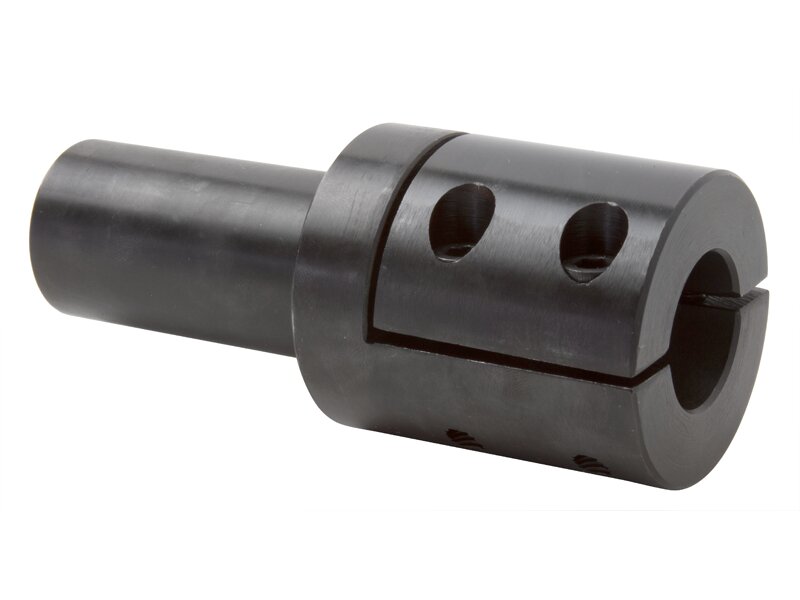
Post-Processing Risks & Failure Analysis
Precision machining is only half the battle. For an engineer, the “lifecycle” of an ASTM A108 component is defined by how it handles heat, chemistry, and environmental stress. Failure to account for the metallurgical behavior of these grades during post-processing is a leading cause of field recalls.
The “Silent Killer”: Hydrogen Embrittlement
This is a critical risk for medium-carbon grades like 1045 or 1144, especially when they are hardened above 35 HRC.
- The Mechanism: During acid pickling or electroplating (Zinc, Chrome, etc.), atomic hydrogen can migrate into the steel’s grain boundaries. Under load, this causes the part to shatter without warning—often at stresses far below its yield strength.
- Engineering Mandate: Always specify a Hydrogen Bake-Out cycle (190°Cto210°C for 4–24 hours) to be performed within 3 hours of the plating process.
Surface Hardening: Carburizing vs. Induction
Selecting the right A108 grade depends heavily on your required hardness depth and geometry.
- Carburizing (1018/12L14): Ideal for complex geometries (gears, small bushings). It adds carbon to the surface, creating a hard “case” (up to 60 HRC) while maintaining a ductile core.
- Warning: Avoid carburizing 12L14 if the part is safety-critical; the lead inclusions can lead to surface pitting during the quench.
- Induction Hardening (1045/1144): Best for shafts and axles. It is localized and fast.
- The Risk: Watch your Transition Zones. The area where the hardened surface ends and the soft core begins is a massive stress riser. Ensure your design includes a generous radius at these points to prevent fatigue cracking.
Corrosion Protection & The “Tolerance Stack-up”
ASTM A108 has zero inherent corrosion resistance. In 2026, standard “rust-preventative oil” is rarely enough for global shipping.
- Electroless Nickel (EN): The gold standard for precision. It deposits with perfect uniformity, even in blind holes. Use this for A108 parts with 0.005 mm tolerances.
- The Coating Rule of Thumb: If you specify a 25 micron (0.001″) Zinc plating, your shaft diameter increases by 50 microns (0.002″).
- Pro-Tip: Always machine the “pre-plate” dimension. If your final fit is a press-fit, the thickness of the coating is your interference.
Why A108 Parts Fail: Lessons from the Field
| Failure Mode | Common Cause | Engineering Correction |
|---|---|---|
| Weld Cracking | Welding 12L14 or 1215. | Hard Stop: Switch to 1018 or 1020 for all welded components. |
| Snap Failure | 1144 in high-impact applications. | 1144 is "Stressproof" but lacks impact toughness. Switch to 4140 L/H (Leaded/Hardened) for shock loads. |
| Shaft Fatigue | Sharp machined corners on cold-drawn skin. | Increase fillet radii. The cold-drawn skin is already under tensile stress; sharp corners act as "force multipliers" for cracks. |
Sustainability & Compliance Audit
As you finalize your material choice, remember that ASTM A108 is highly recyclable, contributing to a lower carbon footprint in “Green” manufacturing audits. However, the use of 12L14 (Leaded) is increasingly scrutinized.
- The Pivot: If your project has a 10-year lifecycle, start transitioning your 12L14 high-volume parts to 1215. The small sacrifice in SFM is worth the long-term regulatory security.
Conclusion
ASTM A108 remains the “gold standard” because it balances the three pillars of modern manufacturing: Precision, Speed, and Cost. Whether you are in the Rapid Prototyping phase—where you need a material that behaves predictably—or in Mass Manufacturing—where every second counts—ASTM A108 provides the technical foundation you need.
By mastering the nuances of grade selection, managing machining risks, and applying the correct surface treatments, you transform a standard steel bar into a high-performance engineering asset.
Navigating the nuances of material science and precision CNC machining is what we do every day. Whether you are transitioning a complex rapid prototype into a mass-manufacturing run or need to solve a recurring stability issue with your current steel components, our team of engineers is ready to assist.
Ready to realize your project with precision-grade ASTM A108? Upload your CAD files and let our engineers review your material specifications for manufacturability.
Hey, I'm Kevin Lee

For the past 10 years, I’ve been immersed in various forms of sheet metal fabrication, sharing cool insights here from my experiences across diverse workshops.
Get in touch
Kevin Lee
I have over ten years of professional experience in sheet metal fabrication, specializing in laser cutting, bending, welding, and surface treatment techniques. As the Technical Director at Shengen, I am committed to solving complex manufacturing challenges and driving innovation and quality in each project.