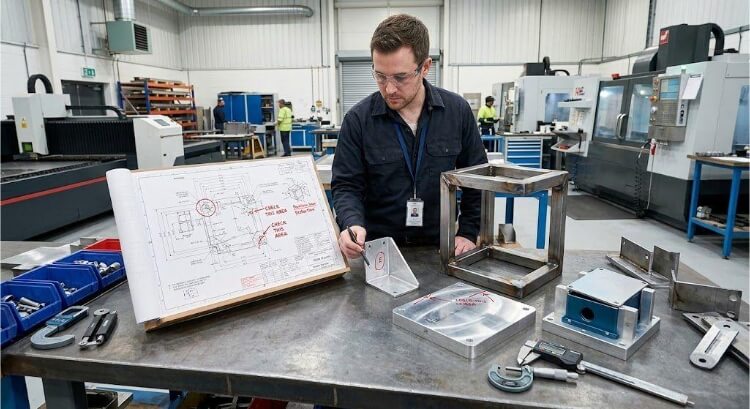
Welding cast aluminum requires specific metallurgical controls. Unlike wrought or extruded alloys, casting processes introduce inherent porosity, trapped hydrocarbons, and varied thermal histories.
This guide outlines the material characteristics of cast aluminum and provides standard procedures for evaluating and executing repairs. It aligns with industry practices such as AWS D1.2 (Structural Welding Code – Aluminum) to ensure reliable outcomes.

Material Characteristics and Cast Aluminum Welding Challenges
Understanding the metallurgical baseline is the first step in planning a repair. The composition and manufacturing history of a casting directly dictate its behavior under a welding arc.
The Aluminum Oxide Barrier
Like all aluminum alloys, cast parts develop a surface oxide layer. Due to the rough, porous surface of a typical casting, this layer is often deeply embedded.
Aluminum oxide melts at approximately 3,700°F (2,037°C), while the base aluminum melts near 1,200°F (650°C). If this barrier is not mechanically removed and electrically broken via AC TIG, welding cast aluminum becomes impossible as the filler metal will not fuse with the substrate.
Casting Porosity and Trapped Gases
Molten aluminum absorbs hydrogen gas during foundry processes, such as sand casting or die casting. As the metal solidifies, the gas becomes trapped, forming microscopic internal voids.
During welding, the arc’s heat causes this trapped gas to expand and escape through the weld pool. This outgassing is a primary cause of weld porosity and requires specific puddle control and preheating to manage.
Hydrocarbon Contamination
Cast components operating in fluid environments—such as A356 transmission housings or industrial oil pans—absorb coolants, oils, and greases over time.
When heated by the welding arc, these trapped fluids vaporize rapidly, contaminating the weld puddle. This causes severe porosity and prevents proper root fusion unless a thorough mechanical and chemical cleaning cycle is applied.
Heat-Treated Strength Loss
Many structural castings undergo T6 heat treatment to achieve specific yield strengths. The high heat input required for GTAW (TIG) welding alters this temper in the Heat-Affected Zone (HAZ).
In many cases, tensile strength in the HAZ can drop by 40% to 50%, returning the material to an annealed state. Unless full post-weld heat treatment (PWHT) is applied, the repaired area will not retain its original load-bearing capacity.
Evaluating Repair vs. Replacement: ROI and Liability
The decision to repair a cast aluminum part must factor in the component’s function, structural requirements, and total repair costs. A successful weld does not automatically equate to a viable engineering repair.
Cosmetic Defect Remediation
Defects in non-bearing areas, such as stripped threads on a sensor housing or damaged mounting tabs for lightweight accessories, are usually suitable for welding.
In these applications, the localized heat input is low. The overall structural integrity of the main component remains unaffected, making it a low-risk repair.
Structural and Sealing Repairs
Welding works well for thick-walled enclosures, like an industrial fluid pan or a gearbox casing, where the primary goal is restoring a liquid-tight seal rather than bearing severe dynamic tension.
Cracks in these areas can typically be V-grooved, cleaned, and filled completely. This approach restores functional use and effectively prevents fluid leaks.
High-Risk Components
Components subjected to cyclical fatigue or heavy dynamic loads, such as automotive steering knuckles or suspension A-arms, present significant liability if welded.
The localized softening in the HAZ creates stress concentrators in the material. These weakened zones may cause the part to fail unpredictably under normal operating conditions.
The Cost Analysis for Replacement
A structural repair compliant with standard engineering practices requires extensive preparation, controlled pre-heating, and often non-destructive testing (NDT), such as dye penetrant testing (PT) or ultrasonic testing (UT), to verify internal integrity.
If the combined cost of facility downtime, specialized welding labor, and NDT exceeds the price of a replacement part, scrapping the casting is the most cost-effective decision.
Weld Prep That Matters When Welding Cast Aluminum
Proper preparation dictates the success of a cast aluminum repair long before the arc is struck. In cast aluminum repair, 90% of structural failures and rework costs originate in the preparation phase. Skipping mechanical excavation guarantees a failed NDT inspection.
Carbide Burr Cleaning
Standard grinding wheels smear aluminum and embed abrasive particles directly into the porous surface. This severely compromises weld fusion.
Always use a dedicated Aluma-Cut or single-cut carbide burr to mechanically shear away the oxidized layer. Standard burrs will instantly clog with aluminum chips. Continue cutting until you reach bright, uncontaminated base metal.
Crack Opening
Surface-welding over a crack on a stressed component, like a transmission housing, guarantees premature failure.
Use a carbide burr to excavate the entire length of the defect, creating a U-groove or V-groove that allows for 100% root penetration. It is also standard engineering practice to stop-drill the extreme ends of the crack to prevent it from propagating under thermal stress.
Contamination Removal
After mechanical cutting, wipe the joint thoroughly with a high-purity solvent like acetone or an aerospace-grade aluminum degreaser to remove cutting fluids and residual oils.
Never use chlorinated brake cleaners on parts being prepared for welding. The intense UV light emitted by the welding arc reacts with chlorinated solvents to produce phosgene gas, which is highly toxic and poses a severe safety hazard.
Preheat Control
Preheating a thick casting, such as a cylinder head, to a controlled range of 200°F to 400°F (93°C – 204°C) serves two critical engineering functions.
First, the sustained heat drives out residual moisture and solvents trapped deep within the casting pores. Second, it reduces the thermal shock gradient between the weld zone and the surrounding cold metal, significantly lowering the risk of post-weld cracking.
Fixturing and Access
Applying intense, localized heat to a complex casting inherently causes thermal expansion and distortion.
Secure the component to a rigid, precision-machined welding table using strategic clamping to control warpage. Before striking the arc, perform a dry run with the TIG torch to ensure you have clear access to the entire joint, maintaining a continuous shielding gas envelope.

AC TIG Repair Setup
Gas Tungsten Arc Welding (GTAW) using Alternating Current (AC) is the strict industry standard to successfully weld cast aluminum. Proper machine calibration allows the operator to control the balance between surface cleaning and base metal penetration.
Tungsten Electrode Selection
For modern inverter machines with adjustable AC frequency, 2% Lanthanated Tungsten is the engineering standard.
It maintains a sharp, focused point under high AC frequencies. This provides a highly directional arc, unlike traditional pure tungsten (green tip), which quickly balls up and causes arc wandering during the AC cycle.
AC Balance
AC balance dictates the exact ratio of cleaning action to penetration. For moderately clean castings, a baseline setting of 65% to 70% Electrode Negative (EN) works well.
If the weld puddle appears cloudy or black soot forms around the bead, the material contains heavy impurities. In this scenario, lower the EN percentage (e.g., to 60%) to increase the Electrode Positive (EP) cleaning action and break up the contamination.
AC Frequency
Setting the AC frequency between 100Hz and 150Hz tightly focuses the arc cone.
This allows for precise heat placement, increases penetration on thick sections, and minimizes the width of the Heat-Affected Zone (HAZ).
Heat Input
Cast aluminum acts as a massive thermal sink, rapidly pulling heat away from the weld zone. A standard rule of thumb requires roughly 1 amp per 0.001 inches of material thickness just to initiate the puddle.
Use a foot pedal to quickly spike the amperage and establish the weld pool. As the surrounding casting inevitably heats up and absorbs thermal energy, smoothly taper off the current to prevent blowing a hole through the material.
Gas Coverage
100% Argon is the standard shielding gas for most cast aluminum repairs, typically set between 15 and 20 CFH.
For extremely thick industrial castings where standard Argon lacks the required thermal transfer, blending 25% to 50% Helium is recommended. Helium increases the arc voltage, producing a hotter, more fluid puddle that penetrates deeper into heavy sections.
Filler Metal Choice
Selecting the correct filler metal is critical for matching the metallurgical properties of the casting and preventing hot cracking during the cooling phase.
ER4043
ER4043 contains approximately 5% silicon and is the most common filler alloy for repairing 3xx series cast aluminum (such as A356).
The added silicon lowers the melting point and increases puddle fluidity. This combination significantly reduces the material’s sensitivity to hot cracking as it cools and solidifies.
ER4047
ER4047 contains roughly 12% silicon, offering an even lower melting point and a highly fluid, almost watery weld pool. This filler minimizes shrinkage stress on rigid, heavily constrained castings.
However, this fluidity comes with a mechanical compromise: ER4047 has significantly lower ductility than ER4043. If the repaired component must endure structural deformation or bending in service, an ER4047 weld is more prone to brittle failure.
Filler by Function
Filler selection must also account for post-weld surface finishing requirements.
If the repaired component will undergo decorative anodizing, the high silicon content in ER4043 and ER4047 will turn dark gray or black. In these specific manufacturing cases, a magnesium-based filler like ER5356 is required to achieve an accurate color match, provided the base alloy is compatible.
Sealing and Crack Resistance
For components like oil pans, gearboxes, or water pump housings, achieving a hermetic, liquid-tight seal is the primary engineering objective.
ER4047 is usually the preferred choice for these specific applications. Its superior capillary action allows the molten metal to flow smoothly into the joint, helping to seal micro-porosity and prevent long-term fluid leaks.
Welding Technique on Cast Aluminum Parts
Executing the weld on cast aluminum requires constant adaptation. The operator must manage heat input strictly and respond immediately to impurities bubbling out of the porous substrate.
Sacrificial Passes
For castings heavily saturated with oil, standard surface cleaning is rarely enough. A common shop-floor technique involves running a “sacrificial” or cleaning pass at a low amperage over the joint without adding filler metal.
This low-heat arc acts as a vacuum, boiling deep-seated hydrocarbons and impurities up to the surface. Once the arc is extinguished, the operator uses a carbide burr to grind away this contaminated layer before executing the actual structural weld.
Short Weld Runs
Pouring continuous heat into a casting causes massive thermal expansion and unpredictable outgassing. To manage this, limit your weld passes to short segments, typically 1 to 2 inches (25mm to 50mm) in length.
After completing a short run, allow the localized area to dissipate heat. This prevents the weld puddle from overheating, becoming too fluid, and dropping through the root of the joint.
Skip Welding
To further control thermal distortion, never weld a long crack continuously from one end to the other. Instead, use a skip-welding technique to distribute the thermal load across the entire component.
Weld a short section, stop, and move to the opposite side of the repair zone to place the next bead. This balances the shrinkage stresses as the puddle solidifies, significantly reducing the risk of warping the machined mating surfaces.
How to Check the Repair?
A repair is only as reliable as the testing used to verify it. Relying solely on visual appearance is a dangerous practice in industrial maintenance.
Dye Penetrant Testing
Dye penetrant testing (PT) is the industry standard for locating surface-breaking micro-cracks that are completely invisible to the naked eye. A high-visibility liquid dye is applied to the weld zone, allowed to seep into any microscopic voids, and then drawn out by a developer.
For structural or pressure-retaining components, the industry acceptance criteria is typically zero tolerance for surface-breaking cracks. Any indication requires immediate excavation and re-welding.
Fit and Alignment Checks
Welding heat inevitably causes some degree of distortion. Before a repaired casting is put back into service, all machined mating surfaces must be verified using precision straightedges or a Coordinate Measuring Machine (CMM).
In high-precision manufacturing, welding is often only the first step; post-weld CNC machining is frequently required to restore critical assembly precision. Design for repair should include an adequate machining allowance to compensate for the thermal distortion of flange surfaces.
Internal Defect Checks
For critical load-bearing components, confirming the internal soundness of the weld is required. Surface testing cannot detect lack of root fusion or deep internal voids.
Ultrasonic Testing (UT) or Radiographic Testing (X-ray) provides a clear picture of the internal weld structure. If the cost of UT or X-ray exceeds the component’s value, it often reinforces the decision to replace rather than repair.

What Changes After Welding?
Understanding the mechanical limitations of a welded casting is critical for safety and liability. The physical properties of the repaired zone are rarely identical to the original manufactured part.
HAZ Softening
As established earlier, welding destroys the artificial aging (T6 temper) of heat-treated aluminum castings. The material in the Heat-Affected Zone (HAZ) softens significantly, often losing up to 50% of its original yield strength.
While lab-grade tensile testing is rarely available on the shop floor, technicians can use portable hardness testing (such as Webster or Brinell) to quickly verify the degree of softening. This provides a quantifiable metric to determine if the material properties still meet the application requirements.
Post-Weld Heat Treatment
The only way to fully restore the mechanical properties of a heat-treated casting is through Post-Weld Heat Treatment (PWHT). This requires placing the entire component into an oven to undergo solution heat treating, quenching, and artificial aging.
Due to the high cost, risk of part distortion, and extended lead times, PWHT is usually reserved for high-value aerospace or specialized industrial components where strength-to-weight ratios are critical.
Inspection Does Not Restore Strength
A common misconception in manufacturing is that a part passing NDT inspection is “as good as new.”
Passing an X-ray or PT test only proves the weld is free of physical defects like cracks or pores. It does absolutely nothing to verify or restore the mechanical yield strength lost to thermal degradation during the welding process.
Common Mistakes in Cast Aluminum Welding
Avoiding these common shop-floor errors separates professional engineering repairs from amateur attempts that lead to field failures.
Too Much Heat Too Early
Stomping the TIG pedal to maximum amperage on a cold casting causes extreme thermal shock. This forces rapid expansion in a localized area, frequently causing the surrounding brittle cast metal to crack. Proper preheating and a controlled ramp-up of amperage are required to manage the thermal gradient safely.
Releasing Parts by Appearance Alone
A weld bead that looks bright and smooth—often referred to in the shop as a “stack of dimes”—can still be structurally compromised. A visually perfect weld can hide severe lack of root fusion or a dangerously weakened HAZ.
A “pretty” weld that fails in the field costs exponentially more in warranty claims and equipment downtime than doing the job correctly the first time. Releasing critical components without appropriate NDT or dimensional fit checks invites catastrophic failure.
Conclusion
Welding cast aluminum is an exercise in strict metallurgical control, not just physical welding skill. From managing the stubborn aluminum oxide layer to neutralizing trapped hydrocarbons and mitigating thermal degradation, every step requires a calculated, engineering-led approach.
If you have a cast aluminum part that needs repair, send us your drawing, photos of the damaged area, and the part’s service conditions. Our engineering team can review whether the part is worth repairing, identify the main welding risks, and suggest a practical repair plan based on function, cost, and inspection needs.
Hey, I'm Kevin Lee

For the past 10 years, I’ve been immersed in various forms of sheet metal fabrication, sharing cool insights here from my experiences across diverse workshops.
Get in touch
Kevin Lee
I have over ten years of professional experience in sheet metal fabrication, specializing in laser cutting, bending, welding, and surface treatment techniques. As the Technical Director at Shengen, I am committed to solving complex manufacturing challenges and driving innovation and quality in each project.
Related Resource
Fingerprint Resistant Stainless Steel: How It Works,and How to Choose