Veel assemblagelijnen hebben tegenwoordig te maken met dezelfde problemen. Technici zien ongelijkmatige bevestigingskwaliteit. Ze zien ook snelle slijtage van gereedschap. Pneumatische en hydraulische systemen hebben vaak veel onderhoud nodig. Deze problemen verminderen de betrouwbaarheid van het product. Ze worden ernstiger als teams werken met dunne, lichte of gecoate materialen.
Om deze problemen aan te pakken, gebruiken veel fabrikanten nu servopersen. Deze machines werken op elektromotoren. Ze zijn niet afhankelijk van olie of perslucht. Het systeem geeft nauwkeurige controle over kracht, positie en snelheid in elke cyclus. Deze mate van controle helpt bij het creëren van een stabiele verbindingssterkte. Het verkort ook de cyclustijd. Tegelijkertijd kan het systeem procesgegevens registreren voor het bijhouden van de kwaliteit.
Tegenwoordig worden servopersen veel gebruikt in verschillende industrieën. Deze industrieën zijn onder andere de autoproductie, de assemblage van EV-batterijen, de ruimtevaart en de productie van elektronica. Op deze gebieden is een consistente verbindingskwaliteit van groot belang. Procesgegevens en traceerbaarheid spelen ook een belangrijke rol bij het voldoen aan veiligheids- en nalevingsvereisten.

Wat zijn klink- en sluitbewerkingen?
Klinken en clinchen zijn twee belangrijke bevestigingsmethoden die vorm geven aan moderne metalen assemblages. Als je begrijpt hoe elk proces werkt, begrijp je waarom servobesturing zo'n enorm verschil maakt in consistentie en kwaliteit.
Klinken: Permanente verbindingen met hoge sterkte maken
Klinkend is een mechanisch bevestigingsproces. Een arbeider plaatst een klinknagel door voorgeboorde gaten in de onderdelen. De pers vervormt vervolgens de klinknagel om de onderdelen aan elkaar vast te zetten. Deze methode creëert een permanente verbinding. Veel fabrikanten gebruiken deze methode als ze een hoge vermoeiingssterkte nodig hebben. Het werkt ook goed bij het verbinden van verschillende materialen, zoals staal en aluminium of titaniumlegeringen.
In de precisie-industrie, zoals de lucht- en ruimtevaart, is krachtregeling van cruciaal belang. De pers moet kracht uitoefenen binnen een strak bereik. Te veel kracht kan scheuren of oppervlakteschade veroorzaken. Te weinig kracht kan de verbinding verzwakken. Servogestuurde persen houden de vervormingskracht binnen ongeveer ±1% van de doelwaarde. Deze controle helpt om uniforme klinknagelkoppen te produceren.
Clinchen: verbinden zonder extra bevestigingsmiddelen
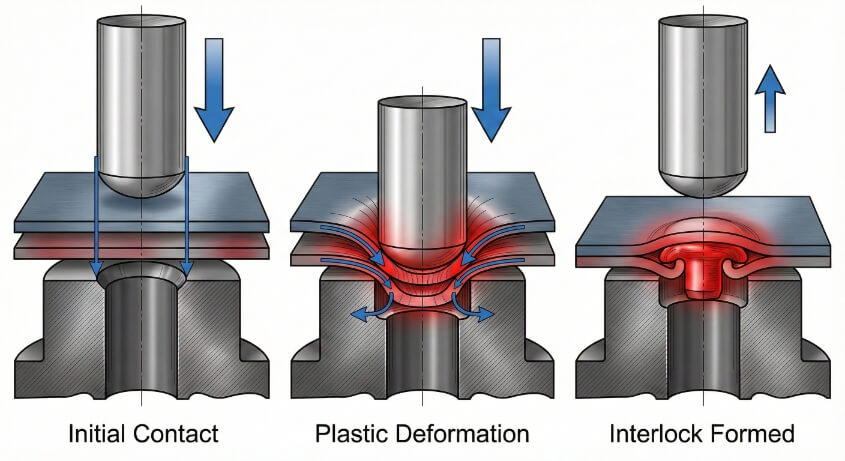
Clinchen wordt ook wel persverbindingen genoemd. Het verbindt plaatmetaal door een plaatselijke sluiting te vormen tussen de lagen. Het proces maakt gebruik van gecontroleerde vervorming van het materiaal. Er zijn geen klinknagels, lassen of lijm nodig. Veel fabrikanten gebruiken clinchen voor aluminium en gecoat staal. Het proces veroorzaakt geen warmte. Het voorkomt ook dampen en oppervlaktevervuiling.
Een servopers geeft ingenieurs een nauwkeurige bewegingscontrole. Ingenieurs kunnen de bewegingscurve voor elk materiaalpaar aanpassen. Een korte stilstand dicht bij de bodem, in het midden, helpt om een volledige interlock te vormen. Deze stap beschermt ook de oppervlaktecoatings tegen beschadiging. In veel gevallen bereiken geklonken verbindingen ongeveer 80-90% van de sterkte van puntlassen. Tegelijkertijd veroorzaakt het proces geen spatten en hoeft het niet nagezuiverd te worden.
Beperkingen van traditionele perssystemen
Oudere pneumatische, hydraulische en mechanische persen hebben moeite om te voldoen aan de hedendaagse normen voor nauwkeurigheid en efficiëntie. Door hun zwakke punten te onderzoeken, wordt duidelijk waarom fabrikanten overstappen op servogestuurde systemen.
| Type pers | Krachtregeling | Onderhoud | Energieverbruik | Typische nauwkeurigheid | Gemeenschappelijk probleem |
|---|---|---|---|---|---|
| Pneumatisch | Slecht (samendrukbaarheid van lucht) | Laag tot gemiddeld | Matig | ±10% | Inconsistente kracht |
| Hydraulisch | Hoog maar moeilijk te stabiliseren | Hoog (lekken, vloeistofveroudering) | Hoog | ±5% | Olievervuiling, lawaai |
| Mechanisch | Vaste curve, niet instelbaar | Medium | Medium | ±5-8% | Geen adaptieve besturing |
| Servo (elektrisch) | Uitstekend (gesloten lus) | Laag | Laag | ±1% | - |
Pneumatische persen: Inconsistente krachtafgifte
Pneumatische persen gebruiken perslucht om kracht te genereren. De luchtdruk verandert met de temperatuur en de toevoeromstandigheden. Zelfs kleine veranderingen kunnen krachtvariaties tot ±10% veroorzaken. Deze variatie is te groot voor precisieassemblagewerk.
Hierdoor wordt de kwaliteit van de gewrichten instabiel. Sommige verbindingen kunnen te los zijn, terwijl andere te hard worden aangedrukt. Verkeerde uitlijning en nabewerking komen vaker voor. Na verloop van tijd verminderen luchtlekken, versleten kleppen en vervuiling de betrouwbaarheid van het systeem nog verder.
Hydraulische persen: Hoog energieverbruik en zwaar onderhoud
Hydraulische persen kunnen grote kracht genereren. Ze zijn afhankelijk van pompen die vaak continu werken. Zelfs als de pers niet actief is, verbruikt het systeem nog energie om de druk op peil te houden. In veel gevallen kan het stroomverbruik tot 70% hoger zijn dan dat van een op servo gebaseerd systeem.
Hydraulische olie brengt ook risico's met zich mee. Door olielekkage kunnen onderdelen en werkgebieden vervuild raken. Temperatuurveranderingen beïnvloeden de viscositeit van de olie. Deze verandering verandert de perskracht en vermindert de procesconsistentie tijdens de productie.
Mechanische persen: Hoge snelheid maar beperkte controle
Mechanische persen gebruiken een vaste krukbeweging. Het bewegingsprofiel kan niet veranderen tijdens de slag. Deze persen werken goed voor hogesnelheidsvormen. Ze missen echter de flexibiliteit die nodig is voor gevoelige assemblagetaken.
De vaste beweging maakt het moeilijk om de kracht op dunne materialen of gelaagde verbindingen te controleren. Een grote impact aan het einde van de slag kan de slijtage van het gereedschap vergroten. Het kan ook leiden tot variaties in onderdelen na verloop van tijd.
Hoe Servopers technologie het spel verandert?
Servotechnologie vervangt lucht en olie door digitale precisie. Laten we eens onderzoeken hoe closed-loop besturing en programmeerbare beweging zorgen voor stabiele kwaliteit, schonere werking en verbeterde productie-efficiëntie.
Nauwkeurige regeling van kracht, positie en snelheid
Servopersen maken gebruik van een gesloten regelkring. Het systeem combineert motorencoders voor positiecontrole en loadcellen voor krachtmeting. De besturing vergelijkt real-time waarden met de geprogrammeerde instellingen. Hij past de uitvoer om de paar milliseconden aan om het proces stabiel te houden.
Deze besturing maakt een zeer hoge nauwkeurigheid mogelijk. Servopersen kunnen een positienauwkeurigheid bereiken van ±0,01 mm. Ze kunnen ook een krachtherhaalbaarheid van ±1% aanhouden. Pneumatische persen vertonen onder dezelfde omstandigheden vaak krachtvariaties tot ±10%.
Voor ingenieurs betekent dit dat de pers complexe bewegingsprofielen kan uitvoeren:
- Snelle aanpak om stilstand te verminderen.
- Langzaam vormende fase dicht bij de bodem, in het midden, om overcompressie te voorkomen.
- Periode van inactiviteit om materiaal te laten vloeien of stollen (bij gebruik van warmte-ondersteunde verbindingen).
- Voorzichtig terugtrekken om terugvering of beweging van onderdelen te minimaliseren.
Dankzij deze flexibiliteit kan een enkele servopers meerdere verbindingstaken aan. Licht clinchen en dieptreinken kunnen op dezelfde machine worden uitgevoerd. Er is geen mechanische omschakeling nodig.
Real-time bewaking en gegevensregistratie
Elke servoperslag creëert een digitale record. Dit record is een kracht-verplaatsingscurve. De curve illustreert het gedrag van de verbinding tijdens het hele persproces. Technici gebruiken deze curve als kwaliteitsreferentie. Wanneer zich problemen voordoen, zoals een verkeerde uitlijning, een ontbrekende klinknagel of veranderingen in de materiaaldikte, detecteert het systeem deze onmiddellijk.
Operators kunnen tolerantiegrenzen instellen voor het proces. Deze banden definiëren de boven- en ondergrenzen van de kracht bij verschillende slagfasen. Als de curve buiten het toegestane bereik komt, reageert de pers automatisch. Hij kan de cyclus stoppen of het onderdeel markeren voor inspectie. Deze vroegtijdige controle voorkomt dat defecte verbindingen doorgaan naar het volgende proces. Het vermindert ook nabewerking en verlaagt het garantierisico.
Het systeem registreert ook procesgegevens voor elke cyclus. Deze gegevens ondersteunen volledige traceerbaarheid en helpen te voldoen aan normen zoals IATF 16949 en AS9100. De pers kan details opslaan zoals cyclustijd, kracht, positie, operator-ID en onderdeel-ID. De gegevens kunnen op de machine blijven of worden overgebracht naar een MES-systeem van de fabriek.

Energie-efficiëntie en schone werking
Servosystemen gebruiken alleen energie als de pers beweegt. Hydraulische persen laten pompen continu draaien. Wanneer een servopers stilstaat, is het energieverbruik bijna nul. Tijdens het vertragen kan de motor energie terugwinnen en terugsturen naar het elektriciteitssysteem. Dit verbetert de algehele efficiëntie.
In echte productielijnen levert dit ontwerp vaak een energiebesparing op van 30-70%. De exacte besparingen hangen af van de cyclussnelheid en de vereiste kracht. Servopersen gebruiken ook geen hydraulische olie. Hierdoor is er geen risico op lekken, verontreiniging van onderdelen of oliegeur. Het elimineert ook krachtveranderingen die worden veroorzaakt door temperatuurgerelateerde veranderingen in de viscositeit van de olie.
De elektrische aandrijving werkt veel stiller. De geluidsniveaus zijn vaak 10-15 dB lager dan die van traditionele persen. Dit voordeel is belangrijk in cleanroomomgevingen. Het verbetert ook het comfort en de veiligheid voor operators op de werkvloer.
Flexibele programmering voor verschillende gewrichtstypen
Elk product heeft andere verbindingsbehoeften. Plaatdikte kan veranderen. Materiaalhardheid en oppervlaktecoatings variëren ook. De onderdeelgeometrie maakt het nog complexer. Een servopers verwerkt deze veranderingen via softwarebesturing.
Ingenieurs kunnen vooraf meerdere persprogramma's maken. Elk programma definieert snelheid, kracht, verblijftijd en terugtrekafstand. Operators kunnen onmiddellijk tussen programma's schakelen. Er is geen mechanische aanpassing nodig. Deze flexibiliteit is geschikt voor producties met een hoge mix en lage volumes. Het werkt ook goed in geautomatiseerde lijnen met verschillende soorten onderdelen.
Meer geavanceerde servopersen ondersteunen directe systeemintegratie. Ze kunnen verbinding maken met robots en besturingssystemen via standaard industriële netwerken. Wanneer een robot een nieuw onderdeel laadt, kan de pers automatisch het juiste programma selecteren. Dit vermindert instelfouten. Het zorgt ook voor consistente resultaten bij verschillende producten.
Toepassingen in verschillende sectoren
Servoperssystemen zijn onmisbaar geworden in industrieën waar precisie, herhaalbaarheid en netheid essentieel zijn. Laten we eens onderzoeken hoe deze voordelen zich vertalen in praktische resultaten.
Automobiel- en EV-assemblage
In de autoproductie heeft de kwaliteit van de bevestiging een grote invloed op de veiligheid en betrouwbaarheid op lange termijn. Veel traditionele pneumatische en hydraulische persen hebben moeite met aluminium panelen, gemengde materialen en grote volumes die een strikte kwaliteitscontrole vereisen.
Servogestuurde persen lossen deze problemen op. Ze houden de krachtregeling binnen ±1% bij elke cyclus. Deze stabiliteit zorgt voor een uniforme verbindingssterkte, zelfs bij honderdduizenden onderdelen. Bij de assemblage van EV-batterijen helpt servogestuurd clinchen paneelvervorming voorkomen. Het ondersteunt ook het nauwkeurig afdichten van gevoelige batterijmodules.
Servopersen integreren ook goed in geautomatiseerde productielijnen. Robots laden de onderdelen en de pers controleert elke verbinding aan de hand van de kracht-verplaatsingscurve. Wanneer een verbinding buiten de ingestelde limieten valt, geeft het systeem dit onmiddellijk aan.
Ruimtevaart en elektronica
Onderdelen voor de ruimtevaart vereisen zeer nauwe toleranties en schone assemblageomstandigheden. Tijdens het klinken of clinchen van aluminium, titanium of composietmaterialen is krachtbeheersing cruciaal. Zelfs een kleine toename in kracht kan microscheurtjes of laagscheiding veroorzaken.
Servopersen verminderen dit risico door programmeerbare beweging en real-time feedback. Ingenieurs kunnen het laatste vervormingsstadium vertragen met ongeveer 30-50% in de buurt van het onderste dode punt. Deze langzamere beweging helpt het materiaal gelijkmatig te vervormen. Het beperkt ook de spanning op dunne of gelaagde structuren.
Bij elektronica assemblage is reinheid net zo belangrijk. Printplaten en gecoate onderdelen moeten vrij blijven van olie en vuil. Servopersen werken zonder hydraulische olie en produceren weinig geluid. Hun compacte en schone ontwerp ondersteunt ISO klasse 8 cleanroomomgevingen.
Integratie van automatisering en robotica
Veel moderne fabrieken gebruiken nu servopersen in geautomatiseerde robotcellen. Deze persen zijn via standaard industriële netwerken verbonden met robots, transportbanden en vision-systemen. Dankzij deze verbinding functioneert alle apparatuur als één gecoördineerd systeem.
In een typische opstelling lokaliseert en positioneert een robot het onderdeel met behulp van een camera. De servopers voert dan de verbindingsbewerking uit met een gecontroleerde beweging. Tegelijkertijd registreert de pers de kracht-verplaatsingscurve. Er wordt gecontroleerd of de curve binnen de gedefinieerde grenzen blijft. Het systeem stuurt vervolgens het resultaat naar het MES- of SPC-systeem van de fabriek.
Wanneer de pers een abnormale curve detecteert, zoals een te lage piekkracht, reageert de cel onmiddellijk. Hij kan het proces stoppen of het onderdeel markeren voor controle. Deze gesloten-lus verificatie maakt handmatige inspectie overbodig. Het vermindert ook uitval en ondersteunt voortdurende procesverbetering door gegevensanalyse.

Proceskwaliteit en gereedschapsoverwegingen
Zelfs het beste servosysteem is afhankelijk van deugdelijk gereedschap en procesbesturing. Hier onderzoeken we hoe technici perfecte verbindingen garanderen door intelligent ontwerp en gegevenscontrole.
Het belang van gereedschapontwerp
Bij klinken en clinchen speelt het ontwerp van het gereedschap een sleutelrol in de kwaliteit van de verbinding. De vorm van de stempel en de matrijs bepalen hoe het materiaal vloeit en vastklikt. Zelfs kleine veranderingen kunnen belangrijk zijn. Een verandering van 0,1 mm in de diepte van de matrijsholte of een verandering van 2° in de ponshoek kan een merkbare invloed hebben op de sterkte van de verbinding.
Goed ontworpen gereedschap zorgt voor een stabiele materiaalstroom. Dit helpt scheuren of zwakke verbindingen te voorkomen. Veel ingenieurs gebruiken eindige-elementensimulaties om materiaalvervorming van tevoren te bestuderen. Deze simulaties helpen bij het verfijnen van de matrijsgeometrie voordat het gereedschap wordt gemaakt.
Tijdens de productie herhaalt de servopers hetzelfde bewegingsprofiel met hoge nauwkeurigheid. Deze beweging komt bij elke cyclus overeen met het ontwerp van het gereedschap. Het gecontroleerde contact vermindert schokbelastingen. Hierdoor gaat gereedschap vaak 20-30% langer mee dan bij pneumatische of mechanische persen.
Meerlagige en ongelijksoortige materiaalverbindingen
Veel moderne producten maken gebruik van lichtgewicht constructies. Deze ontwerpen combineren vaak verschillende materialen, zoals aluminium met staal of gecoate platen met blank metaal. Elke laag heeft een andere vloeigrens. Hierdoor moet de vervormingskracht tijdens de slag veranderen.
Servopersen kunnen deze uitdaging heel goed aan. Ze maken gebruik van adaptieve besturing op basis van real-time feedback. Wanneer de pers weerstand voelt tijdens het vormen, past hij het motorkoppel onmiddellijk aan. Deze besturing houdt de materiaalvervorming binnen het gewenste bereik.
Met deze aanpak vormt de voeg zich grondig en consistent. Oppervlaktecoatings blijven intact. Zachtere lagen worden niet overmatig samengedrukt. Het resultaat is een sterke en betrouwbare verbinding over gemengde materiaalstapels.
Kracht-verplaatsingskrommen controleren
De kracht-verplaatsingscurve is een belangrijk diagnostisch hulpmiddel bij servo-verbinden. Hij laat zien hoe de kracht toeneemt en afneemt tijdens het vervormingsproces. Elke slag creëert zijn eigen curve, die het gedrag van de verbinding weergeeft.
Zelfs kleine veranderingen in de curve kunnen duiden op problemen. Deze veranderingen kunnen duiden op vroegtijdige slijtage van gereedschap, een verkeerde uitlijning van onderdelen of variaties in materiaaldikte of hardheid. Door deze krommen in de loop van de tijd te volgen, kunnen technici problemen opsporen voordat ze leiden tot defecten of stilstand.
Bijvoorbeeld:
- A lagere piekkracht kan duiden op overmatige speling of slijtage van het gereedschap.
- A steilere helling duidt op een verandering in de hardheid van het materiaal.
- Een vroeg plateau kan duiden op overlap van een dubbel vel of onjuiste onderdeeloriëntatie.
Door de bovenste en onderste curveomhullende in te stellen, kunnen technici deze problemen in realtime detecteren. Sommige systemen classificeren krommingen zelfs automatisch met behulp van AI-algoritmes, waardoor defecten aan gereedschap worden voorspeld voordat ze optreden.
De juiste servopers kiezen voor klinken of clinchen
Bij het kiezen van de juiste servopers moeten tonnage, nauwkeurigheid en integratiemogelijkheden tegen elkaar worden afgewogen. Hieronder staan de belangrijkste factoren die je moet evalueren.
Belangrijkste technische specificaties
| Parameter | Aanbevolen bereik | Waarom het belangrijk is |
|---|---|---|
| Nominale kracht (kN) | 10-100 | Bepaalt de maximale vervormingscapaciteit voor verschillende plaatdiktes en klinknagels. |
| Slaglengte (mm) | 50-200 | Definieert bewegingsflexibiliteit voor zowel korte clinches als diepere klinknagelvorming. |
| Positienauwkeurigheid (mm) | ±0,01 of beter | Zorgt voor een consistente voegdiepte en compenseert diktevariaties. |
| Nauwkeurigheid krachtregeling | ±1% | Voorkomt overpersen en garandeert herhaalbare verbindingssterkte. |
| Snelheidsbereik (mm/s) | 1-300 | Maakt hogesnelheidsnadering met gecontroleerde vervorming bij lage snelheid mogelijk. |
| Gegevensuitvoer / connectiviteit | EtherCAT, PROFINET, OPC UA | Maakt integratie mogelijk met MES, SPC en robotsystemen voor slimme productie. |
Nauwkeurigheid positie en kracht
Bij precisiebevestigingen kunnen kleine fouten grote problemen veroorzaken. Een positiefout van slechts 0,05 mm kan resulteren in een slechte uitzetting van de klinknagel of een ondiepe vergrendelingsdiepte. Deze problemen verzwakken de verbinding en verminderen de betrouwbaarheid.
Daarom moeten technici persen kiezen met encoders met een hoge resolutie, vaak rond 0,001 mm. Digitale krachtopnemers spelen ook een belangrijke rol. Samen zorgen ze ervoor dat elke slag het geplande kracht- en positieprofiel volgt.
Sommige geavanceerde controllers voegen zelfkalibratiefuncties toe. Deze routines passen de basislijnmetingen automatisch aan. Ze verkorten de insteltijd en beperken de invloed van operatorvariaties op de procesnauwkeurigheid.
Bewegingsprofiel en procesflexibiliteit
Een servopers moet programmeerbare bewegingsmodi bieden, waaronder positieregeling, krachtregeling en hybride regeling. Met deze modi kunnen technici het proces aanpassen aan verschillende materialen:
- Krachtmodus voor consistente compressie in aluminium clinching.
- Positiemodus voor een nauwkeurige klinknageldiepte.
- Hybride modus voor het verbinden van meerlagige of gecoate materialen.
Curven met meerdere segmenten maken volledige aanpassing mogelijk - bijvoorbeeld snel starten, langzaam drukken in de buurt van contact, kort stilstaan en zachtjes terugtrekken.
Gegevensbeheer en slimme integratie
In moderne fabrieken zijn procesgegevens net zo belangrijk als het eindproduct. Een servopers die procescurves registreert en exporteert, ondersteunt de kwaliteitscontrole en een stabiele productie. Het helpt teams ook om onderhoud te plannen voordat er problemen optreden.
Via standaard industriële netwerken kan de pers rechtstreeks verbinding maken met MES- of SPC-systemen. Deze verbinding maakt automatische gegevensoverdracht zonder handmatige invoer mogelijk. Ingenieurs kunnen de prestaties in real-time volgen. Ze kunnen ook trends over duizenden cycli bestuderen om de processtabiliteit op lange termijn te verbeteren.
Energie-efficiëntie en onderhoud
Servopersen gebruiken alleen energie wanneer de pers beweegt. Tijdens de vertraging kan het systeem energie terugwinnen in plaats van deze te verspillen als warmte. In de meeste toepassingen resulteert dit in een 30-70% lager energieverbruik in vergelijking met hydraulische persen. Een lager energieverbruik betekent ook lagere bedrijfskosten en minder koolstofuitstoot.
Servopersen gebruiken geen hydraulische olie. Hierdoor is er geen risico op lekken en vloeistofgerelateerd onderhoud. Het werkgebied blijft schoon en de uptime verbetert. Het systeem heeft ook minder bewegende delen en er draait geen pomp op de achtergrond. Daardoor nemen de onderhoudsintervallen vaak toe met 30-40%, waardoor de totale efficiëntie van de apparatuur stabiel blijft.
Conclusie
Servopersen hebben klinken en clinchen veranderd van eenvoudige mechanische stappen in gecontroleerde, gegevensgestuurde processen. Ze bieden nauwkeurige controle over kracht en positie. Ze ondersteunen ook een schone werking, waardoor er geen olie nodig is en er minder overmatig lawaai is.
Deze voordelen leiden tot nauwkeurige bedrijfsresultaten. Het energieverbruik daalt, herbewerking en uitval nemen af. Na verloop van tijd leveren deze voordelen een meetbaar rendement op en ondersteunen ze een stabiele productie van hoge kwaliteit.
Wilt u uw klink- of clinchproces verbeteren met meer innovatieve apparatuur? Ons team helpt fabrikanten om nabewerkingen te verminderen, de levensduur van gereedschappen te verlengen en sneller rendement te behalen door middel van goed afgestemde servopersoplossingen. Neem contact op met onze experts om uw assemblage-uitdagingen te bespreken of een gratis technisch adviesgesprek aan te vragen.
Hey, ik ben Kevin Lee
De afgelopen 10 jaar heb ik me verdiept in verschillende vormen van plaatbewerking en ik deel hier de coole inzichten die ik heb opgedaan in verschillende werkplaatsen.
Neem contact op
Kevin Lee
Ik heb meer dan tien jaar professionele ervaring in plaatbewerking, gespecialiseerd in lasersnijden, buigen, lassen en oppervlaktebehandelingstechnieken. Als technisch directeur bij Shengen zet ik me in om complexe productie-uitdagingen op te lossen en innovatie en kwaliteit in elk project te stimuleren.
Verwante bron
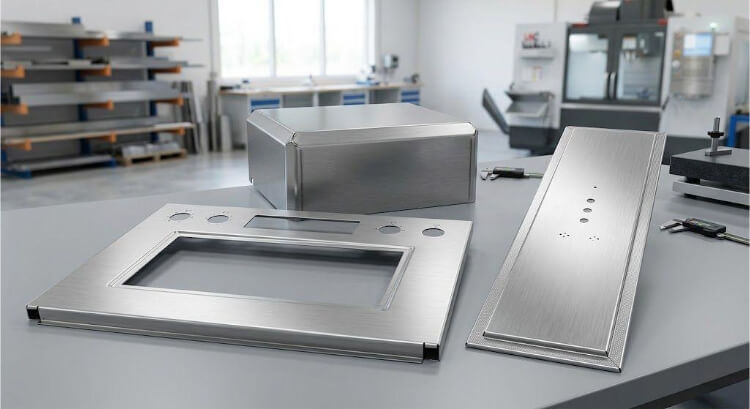
Vingerafdrukbestendig roestvrij staal: hoe het werkt en hoe te kiezen
OEM vs Loonproductie: Hoe het juiste model voor uw project te kiezen
Setupkosten vs eenheidskosten bij de productie van plaatmetaal