The surface finish of a metal part isn’t just about looks — it defines how a product performs, ages, and communicates quality. Whether you choose a mirror polish, a brushed finish, or a matte texture, your choice affects durability, maintenance, and manufacturing costs.
For engineers, designers, and purchasing managers, understanding these finishes is key to selecting the right balance between appearance, performance, and practicality. This guide breaks down how each surface behaves, where it works best, and what factors to consider before production.
Mirror Polish — High Shine and Reflective Perfection
While every finish has its appeal, none catches attention quite like a mirror polish. This process turns metal into a reflective surface that projects precision, cleanliness, and premium value.
What Mirror Polish Means?
A mirror-polished surface is achieved through progressive grinding and fine buffing, gradually refining roughness until the metal reflects light almost perfectly. The process typically uses abrasive grits ranging from 400 to 2000, followed by a polishing compound for the final shine.
In technical terms, a properly executed mirror finish reaches a surface roughness (Ra) below 0.05 µm, about ten times smoother than a standard brushed surface. Such refinement minimizes micro-pores and surface irregularities that can trap contaminants or moisture.
Visual and Functional Characteristics
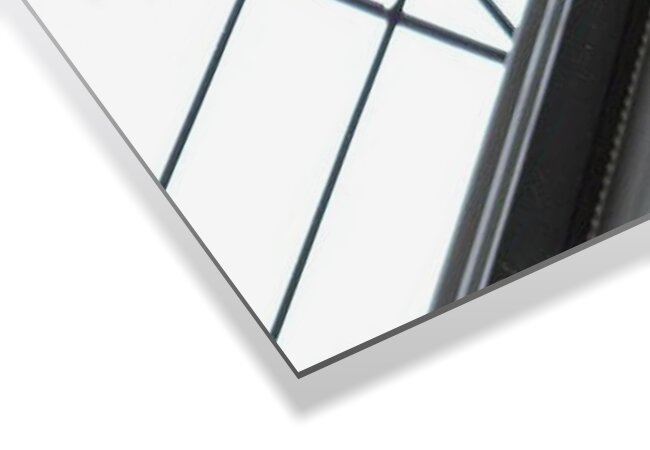
Mirror polish achieves a high-gloss, glass-like surface that reflects surrounding colors, light, and shapes. The result is striking — a clean, almost liquid-metal appearance that instantly elevates perceived quality.
Functionally, the smoothness reduces corrosion risk by sealing the microscopic gaps where oxidation often begins. It also allows for easier disinfection in applications where hygiene matters. However, this flawless look comes with a trade-off — fingerprints, smudges, and even small scratches become highly visible.
That’s why mirror finishes are ideal for low-touch or display areas, rather than components that experience constant handling.
Advantages and Drawbacks
Mirror polish offers visual impact and superior corrosion protection but demands careful upkeep.
利点:
- Luxurious visual impact: Bright, reflective, and elegant appearance.
- Improved corrosion resistance: Sealed surface minimizes oxidation and contamination.
- Hygienic and easy to clean: The smooth surface allows quick wipe-downs or sterilization.
欠点:
- High maintenance: Fingerprints and smudges show easily.
- Scratch sensitivity: Even small marks are visible under light.
- Higher cost and longer processing time: Multi-stage polishing can take up to 50% more labor than brushing.
According to surface-finishing data from stainless steel manufacturers, mirror polishing typically requires 1.5–2 times the processing time as brushing or bead blasting, directly impacting production costs.
一般的な用途
Mirror polish is widely used when appearance outweighs wear resistance or when reflective properties serve a purpose. Common examples include:
- Architectural trims and decorative panels — reflect light to brighten interiors.
- High-end appliances and kitchenware — convey premium quality and cleanliness.
- Luxury automotive and marine parts — highlight precision and craftsmanship.
- Medical and laboratory tools — ensure smooth, easy-to-sterilize surfaces.
デザインのヒント Use mirror finishes only on low-contact or aesthetic surfaces. For parts handled frequently, consider pairing mirror edges with brushed or matte panels to balance visual impact with practicality.
Brushed Finish — Subtle Lines with Functional Durability
In environments where parts are frequently handled or exposed to wear, a brushed finish provides a balanced solution — clean, modern, and resilient. This finish is popular in both industrial and consumer applications because it hides small imperfections while maintaining a professional appearance.
How Brushed Finishing Works?
A brushed finish is produced by sanding or grinding the metal surface with abrasive belts or wire brushes to create fine, linear patterns. This process removes the glossy top layer, leaving a directional grain texture.
Manufacturers typically use abrasives in the 120–320 grit range to achieve a satin or hairline appearance. The resulting surface roughness is generally Ra 0.1–0.4 µm, giving it a tactile yet smooth texture.
The process can be done on stainless steel, aluminum, and other alloys. Because it doesn’t require mirror-level polishing, brushing is faster, more consistent, and cost-effective — especially for large panels or enclosures.
Aesthetic and Performance Traits
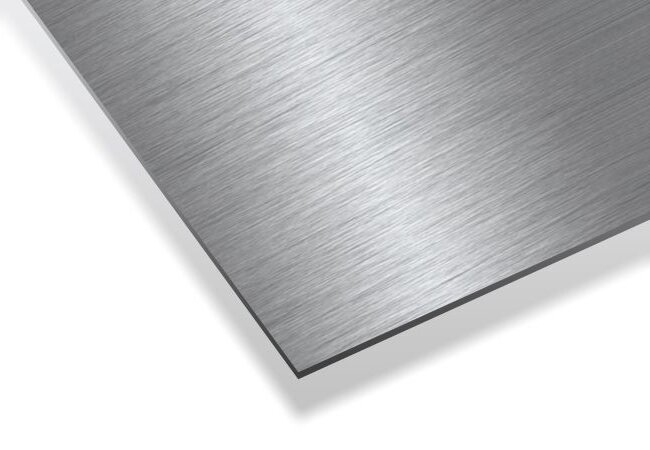
A brushed finish has a soft metallic glow rather than a high-gloss shine. The parallel grain lines diffuse light, giving the surface a sense of depth without being overly reflective.
Functionally, it performs well in demanding environments. The texture naturally hides fingerprints, fine scratches, and handling marks. Even after years of use, brushed surfaces maintain their look with minimal cleaning.
This finish also provides slightly higher friction, making it safer for handrails, handles, or machinery covers that people often touch. The blend of beauty and practicality makes it one of the most commonly specified finishes in modern sheet metal design.
Engineering Insight: A brushed texture can reduce visible wear by up to 40% compared with mirror polish in high-contact environments, based on surface durability studies.
Advantages and Drawbacks
Brushed finishes strike a smart balance between visual appeal, maintenance, and cost.
利点:
- Hides wear and handling marks: Ideal for frequently used parts.
- Reduced glare: Diffused surface reflection improves visibility and comfort.
- Lower maintenance: Dust and smudges are less noticeable.
- Contemporary aesthetic: Matches well with modern architecture and industrial products.
欠点:
- Less reflective: Cannot achieve mirror-level brightness.
- Fine dust accumulation: Grain lines can trap residue if not wiped periodically.
- Not fully sanitary: Slight texture may hold micro-debris, making it unsuitable for sterile applications.
In most industrial or architectural uses, these limitations are minor. The finish’s combination of durability and visual consistency makes it an optimal choice for both prototype and mass production.
一般的な用途
Because of its versatility, the brushed finish appears in nearly every field — from household goods to advanced equipment. Common applications include:
- Kitchen appliances and fixtures: Stainless refrigerators, range hoods, and sinks.
- Elevator interiors and escalator panels: Resistant to touch marks and wear.
- Machine housings and control boxes: Maintain a professional look with minimal upkeep.
- Architectural railings and decorative trim: Offer a modern and elegant surface.
デザインのヒント When designing parts for public or high-contact use, orient the brush lines vertically to make scratches and fingerprints less visible.
Matte Texture — Soft Light and Minimal Reflection
If brushed finishes reduce glare, matte textures nearly eliminate it. They transform metal from reflective to quietly refined — ideal for engineers and designers who value performance, cleanliness, and stability over shine.
How Matte Surfaces Are Created?
あ matte texture is achieved by modifying the metal surface at the microscale to scatter light rather than reflect it. Common methods include:
- Bead Blasting: Fine glass or ceramic beads are propelled onto the surface, creating an even, satin-like dullness.
- Chemical Etching: Controlled acid or alkaline treatments dissolve surface irregularities to create a soft, non-reflective layer.
- Fine Sanding or Abrasive Finishing: High-grit (600–1000) abrasives smooth out roughness while maintaining a flat, low-luster surface.
The resulting surface roughness ranges between Ra 0.3–0.6 µm, depending on process intensity and material type. This microtexture scatters incident light in multiple directions, significantly reducing visible reflections — in some cases by up to 80% compared to mirror-polished surfaces.
Because the texture is uniform and isotropic (no visible grain direction), it also hides small imperfections extremely well.
Appearance and Surface Behavior
Matte surfaces present a consistent, low-sheen look that remains stable across lighting conditions. The absence of reflections helps create a calm, professional aesthetic that’s easy on the eyes in workplaces or bright environments.
From a functional standpoint, matte finishes excel at resisting fingerprints and scratches. Oils and smudges do not contrast strongly against the surface, and any abrasion tends to blend with the surrounding microtexture.
The finish also offers a more tactile, “dry” feel, making it suitable for applications that require grip or minimal slippage. Over time, matte textures retain their look far better than mirror or brushed surfaces, even with repeated cleaning or handling.
Engineering Insight: Studies on light reflectivity show that matte stainless steel surfaces maintain less than 10% specular reflection, making them ideal for environments with strict anti-glare requirements, such as laboratories or control rooms.
Advantages and Drawbacks
Matte finishes provide a combination of aesthetic stability, low maintenance, and functional reliability, especially in heavy-use or outdoor environments.
利点:
- Minimal glare and reflection: Improves visual comfort in high-light conditions.
- High resistance to fingerprints and smudges: Requires infrequent cleaning.
- Uniform and consistent appearance: Conceals scratches and dust effectively.
- Durable and low-maintenance: No polishing or refinishing required.
欠点:
- Subtle appearance: Lacks the visual “spark” of polished metals.
- Surface porosity: Slightly textured surfaces may retain stains if not sealed.
- Limited decorative use: Better suited for industrial or technical products than luxury applications.
一般的な用途
Matte finishes are now standard for functional, professional-grade components that must withstand constant use without frequent maintenance. Typical applications include:
- Medical and laboratory equipment: Reduces glare and supports easy sterilization.
- Industrial machine panels and cabinets: Durable under frequent cleaning and contact.
- Architectural interiors and facades: Achieve a calm, modern aesthetic under bright lighting.
- Consumer electronics and appliances: Anti-glare and anti-fingerprint properties enhance usability.
デザインのヒント For outdoor or high-light areas, pair a matte surface with UV-stable coatings or passivation layers to preserve color tone and reduce long-term fading.
Comparative Analysis: Mirror vs Brushed vs Matte
Every surface finish delivers a different balance of appearance, function, and cost. Understanding how they compare helps ensure that both the design and performance goals are met efficiently.
Visual & Design Appeal
Each finish communicates a distinct design message:
- Mirror Polish: Reflective and luxurious — used when presentation or visual branding matters. Its clarity enhances architectural lighting and creates a high-end, premium impression.
- Brushed Finish: Subtle and professional — the visible grain conveys craftsmanship and reliability. It’s the go-to choice for modern industrial or consumer-facing products.
- Matte Texture: Understated and stable — ideal for environments that prioritize visual comfort, minimal reflection, and long-term uniformity.
For design engineers, this means choosing based on user experience as much as appearance. Reflectivity can either enhance a space (mirror) or reduce eye strain (matte), depending on how and where the product will be used.
Durability & Maintenance
In real-world conditions, the best-looking surface is the one that stays consistent over time.
- Mirror Polish offers the smoothest surface but shows every fingerprint, smudge, or micro-scratch. It requires regular cleaning with non-abrasive agents.
- ブラッシュ仕上げ hides wear well. Its grain masks small abrasions, making it ideal for frequently handled products like enclosures or panels.
- Matte Texture provides the longest visual stability. It resists marks, diffuses scratches, and maintains an even appearance under heavy use.
In laboratory and field testing, matte and brushed surfaces retained over 90% of their original appearance after six months of daily handling, while mirror polish required frequent cleaning to maintain its look.
Cost and Manufacturing Considerations
Cost is not only about materials but also about processing time and maintenance.
| ステージ | Mirror Polish | ブラッシュ仕上げ | Matte Texture |
|---|---|---|---|
| 処理時間 | Long — multi-step buffing (1.5–2× brushing time) | Moderate — single directional sanding | Short — automated blasting or etching |
| Surface Roughness (Ra) | < 0.05 µm | 0.1–0.4 µm | 0.3–0.6 µm |
| Maintenance Frequency | 高い | ミディアム | 低い |
| Total Lifecycle Cost | 最高 | ミディアム | Lowest |
| 一般的な使用 | Decorative, premium | Functional, professional | Industrial, outdoor |
From a fabrication standpoint, mirror polishing can increase finishing costs by up to 50% compared with brushing or blasting, especially for large or complex parts. For sheet metal projects where consistency, cost, and turnaround time matter, brushed or matte finishes often provide the best value.
Choosing the Right Finish for Your Project
Surface finish selection is a strategic decision — not just a visual one. The right finish affects durability, cleaning effort, and perceived quality.
Here’s how to decide:
- If aesthetics lead: Choose mirror polish for parts that serve a decorative or high-visibility role.
- If balance matters: Choose a brushed finish when both appearance and usability are important.
- If durability leads: Choose matte texture for long-term, heavy-duty, or outdoor environments.
Engineering Insight: In sheet metal design, consider finishing after forming and welding, especially for mirror polish, to remove heat tint and surface distortion. Brushed and matte finishes can be applied before or after assembly with minimal risk of visual mismatch.
Environmental & Functional Considerations
- Indoor architectural and consumer products: Mirror or brushed finishes offer elegant aesthetics.
- High-contact industrial or public installations: Brushed finishes hide wear and reduce glare.
- Outdoor or high-humidity settings: Matte textures combined with passivation or coating resist corrosion and maintain stability.
For engineers working with stainless steel, aluminum, or titanium, finish choice can also affect weld prep, coating adhesion, and friction properties — all critical factors in long-term performance.
結論
Mirror, brushed, and matte finishes each have distinct advantages. Mirror polish showcases perfection and luxury but needs care to maintain. Brushed finishes balance durability and visual appeal, making them ideal for high-use environments. Matte textures focus on practicality, offering stability and simplicity that suit modern industrial designs. The right choice depends on how your metal part will look, feel, and age over time.
Need help selecting the right surface treatment for your metal parts? Upload your drawings or request a free DFM review — our engineers will recommend the best finish for your product’s performance and appearance.
よくあるご質問
What is the main difference between mirror, brushed, and matte finishes?
Mirror polish offers high reflectivity and luxury appeal; a brushed finish provides a soft linear texture with good durability; and a matte finish delivers a non-reflective, stable surface ideal for industrial use.
Which finish is best for high-touch or frequently used parts?
Brushed finishes work best for high-contact areas. Their directional grain hides fingerprints and scratches, maintaining a clean look with minimal maintenance.
Does mirror polish improve corrosion resistance?
Yes. A mirror-polished surface has fewer micro-pores and a smoother texture, which limits oxidation and makes it easier to disinfect — perfect for medical or decorative applications.
Why choose matte texture for industrial or outdoor products?
Matte finishes reduce glare, resist fingerprints, and maintain a consistent appearance over time. They also perform well under harsh lighting or outdoor exposure.
How does the surface finish affect manufacturing cost?
Mirror polishing requires multiple grinding and buffing stages, increasing labor time and energy use. Brushed and matte finishes are faster to process and more cost-effective for mass production.
ケビン・リー
レーザー切断、曲げ加工、溶接、表面処理技術を専門とし、板金加工において10年以上の実務経験があります。シェンゲンのテクニカルディレクターとして、複雑な製造上の課題を解決し、各プロジェクトにおける革新と品質の向上に尽力しています。