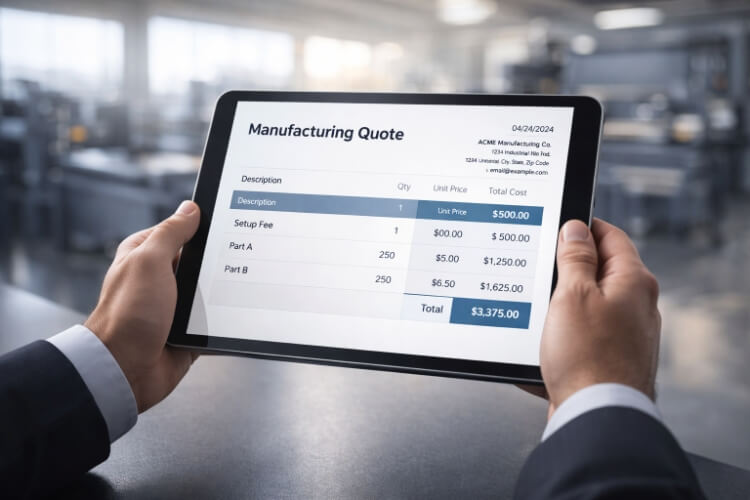
Todos os projectos começam com uma pergunta: porque é que a primeira peça custa muito mais do que as restantes? Esta é uma frustração comum no fabrico de chapas metálicas. A razão reside nos custos de instalação - tempo, mão de obra e ferramentas - antes do início da produção. Enquanto as pequenas séries suportam o peso total das despesas de instalação, as encomendas maiores distribuem este custo por muitas peças, reduzindo drasticamente o preço unitário.
Os custos de instalação e os custos unitários são os dois principais pilares do seu orçamento de produção. Os custos de instalação são taxas fixas para a programação e preparação da máquina que não se alteram independentemente do tamanho da encomenda. Os custos unitários representam o impulso repetitivo da produção, abrangendo materiais e tempo de máquina ativo. Ao aumentar o seu volume de encomendas, distribui a taxa de configuração fixa por mais artigos, o que faz baixar o preço por peça.
Pequenas escolhas de design conduzem a enormes poupanças à escala. Vamos analisar a mecânica destes custos para o ajudar a encontrar o seu "ponto ideal" mais rapidamente.

Fundamentos dos custos de produção
O custo total de produção é a soma de cada dólar gasto para mover uma peça de um desenho para o seu armazém. Para gerir uma cadeia de abastecimento optimizada, é necessário controlar a forma como o dinheiro flui para as categorias fixas e variáveis.
O que compõe o custo total de produção?
Os custos fixos são as barreiras à entrada para qualquer trabalho. Estes incluem o tempo do engenheiro para rever os seus ficheiros CAD e o tempo do técnico para configurar o chão de fábrica. Os custos variáveis são as despesas que aumentam com o tamanho da encomenda.
Estes incluem o peso das chapas metálicas e a eletricidade utilizada pelo laser. Ferramentas é um custo fixo importante porque as matrizes personalizadas são caras de construir. A mão de obra actua como ambos; paga-se pela preparação especializada e pelo manuseamento manual de cada peça acabada.
Definição dos principais termos de custo
O custo de instalação é o dinheiro que se gasta antes da primeira faísca. Cobre a calibração do equipamento e o carregamento do software. Esta taxa é estática; mantém-se a mesma quer faça cinco peças ou cinco mil.
O custo unitário é o preço de uma única peça quando a máquina está a funcionar a toda a velocidade. Centra-se na eficiência do material e no tempo de processamento. Quando o custo unitário é baixo, a sua capacidade de escalar a produção torna-se a sua maior vantagem competitiva.
A natureza do custo de instalação
Os custos de configuração cobrem tudo o que fazemos para preparar a nossa oficina para o seu projeto específico. Estes passos garantem que as máquinas cumprem as suas especificações exactas sem desperdiçar tempo ou material dispendioso.
Repartição das actividades de preparação
Os técnicos começam por calibrar o equipamento para garantir que cada corte se mantém dentro da tolerância exigida. Instalam dispositivos específicos ou gabaritos para manter a sua chapa metálica firmemente no lugar. Um engenheiro deve então converter o seu ficheiro CAD em código CNC que o laser ou o punção possam ler.
Depois de a primeira peça sair da máquina, efectuamos uma inspeção do primeiro artigo. Este passo de validação é vital. Comprova que a configuração está correta antes de nos comprometermos com uma produção completa. Este processo requer competências profissionais e tempo significativo, o que constitui a maior parte da sua taxa inicial.
Factores que influenciam o custo de instalação
Peças complexas com múltiplas curvas ou padrões de furos intrincados requerem mais tempo de preparação. Se o seu projeto tiver tolerâncias muito apertadas, passamos mais tempo a alinhar as ferramentas para evitar erros. O tipo de máquina também desempenha um papel importante. Os sistemas altamente automatizados podem demorar mais tempo a programar, mas funcionam muito mais depressa depois de arrancarem.
O tamanho dos lotes e a frequência das alterações de desenho também afectam estes custos. Sempre que se altera um desenho, temos de reiniciar as máquinas. Manter os seus desenhos consistentes e agrupar peças semelhantes pode ajudar a manter estas taxas baixas.

A estrutura do custo unitário
O custo unitário é o preço de uma única peça depois de terminado o "trabalho de preparação". Este número determina as suas margens brutas e dita o preço do seu produto final.
Elementos incluídos no custo unitário
A matéria-prima é a maior parte do custo unitário. Paga-se pelo tipo específico de metal e pelo peso desse material. O tempo de máquina é o fator seguinte; quanto maior for o corte a laser de despesas a sua geometria, mais elevado é o preço.
Se a sua peça precisar de um acabamento como revestimento em póAcrescentamos esse custo a cada peça. Também consideramos a eletricidade e o gás utilizados durante o corte. Por fim, incluímos a mão de obra para rebarbar e embalar cada peça antes de ser enviada para si.
Porque é que o custo unitário diminui com o volume?
A produção em massa cria economias de escala. Quando compramos milhares de quilos de metal para uma grande produção, os fornecedores oferecem-nos um preço melhor. Passamos estas poupanças de material diretamente para si. Além disso, utilizamos software de colocação para encaixar o maior número possível de peças numa folha de metal. Isto reduz o desperdício e poupa dinheiro.
Existe também uma curva de aprendizagem para o pessoal da oficina. À medida que a nossa equipa lida com mais peças, torna-se mais rápida e eficiente. Isto reduz o custo de mão de obra por peça e aumenta o seu lucro.
Estratégias para otimizar ambos os custos
Uma engenharia inteligente e um planeamento estratégico podem reduzir as suas despesas de produção. Pode reduzir tanto o custo de entrada como o preço a longo prazo, tomando decisões baseadas em dados durante a fase de projeto.
Abordagens de projeto de engenharia
Design para Manufaturabilidade (DFM) é a sua melhor ferramenta para poupar dinheiro. Mostre a matemática à sua equipa de design: pequenas alterações nos seus desenhos podem poupar milhares no seu orçamento de aquisições. Utilize calibres de material padrão e diâmetros de furo comuns para que os técnicos não tenham de trocar de ferramentas.
Se mantiver as curvas no mesmo plano, podemos processar a peça num movimento contínuo. As geometrias simples reduzem o tempo necessário para a programação e inspeção. Estas opções reduzem as suas taxas de configuração e diminuem o tempo de máquina para cada unidade produzida.
Técnicas de melhoria de processos
A automatização e a integração do CNC ajudam a manter os custos estáveis. Os lasers de alta velocidade e as células de dobragem automatizadas reduzem o trabalho manual necessário para cada peça.
Também utilizamos a programação de lotes para melhorar a eficiência. Se encomendar várias peças que utilizem o mesmo material e a mesma espessura, podemos "agrupá-las" em lotes. Isto permite-lhe dividir uma taxa de preparação por vários números de peças diferentes. Esta abordagem proporciona uma grande variedade e um baixo custo.

Implicações para a cotação e fixação de preços
Um orçamento transparente é a base de uma boa parceria de fabrico. Deve saber sempre exatamente para onde vai o seu dinheiro para poder planear o seu próximo passo.
Como os fabricantes estimam os custos?
A maioria das lojas profissionais utiliza software avançado para calcular os tempos exactos de funcionamento da máquina. Analisamos o comprimento total dos cortes a laser e o número de golpes efectuados pela prensa de punção. Em seguida, adicionamos o tempo de trabalho para a configuração e o preço de mercado atual do metal.
Um bom fornecedor fornece uma discriminação que separa estas taxas. Esta transparência permite-lhe ver as "quebras de preço" em que o seu custo unitário diminui à medida que adiciona mais volume à encomenda.
O que os compradores devem ter em atenção?
Exija uma cotação que mostre os custos de instalação como um item de linha separado. Se um fornecedor se recusar a separar a configuração do custo unitário, pode estar a esconder uma margem elevada. Procure níveis de preços baseados no volume que lhe mostrem o "ponto ideal" para o tamanho da sua encomenda.
Por vezes, aumentar a sua encomenda em apenas 10% pode provocar uma descida de preço significativa. Além disso, tenha em atenção os custos de ferramentas únicas. Conhecer estes pormenores ajuda-o a evitar surpresas e garante-lhe o melhor retorno sobre o investimento no fabrico.
Conclusão
A diferença entre um projeto fracassado e um produto rentável é a diferença entre os custos de instalação e os custos unitários. Os custos de instalação actuam como barreira de entrada, enquanto os custos unitários definem a sua capacidade de escalar eficientemente. Ao dominar a matemática da amortização e aplicar os princípios DFM, pode transformar estas despesas de obstáculos em vantagens competitivas.
Um equilíbrio estratégico entre estes dois pilares garante que os seus preços se mantêm competitivos sem sacrificar as suas margens. Concentre-se na eficiência a longo prazo e na conceção simples para minimizar os custos e manter a qualidade de classe mundial.
Está pronto para otimizar a sua próxima produção? A nossa equipa de engenheiros pode ajudá-lo a rever os seus desenhos para encontrar o equilíbrio perfeito entre o trabalho de preparação e o preço da peça. Contacte-nos hoje para obter um orçamento transparente e detalhado e transformar o seu projeto numa realidade rentável.
FAQs
Qual é a principal diferença entre o custo de instalação e o custo unitário?
O custo de instalação é uma despesa fixa única para preparar as máquinas, ferramentas e software para o seu trabalho específico. O utilizador paga esta taxa independentemente de encomendar uma peça ou dez mil. O custo unitário é a despesa variável com o material e a mão de obra necessários para produzir cada peça individual. Enquanto a taxa de preparação é estática, o custo unitário total é diretamente proporcional ao volume da encomenda.
Porque é que o custo de configuração é importante para pequenas séries de produção?
Em pequenos lotes, a taxa de instalação tem um impacto enorme no seu resultado final. Há menos peças para partilhar o custo. Se uma configuração custar $300 e só encomendar 10 peças, está a adicionar $30 ao preço de cada peça. Compreender isto ajuda-o a decidir se um protótipo vale o custo. Poderá descobrir que passar diretamente para um lote experimental maior lhe permite poupar dinheiro.
Como é que posso reduzir os custos de instalação sem grandes mudanças de equipamento?
Concentre-se na normalização. Utilize espessuras de material comuns e tamanhos de orifício padrão que a loja já tem nas máquinas. Isto elimina a necessidade de mudanças de ferramentas ou encomendas de materiais especiais. O fornecimento de ficheiros CAD limpos e sem erros também reduz o tempo que um engenheiro gasta na programação. Isto reduz diretamente a sua taxa de instalação.
Que papel desempenha a automatização na redução de ambos os custos?
A automatização acelera a transição entre diferentes trabalhos. Isto reduz as horas de trabalho facturadas na sua taxa de instalação. Durante a produção, os sistemas automatizados cortam o metal mais rapidamente e com menos desperdício do que os processos manuais. Esta precisão de alta velocidade reduz o tempo de máquina e o desperdício de material. Isto leva a um custo unitário muito mais baixo para encomendas de grande volume.
Como devo avaliar os orçamentos de diferentes fornecedores de chapas metálicas?
Procure transparência na repartição. Um orçamento profissional deve separar claramente as taxas de instalação, os custos de material e quaisquer encargos únicos com ferramentas. Compare os níveis de quebra de preços para ver como o fornecedor recompensa os volumes mais elevados. Se um orçamento parecer demasiado baixo, verifique se estão a ser ignorados passos vitais como as inspecções do primeiro artigo. Saltar estes passos pode levar a defeitos dispendiosos mais tarde.
Olá, chamo-me Kevin Lee

Nos últimos 10 anos, tenho estado imerso em várias formas de fabrico de chapas metálicas, partilhando aqui ideias interessantes a partir das minhas experiências em diversas oficinas.
Entrar em contacto
Kevin Lee
Tenho mais de dez anos de experiência profissional no fabrico de chapas metálicas, especializando-me em corte a laser, dobragem, soldadura e técnicas de tratamento de superfícies. Como Diretor Técnico da Shengen, estou empenhado em resolver desafios complexos de fabrico e em promover a inovação e a qualidade em cada projeto.
Recursos relacionados
Aço inoxidável resistente a impressões digitais: como funciona e como escolher
OEM vs. fabrico por contrato: Como escolher o modelo certo para o seu projeto
Custo de instalação vs. custo unitário no fabrico de chapas metálicas