Podczas pozyskiwania części blaszanych, oferty cenowe mogą ujawniać znacznie więcej niż tylko liczby. Czasami to, co wygląda na świetną ofertę, kryje w sobie większe problemy - niedotrzymane terminy, niską jakość lub ukryte koszty, które pojawiają się później. Proces wyceny może pokazać wczesne sygnały ostrzegawcze, jeśli wiesz, czego szukać.
Kluczem jest zwrócenie uwagi na to, w jaki sposób dostawcy się komunikują, jakie szczegóły uwzględniają, a jakie pomijają. Profesjonalna wycena powinna być jasna, konkretna i poparta wiedzą techniczną. Niejasne lub zbyt proste oferty często sygnalizują brak doświadczenia lub skróty, które mogą mieć wpływ na końcowe części.
Kilka szczegółów na etapie wyceny może wskazać, czy dostawca naprawdę rozumie Twój projekt, czy tylko zgaduje. Oto jak wcześnie wykryć te oznaki.

Materiałowe sygnały ostrzegawcze w wycenie blachy
Wybór materiału jest podstawą każdego projektu blacharskiego. Wpływa on na koszt, wytrzymałość, odporność na korozję i ogólną zdolność produkcyjną. Gdy informacje o materiale są niejasne lub niedopasowane, zazwyczaj oznacza to, że dostawca nie przeanalizował dokładnie Twoich wymagań.
Niejasne lub niekompletne specyfikacje materiałowe
Gdy oferta zawiera tylko "stal nierdzewną" lub "blachę aluminiową", oznacza to brak precyzji. Każdy stop zachowuje się inaczej - stal nierdzewna 304 vs. 316 może różnić się kosztem nawet o 30%, a aluminium 5052 wygina się łatwiej niż aluminium 6061, zmniejszając ryzyko pęknięć.
Jeśli w zapytaniu ofertowym brakuje szczegółów, dostawcy przyjmą własne założenia. Jeden może podać grubość 1,2 mm, inny 1,5 mm, a różnica w cenie może być ogromna. Aby temu zapobiec, zawsze dołączaj:
- Dokładny gatunek materiału (np. 304, 5052, SPCC)
- Grubość lub miernik
- Wykończenie powierzchni lub powłoka wymagania
- Dowolny certyfikacja lub standard (ASTM, JIS itp.).
Egzotyczne lub niestandardowe materiały bez uzasadnienia
Czasami wycena obejmuje rzadki stop lub wysokowydajny metal bez wyjaśnienia. To czerwona flaga. Specjalistyczne materiały mogą być trudne do pozyskania, drogie w obróbce i powolne w dostawie.
O ile projekt nie wymaga szczególnych właściwości mechanicznych lub odporności na korozję, standardowe materiały prawie zawsze sprawdzają się równie dobrze. Na przykład:
- Zastąpienie stali nierdzewnej 316 stalą nierdzewną 304 może obniżyć koszty o 20-25% bez wpływu na zastosowania wewnętrzne.
- Zastosowanie aluminium 5052 zamiast 6061 może poprawić podatność na zginanie i skrócić czas formowania.
Przed zatwierdzeniem jakiegokolwiek niestandardowego stopu należy zapytać dlaczego jest potrzebny. Dobry dostawca wyjaśni jego przeznaczenie i pomoże zrównoważyć wydajność i koszty.
Niedopasowanie materiału do zastosowania
Niewłaściwy wybór materiału może zrujnować zarówno koszty, jak i wydajność. Dostawca sugerujący stal nierdzewną do opraw wewnętrznych lub cienkie aluminium do wsporników nośnych wykazuje się słabą oceną inżynierską.
Typowe niedopasowania obejmują:
- Nadmierna specyfikacja stali nierdzewnej w suchych, niekorozyjnych środowiskach
- Zastosowanie aluminium o niskiej grubości tam, gdzie liczy się sztywność
- Stosowanie stali miękkiej na zewnątrz bez ochrony antykorozyjnej
Doświadczony dostawca zakwestionuje te niedopasowania i zaproponuje lepsze opcje. Ich celem powinno być osiągnięcie funkcjonalności, niezawodności i wartości - a nie bezdyskusyjna wycena.
Czerwone flagi projektowe i rysunkowe w wycenie blachy
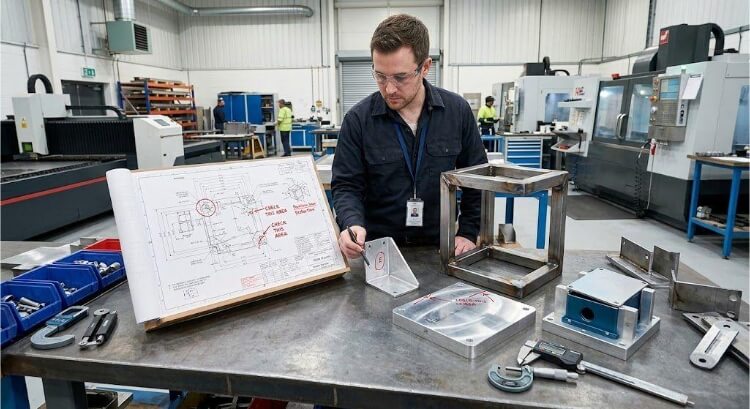
Nawet najlepsze materiały nie uratują projektu, jeśli dane projektowe są niejasne. Rysunki techniczne są podstawą dokładnej wyceny - informują dostawcę dokładnie o tym, jak część powinna być wykonana.
Niekompletne lub niejednoznaczne rysunki techniczne
Rysunek, który pomija promienie gięcia, tolerancje lub pozycje otworów, zmusza dostawcę do zgadywania. Różni producenci będą różnie interpretować te luki, co doprowadzi do bardzo zróżnicowanych wycen.
Na przykład, jeśli brakuje danych dotyczących naddatku na zginanie, jeden warsztat może przyjąć współczynnik K równy 0,33, podczas gdy inny stosuje 0,5 - co prowadzi do niespójnych płaskich wzorów i niewspółosiowych zespołów. Nawet niewielkie rozbieżności mogą zmienić geometrię części po formowaniu.
Aby tego uniknąć, upewnij się, że rysunki zawierają:
- Wszystkie wymiary z wyraźnie oznaczonymi strefami tolerancji
- Kierunek, kąt i promień gięcia
- Lokalizacje i średnice otworów
- Symbole spoin i uwagi dotyczące wykończenia w stosownych przypadkach
Zbyt wąskie tolerancje bez uzasadnienia funkcjonalnego
Ścisłe tolerancje brzmią imponująco, ale mogą szybko podnieść koszty. Każde dodatkowe 0,1 mm dokładności tolerancji może podnieść koszty oprzyrządowania lub kontroli o 10-15%. Jest to dobre w przypadku precyzyjnych elementów współpracujących, ale marnotrawstwo w przypadku stref kosmetycznych lub niekrytycznych.
Oto prosta zasada:
- Krytyczne dopasowanie (np. wyrównanie otworów, powierzchnie współpracujące): zachowanie wąskich tolerancji
- Kosmetyczne lub niefunkcjonalne krawędzie: Poluzowanie tolerancji w celu obniżenia kosztów
Dobry dostawca zwróci na to uwagę. Jeśli nie zakwestionuje rygorystycznych specyfikacji, może podać cenę bez zastrzeżeń - lub zaniżyć cenę, aby zabezpieczyć się przed nieznanym ryzykiem.
Nie dostarczono płaskiego wzoru ani pliku 3D
Gdy producenci nie dysponują plikiem 3D lub płaskim wzorem, muszą oszacować potrącenia za gięcie i rozciąganie materiału. Szacunki te różnią się, zwłaszcza w przypadku różnych stopów i grubości, co prowadzi do rozbieżności w wycenach i słabego dopasowania podczas montażu.
Dostarczanie danych 3D CAD pozwala dostawcom na:
- Weryfikacja geometrii i sekwencji gięcia
- Symulacja odkształcenia przed oprzyrządowaniem
- Poprawa wydajności zagnieżdżania, redukcja odpadów materiałowych
Jeśli dostawca wcześnie poprosi o dane CAD, to dobry znak - pokazuje to, że przedkłada dokładność nad założenia.

Procesowe i produkcyjne sygnały ostrzegawcze w cytowaniu blach
Metoda produkcji części determinuje nie tylko ich wygląd, ale także spójność i opłacalność. Jeśli wycena pomija lub niejasno opisuje etapy produkcji, zwykle oznacza to, że dostawca nie przeanalizował prawidłowo projektu.
Niezdefiniowane procesy produkcyjne
Jeśli oferta dostawcy nie określa, czy części będą wycinane laserowo, wykrawane czy tłoczone, jest to czerwona flaga. Każdy proces ma inne koszty konfiguracji, tolerancje i wydajność.
- Cięcie laserowe oferuje elastyczną geometrię i szybkie prototypowanie.
- Wbijanie pasuje do powtarzalnych wzorów otworów, ale wymaga wymiany narzędzi.
- Cechowanie jest najlepszy do produkcji masowej, ale wymaga wysokich nakładów na oprzyrządowanie.
Bez jasności nie można uczciwie porównać dostawców. Dwie wyceny tej samej części mogą różnić się o 40% tylko dlatego, że jedna zakłada tłoczenie, a druga cięcie laserowe.
Ignorowanie operacji drugorzędnych
Profesjonalna wycena obejmuje cały proces - od cięcia i gięcia po wykończenie i kontrolę. Jeśli nie wspomniano o gratowaniu, spawaniu lub obróbce powierzchni, prawdopodobnie są one wykluczone. Koszty te pojawią się później jako "opłaty dodatkowe", podnosząc łączną kwotę powyżej oczekiwań.
Często pomijane operacje obejmują:
- Gratowanie lub zaokrąglanie krawędzi dla bezpieczeństwa i wyglądu
- Wykończenie powierzchnijak malowanie proszkowe lub anodowanie
- Montaż, gwintowanie lub spawanie punktowe dla złożonych części
Kroki te mogą stanowić 15-30% całkowitego czasu projektu. Jeśli zostaną zignorowane, czas realizacji i koszty prawie na pewno wzrosną.
Zakładanie automatyzacji dla zadań manualnych
Automatyzacja brzmi wydajnie, ale często jest wyolbrzymiana. Niektórzy dostawcy obiecują "automatyczne gięcie" lub "zrobotyzowane spawanie", podczas gdy w rzeczywistości czynności te wykonywane są ręcznie. Praca ręczna wydłuża czas pracy, zwiększa zmienność i może ograniczać powtarzalność w przypadku dużych serii.
Jeśli wycena wydaje się niezwykle niska dla zadania obejmującego skomplikowane zagięcia lub wiele spawów, należy ją zakwestionować. Zapytaj:
- "Czy ten proces jest ręczny czy zautomatyzowany?".
- "Jaki sprzęt będzie używany?"
- "Czy masz własne możliwości, czy zlecasz to podwykonawcom?".
Uczciwi dostawcy będą transparentni. Zawyżone obietnice dotyczące automatyzacji to jeden z najczęstszych sposobów, w jaki oferty wyglądają atrakcyjnie z góry - ale zawodzą później w produkcji.

Ilość i skala produkcji - sygnały ostrzegawcze przy wycenie blachy
Wielkość produkcji jest jednym z najważniejszych czynników kształtujących koszty i wybór procesu. Wycena, która nie odzwierciedla rzeczywistej ilości lub wzoru zamówienia, jest prawie zawsze niedokładna.
Brak wskazania wielkości produkcji
Jeśli zapytanie ofertowe nie określa ilości, dostawcy są zmuszeni zgadywać. Jeden może założyć małą partię prototypową, podczas gdy inny wyceni masową produkcję. Rezultat? Wyceny, które różnią się od siebie bez wyraźnego powodu.
Ceny jednostkowe w produkcja blach może różnić się nawet o 50% między prototypem a serią w pełnej skali ze względu na czas konfiguracji, amortyzację narzędzi i wydajność partii.
Aby to naprawić, zawsze definiuj:
- Niezależnie od tego, czy jest to prototyp, produkcja małoseryjna czy masowa
- Oczekiwana ilość na zamówienie
- Czy planowane są powtarzające się zamówienia lub prognozy harmonogramu
Niestabilna częstotliwość zamówień lub prognoza wolumenu
Częste zmiany ilości lub niepewne odstępy między kolejnymi zamówieniami szkodzą obu stronom. Dostawcy nie mogą efektywnie planować zapasów materiałów, harmonogramów maszyn czy przydziału pracy. Gdy projekt zmienia się z 500 części w tym miesiącu na 50 w następnym, należy spodziewać się wyższych kosztów jednostkowych z powodu zmarnowanego czasu konfiguracji i przestojów.
Doświadczeni dostawcy zapytają o oczekiwany cykl zamówienia lub prognozę wolumenu. Jeśli tego nie zrobią, może to oznaczać, że traktują twoje zamówienie jako jednorazowe, a nie długoterminowe partnerstwo.
Zbyt wczesne wnioskowanie o rabaty hurtowe
Prośba o wycenę masowej produkcji przed udowodnieniem stabilnego popytu może przynieść odwrotny skutek. Niektórzy dostawcy mogą zgodzić się na nierealistyczne rabaty, aby zdobyć zlecenie, a następnie podnieść ceny. Inni mogą pójść na skróty, aby sprostać niskiej wycenie.
Bardziej błyskotliwą strategią jest rozpoczęcie na małą skalę, potwierdzenie jakości części i komunikacji, a następnie negocjowanie cen, gdy wolumeny będą stabilne.
Na przykład:
- Najpierw należy zweryfikować wydajność prototypu.
- Zbieraj dane o rzeczywistym zużyciu energii przez dwa lub trzy cykle.
- Wykorzystaj te wyniki, aby pewnie negocjować rabaty dla wielu zamówień.
Sygnały ostrzegawcze związane z dostawcami w wycenie blachy
Wycena dostawcy opowiada historię - nie tylko o cenach, ale także o profesjonalizmie, możliwościach i długoterminowej niezawodności. Doświadczeni nabywcy wiedzą, że sposób, w jaki dostawca przygotowuje i wyjaśnia swoją ofertę, ujawnia znacznie więcej niż ostateczną liczbę.
Nietypowo niskie lub wysokie wartości kwotowań
Wycena, która jest znacznie tańsza lub droższa od pozostałych, powinna skłonić do zastanowienia. Niewiarygodnie niskie ceny często oznaczają brak procesów, gorsze materiały lub zaniżony czas pracy. Zbyt wysokie ceny mogą sygnalizować nieefektywność lub brak zainteresowania mniejszymi projektami.
Dla porównania, jeśli jedna wycena jest 20-30% poniżej lub powyżej średniej z trzech innych, warto ją zakwestionować. Zapytaj:
- "Jaki proces lub założenie materialne doprowadziło do tej ceny?".
- "Czy uwzględniono obróbkę powierzchni lub etapy kontroli?"
Solidny dostawca otwarcie wyjaśni swoją logikę kosztową. Przejrzystość pokazuje, że rozumieją Twoją część i cenią dokładność ponad zgadywanie.
Brak przejrzystości w podziale kosztów
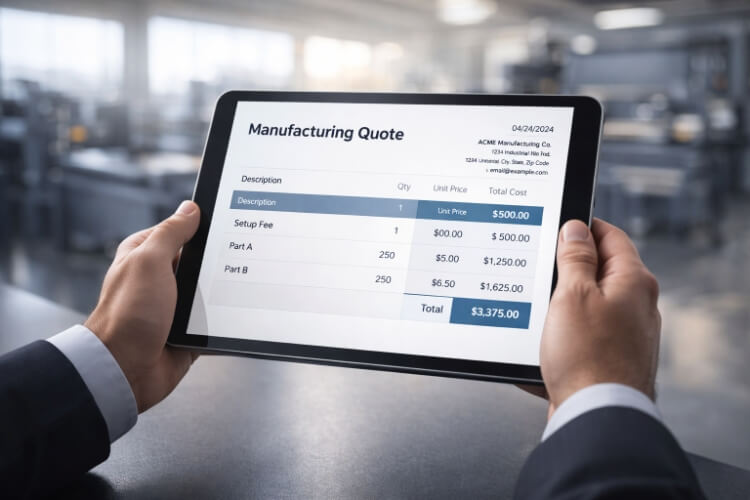
Profesjonalna wycena blacharska powinna oddzielać kluczowe elementy kosztów:
- Materiał (typ, grubość i ilość)
- Produkcja (cięcie, gięcie, spawanie)
- Wykończeniowy (powlekanie, polerowanie itp.)
- Oprzyrządowanie lub konfiguracja koszty
- Kontrola i pakowanie
Gdy wycena zawiera tylko kwotę ryczałtową, tracisz wgląd w to, gdzie wydawane są pieniądze - i nie możesz uczciwie porównać dostawców. Ukryte koszty często pojawiają się później jako "dodatki", zawyżając całkowity budżet.
Brak doświadczenia w podobnych projektach
Doświadczenie z podobnymi częściami ma kluczowe znaczenie w produkcji blach. Warsztat, który tnie głównie proste wsporniki, może mieć trudności z obudowami o wąskiej tolerancji lub zespołami wymagającymi kontroli płaskości spoin.
Zawsze pytaj o przykłady lub zdjęcia poprzednich projektów w danej kategorii części - takich jak obudowy elektryczne, podwozia lub precyzyjne panele. Dostawcy, którzy wykonali podobną pracę, z pewnością wypowiedzą się na temat wyzwań, tolerancji i kontroli wykończenia.
Komunikacja i dokumentacja - sygnały ostrzegawcze w wycenie blach
Dobra komunikacja jest równie cenna jak dobre narzędzia. Etap wyceny nadaje ton całemu projektowi, pokazując, jak zorganizowany, responsywny i zorientowany na szczegóły jest dostawca.
Opóźnione lub niejasne odpowiedzi na etapie RFQ
Jeśli dostawca zbyt długo czeka na odpowiedź lub udziela ogólnych odpowiedzi, jest to znak ostrzegawczy. Opóźnienia sugerują słabe zarządzanie projektem lub ograniczone możliwości. Niejasne zwroty, takie jak "Zajmiemy się tym" Lub "Obowiązuje standardowa tolerancja" Zazwyczaj oznacza to, że nie zapoznali się dokładnie z rysunkami.
Niezawodny dostawca reaguje szybko, udziela jasnych odpowiedzi na każde pytanie i wcześnie sygnalizuje potencjalne problemy.
Brakujące wyjaśnienia techniczne
Godny zaufania dostawca nie tylko wycenia, ale także angażuje się. Jeśli rysunek zawiera niepewne cechy, powinien poprosić o wyjaśnienie przed przedstawieniem ceny. Na przykład:
- "Czy możemy potwierdzić kierunek gięcia tego kołnierza?"
- "Czy wymagane wykończenie powierzchni to Ra 0,8 czy tylko kosmetyczne?"
Jeśli dostawca pomija te pytania, często oznacza to, że nie przeanalizował dokładnie projektu lub nie ma wystarczającej wiedzy technicznej, aby zidentyfikować ryzyko.
Niespójne formaty cytowania
W profesjonalnej wycenie liczy się struktura i przejrzystość. Gdy otrzymujesz jedną ofertę w tabeli Excela, drugą w zwykłej wiadomości e-mail, a trzeciej brakuje czasu realizacji lub warunków płatności, porównanie staje się trudne.
Dobrze zorganizowany dostawca zazwyczaj korzysta ze standardowego formatu wyceny, który obejmuje:
- Wyszczególnione koszty (materiały, robocizna, wykończenie)
- Czas realizacji i warunki dostawy
- Warunki płatności i ważność oferty
- Dane kontaktowe do dalszych działań
Spójna dokumentacja pokazuje, że dostawca posiada wewnętrzne systemy, a nie doraźne nawyki.
Sygnały ostrzegawcze dotyczące kosztów i czasu realizacji w wycenie blachy
Obietnice dotyczące ceny i dostawy mogą wyglądać przekonująco na papierze, ale często to właśnie w nich zaczyna się większość ryzyk związanych z projektem. Wycena, która wydaje się zbyt szybka lub zbyt tania, zwykle ukrywa brakujące kroki, pośpieszną produkcję lub słabe śledzenie kosztów.
Brak rozdzielenia kosztów narzędzi i części
Gdy wycena łączy ceny narzędzi i części w jedną sumę, trudno jest ocenić długoterminowe koszty. Oprzyrządowanie - takie jak matryce formujące, uchwyty lub przyrządy do gięcia - to jednorazowa inwestycja w konfigurację, podczas gdy koszt każdej części jest kontynuowany dla każdej partii.
Bez rozdzielenia nie można obliczyć rzeczywistego kosztu powtarzających się zamówień. Przejrzyści dostawcy podają je oddzielnie, często pokazując:
- Opłata za oprzyrządowanie lub konfigurację (opłata jednorazowa)
- Cena jednostkowa za produkcję
- Zróżnicowanie kosztów w zależności od ilości (np. 100 vs. 1000 sztuk)
Zbyt krótki czas realizacji w stosunku do złożoności
Szybki czas realizacji może wydawać się atrakcyjny, ale nierealistyczne obietnice są klasyczną czerwoną flagą. W przypadku złożonego montażu obejmującego cięcie laserowe, gięcie, spawanie, obróbkę powierzchni i kontrolę, 2-dniowy czas realizacji rzadko jest możliwy.
Dostawcy, którzy przesadnie obiecują dotrzymanie terminów, często idą na skróty - pomijając kontrole lub przyspieszając konfiguracje, aby dotrzymać terminów. Skutkuje to niespójną jakością lub niedotrzymaniem tolerancji.
Godny zaufania dostawca wyjaśnia cały harmonogram, obejmujący każdy etap produkcji. Określi również, w jaki sposób obciążenie pracą, pozyskiwanie materiałów lub procesy wykończeniowe wpływają na dostawę.
Niewyjaśnione dopłaty lub pozycje "do potwierdzenia"
Gdy cytat zawiera niejasne uwagi, takie jak "TBD", "może ulec zmianie," Lub "fracht nie jest wliczony w cenę" to czerwona flaga dla potencjalnego wzrostu kosztów w przyszłości. Te symbole zastępcze zwykle ukrywają niepewność:
- Wahania cen materiałów
- Opłaty za wykończenie lub powlekanie
- Opłaty za fracht i pakowanie
Profesjonalni dostawcy definiują te koszty lub określają jasne warunki, w których obowiązują korekty. Niespodzianki po złożeniu zamówienia często wynikają ze źle zdefiniowanych ofert, a nie z pecha.
Sygnały ostrzegawcze dotyczące jakości i zgodności z przepisami przy wycenie blach
Profesjonalna oferta powinna przedstawiać nie tylko sposób produkcji części, ale także sposób weryfikacji ich jakości. Brakujące lub niejasne szczegóły dotyczące jakości często sygnalizują słabą kontrolę procesu, brak certyfikatów lub ograniczone doświadczenie w projektach podlegających regulacjom.
Brak certyfikatów jakości
Jeśli dostawca nie może przedstawić ważnych certyfikatów, takich jak ISO 9001, CE lub RoHS, jest to natychmiastowy powód do niepokoju. Normy te potwierdzają, że firma przestrzega udokumentowanych procedur kontroli, identyfikowalności i ciągłego doskonalenia.
Bez certyfikatów istnieje ryzyko niespójnej produkcji i słabej dokumentacji - co jest szczególnie niebezpieczne w sektorach takich jak medyczny, lotniczy czy energetyczny. Zawsze sprawdzaj, czy certyfikaty są aktualne i wydane przez uznane organy.
Brak wzmianki o inspekcji lub testowaniu
Wycena, w której brakuje szczegółów inspekcji, sugeruje, że kontrola jakości może być minimalna. Nawet proste części blaszane wymagają kontroli wymiarów, jakości spoin i wykończenia powierzchni. Jeśli ich brakuje, należy założyć, że zostały pominięte.
Poszukaj jasnych stwierdzeń w cytacie, takich jak:
- "100% - kontrola wymiarów cech krytycznych"
- "Kontrola wykończenia powierzchni przed pakowaniem"
- "Dostarczono raport z inspekcji pierwszego artykułu (FAI)".
Zwroty te pokazują, że dostawca rozumie wymagania dotyczące weryfikacji i odpowiednio je planuje.
Niepełna identyfikowalność lub dokumentacja
Brakujące zapisy dotyczące identyfikowalności - takie jak certyfikaty materiałowe, wyniki FAI lub dokumenty PPAP - często prowadzą do opóźnień w zatwierdzaniu. Bez nich nie można potwierdzić autentyczności materiału lub zgodności procesu.
Silni dostawcy prowadzą identyfikowalną dokumentację od momentu otrzymania surowców do ostatecznej wysyłki. Mogą tworzyć raporty na żądanie, udowadniając kontrolę nad każdym etapem produkcji.
Wnioski
Dokładne wyceny blach zależą od przejrzystości, dogłębności technicznej i uczciwej komunikacji. Każda czerwona flaga wychwycona na wczesnym etapie pozwala zaoszczędzić czas, pieniądze i frustrację w późniejszym czasie. Dobra wycena nie jest najtańsza - to taka, która dowodzi, że dostawca rozumie daną część równie dobrze jak Ty.
Potrzebujesz opinii eksperta na temat zapytania ofertowego?
Zanim wyślesz swój projekt do produkcji, uzyskaj profesjonalne spojrzenie. Nasi inżynierowie mogą przejrzeć Twoje rysunki, wskazać zagrożenia i zasugerować ulepszenia, aby Twoja wycena była szybsza, bardziej przejrzysta i dokładniejsza. Prześlij zapytanie ofertowe już dziś - przekształcić potencjalne sygnały ostrzegawcze w wiarygodne wyniki produkcyjne.
Często zadawane pytania
Jaki jest najczęstszy powód niedokładnych wycen blach?
Niejasne rysunki, brakujące tolerancje lub niejasne szczegóły materiałowe są zwykle najważniejszą przyczyną błędów w wycenach.
Jak mogę sprawdzić, czy wycena jest rozsądna?
Porównaj co najmniej trzy szczegółowe oferty i sprawdź, czy każda z nich zawiera etapy procesu, notatki z inspekcji i podział kosztów.
Czy zawsze powinienem wybierać najniższą ofertę?
Nie. Niewiarygodnie niskie ceny często oznaczają pominięte operacje lub słabą kontrolę jakości. Najbardziej wiarygodna wycena równoważy koszty i dokładność techniczną.
Co powinno zawierać moje zapytanie ofertowe, aby uzyskać najlepsze wyniki?
Dostarczyć kompletne rysunki, pliki 3D, materiały i szczegóły wykończenia, ilość, wymagania dotyczące kontroli i oczekiwany czas realizacji.
Hej, jestem Kevin Lee

Przez ostatnie 10 lat byłem zanurzony w różnych formach produkcji blach, dzieląc się tutaj fajnymi spostrzeżeniami z moich doświadczeń w różnych warsztatach.
Skontaktuj się z nami
Kevin Lee
Mam ponad dziesięcioletnie doświadczenie zawodowe w produkcji blach, specjalizując się w cięciu laserowym, gięciu, spawaniu i technikach obróbki powierzchni. Jako dyrektor techniczny w Shengen, jestem zaangażowany w rozwiązywanie złożonych wyzwań produkcyjnych i napędzanie innowacji i jakości w każdym projekcie.
Powiązane zasoby
Odporna na odciski palców stal nierdzewna: jak to działa i jak wybrać