De sterkte van lassen hangt af van meer dan precieze warmte of vaardige techniek - het vulmateriaal speelt ook een rol. Het juiste vulmateriaal bepaalt hoe metalen samensmelten, hoe de spanning zich door de verbinding verplaatst en hoe lang de structuur standhoudt in de praktijk.
Bij plaatbewerking, waar zowel sterkte als uiterlijk van belang zijn, is de keuze van vulmiddel een technische en economische beslissing. De juiste keuze betekent minder herbewerkingen, soepelere lassen en consistente prestaties bij alle productiecharges. Laten we eens kijken hoe vulmaterialen de sterkte en betrouwbaarheid van elke lasverbinding bepalen.
Wat toevoegmateriaal doet bij het lassen?
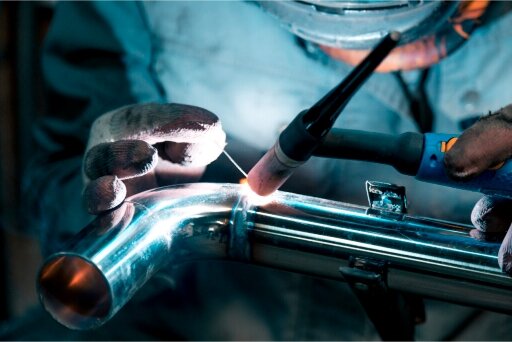
Een toevoegmetaal wordt het hart van de las. Tijdens het smelten smelt het en mengt het met de basismetalen, waardoor een nieuwe legeringszone wordt gevormd die bekend staat als het lasmetaal. De chemie en het vloeigedrag bepalen of de las een sterke verbinding wordt of een verborgen zwakke plek.
Vulmaterialen dienen drie hoofddoelen:
- Brug verbinden: Ze verbinden de basismetalen op moleculair niveau en zorgen voor een goede metallurgische fusie.
- Sterke bijdrage: Hun mechanische eigenschappen - trek-, rek- en slagsterkte - bepalen hoeveel belasting de las kan dragen.
- Boogstabilisator: Hun samenstelling beïnvloedt de zachtheid van de boog, de inbranddiepte en de vorming van de lasrups, wat de algemene laskwaliteit beïnvloedt.
Bij het lassen van zachtstalen panelen met ER70S-6 draad bijvoorbeeld, zorgen de silicium- en mangaanoxidatiemiddelen voor een stabiele boog en een gladde lasparel, zelfs als het oppervlak niet perfect schoon is. Een slecht gekozen toevoegmateriaal kan daarentegen poreusheid of barsten veroorzaken die de las van binnenuit verzwakken.
Gebruikte soorten toevoegmetaal
Elk lasproces is afhankelijk van een specifieke vulvorm en kennis van de verschillen helpt om het type vulmiddel af te stemmen op de eisen van het project:
| Type vulstof | Gebruikt in | Belangrijkste eigenschappen | Typisch gebruik |
|---|---|---|---|
| Massieve draad | MIG, TIG | Schone las, weinig spatten | Dun plaatwerk, precisieonderdelen |
| Metaalgevulde draad | FCAW | Verdraagt roest, hoge afzetting | Frames, buitenstructuren |
| Plakelektrode | SMAW | Draagbaar, flux-afgeschermd | Reparaties ter plaatse, dik staal |
| Metaalgevulde draad | Geautomatiseerd MIG | Snelle afzetting, weinig slak | Productielijnen voor grote volumes |
Metaaldraden met een fluxkern kunnen bijvoorbeeld tot 30% sneller metaal afzetten dan massieve draden, waardoor ze ideaal zijn voor zware frames of lassen in de open lucht. Massieve draden blijven echter de eerste keuze voor dunne of zichtbare lassen, waarbij uiterlijk en netheid prioriteiten zijn.
Bijpassende vulstofsamenstelling met basismetaal
Een sterke las begint met chemische compatibiliteit. Het afstemmen van de samenstelling van het vulmiddel op het basismetaal zorgt voor een goede hechting, een evenwichtige microstructuur en duurzaamheid op lange termijn.
Chemische compatibiliteit en metallurgische hechting
Hoe dichter de samenstelling van het vulmiddel bij het basismetaal ligt, hoe beter de metallurgische verbinding. Als de belangrijkste legeringselementen te veel verschillen, kan de fusiezone broos worden of scheuren.
- Voor zacht staalvulstoffen zoals ER70S-6 bieden een treksterkte van ongeveer 70 ksi (480 MPa), wat dicht in de buurt komt van de treksterkte van koolstofarme staalplaten.
- Voor roestvrij staal 304vulstoffen zoals ER308L behouden de chroom-nikkelbalans die de corrosiebestendigheid na het lassen in stand houdt.
- Voor verschillende metalenHet gebruik van overgangslegeringen (bijv. op nikkel gebaseerde vulstoffen) voorkomt galvanische corrosie en scheuren door thermische mismatch.
Soms kiezen ingenieurs bewust voor onderliggende vullers - die iets minder sterk zijn dan het basismetaal. Hierdoor kan de las onder spanning buigen in plaats van plotseling barsten. Voor drukvaten of dragende frames zorgen overmaatse toevoegmaterialen (hogere treksterkte dan het basismetaal) voor veiligheid onder extreme omstandigheden.
Microstructuur en korrelcontrole
Als de las afkoelt, beïnvloeden de legeringselementen van het toevoegmateriaal hoe kristallen groeien en stollen. Een fijne, uniforme korrelstructuur geeft de las een hogere taaiheid en weerstand tegen vermoeiing.
- Toevoegingen van nikkel of molybdeen kan de korrelgrootte verfijnen en de slagvastheid verhogen tot 30%.
- Silicium en mangaan zuurstof te verwijderen, waardoor porositeit wordt verminderd en lasmetaal dichter wordt.
- Gecontroleerde koeling minimaliseert harde of brosse zones, vooral in dunne materialen die snel afkoelen.
In roestvrijstalen behuizingen bijvoorbeeld vormt een vulmiddel met uitgebalanceerd chroom en nikkel gladde, corrosiebestendige microstructuren die zelfs bij thermische cycli stabiel blijven.
Factoren voor sterkte en duurzaamheid
Het juiste vulmiddel bepaalt of een las buigt, breekt of standhoudt. De sterkte, taaiheid en weerstand tegen vermoeiing bepalen allemaal de prestaties op lange termijn.
Bijdrage aan trek- en vloeigrens
De trek- en vloeigrens van een toevoegmateriaal bepalen hoeveel spanning de lasverbinding kan weerstaan voordat ze vervormt of breekt. Als de sterkte van het toevoegmateriaal dicht in de buurt komt van die van het basismetaal, wordt de las een echte voortzetting van de structuur.
Bijvoorbeeld, zacht staal ER70S-6 heeft een treksterkte van ongeveer 70 ksi (≈ 480 MPa), wat overeenkomt met de meeste koolstofarme staalsoorten die gebruikt worden in frames en beugels. Het gebruik van een zwakker vulmiddel zou in dit geval een zachte zone creëren, waardoor de verbinding onder belasting zou rekken of barsten.
Maar een hogere sterkte is niet altijd beter. Een vulmiddel dat te sterk is kan de verbinding broos maken en vatbaar voor scheuren bij schokken of trillingen. Daarom kiezen veel ingenieurs voor vulmiddelen die iets minder sterk zijn voor flexibele producten van plaatstaal zoals HVAC-behuizingen of elektronische behuizingen - deze absorberen spanning in plaats van te breken.
Ontwerptip:
Bij het verbinden van metalen met verschillende sterktes, moet je het vulmiddel altijd afstemmen op het zwakkere materiaal. Dit voorkomt te stijve verbindingen en zorgt voor een gelijkmatige spanningsverdeling over de las.
Weerstand tegen vermoeiing en cyclische belasting
Veel lasdefecten ontstaan na duizenden kleine, herhaalde belastingen in plaats van na één grote kracht. De samenstelling van het toevoegmateriaal en de zuiverheid van de las spelen een belangrijke rol bij het voorkomen van scheuren door vermoeiing.
Lassen met een fijne korrel en lage porositeit verdelen de spanning gelijkmatig. Vulstoffen met mangaan en silicium helpen zuurstof te verwijderen, waardoor insluitingen die scheurinitiatiepunten kunnen worden, geminimaliseerd worden. In assemblages die gevoelig zijn voor trillingen, zoals machineframes of transportuitrusting, kan het gebruik van ductiele vulstoffen de vermoeiingslevensduur met wel 40 % verhogen in vergelijking met alternatieven met een hoge hardheid.
In een productierun van montagebeugels van plaatstaal bijvoorbeeld, verminderde het overschakelen van een overmatched vulmiddel met hoge sterkte naar een ductiel vulmiddel het microscheuren na 200.000 trillingscycli tijdens het testen. Deze kleine verandering verbeterde zowel de betrouwbaarheid als de klanttevredenheid.
Corrosie- en omgevingsbestendigheid
De keuze van het toevoegmetaal bepaalt ook hoe de las presteert in verschillende omgevingen. Een las die wordt blootgesteld aan vocht, zout of temperatuurschommelingen moet bestand zijn tegen oxidatie en putcorrosie.
- Voor lassen van roestvrij staal, vulstoffen met 18% Cr + 8% Ni behouden de beschermende passieve laag die roest voorkomt.
- Voor onderdelen voor de scheepvaart of buitenshuisVulstoffen die molybdeen (Mo) bevatten, verhogen de weerstand tegen put- en spleetcorrosie.
- Voor geverfde of gecoate behuizingenDoor te kiezen voor vulmiddelen met een schoon, spatarm gedrag vermindert u oppervlaktedefecten en verbetert u de hechting van coatings.
Een onjuiste keuze van vulmateriaal kan de levensduur drastisch verkorten. Een koolstofstalen vulmiddel dat op roestvaststalen onderdelen wordt gebruikt, kan bijvoorbeeld binnen enkele maanden galvanische corrosie veroorzaken in vochtige omgevingen. Door de chemische samenstelling van het vulmiddel af te stemmen op de omgevingsomstandigheden, blijft zowel de structurele integriteit als de visuele kwaliteit behouden.
Compatibiliteit lasproces
Elk lasproces vraagt om specifieke eigenschappen van het toevoegmateriaal. Het op elkaar afstemmen van het type toevoegmateriaal, beschermgas en techniek zorgt voor stabiele bogen, schone lasrupsen en consistente resultaten.
Vulstofselectie voor verschillende lasmethoden
Verschillende lastechnieken stellen unieke thermische en operationele eisen aan het toevoegmateriaal:
| Proces | Type vulstof | Het meest geschikt voor | Belangrijkste voordeel |
|---|---|---|---|
| MIG (GMAW) | Massieve draad of draad met metalen kern | Middelzware tot dikke materialen | Snelle neerslag, schone afwerking |
| TIG (GTAW) | Staaf | Dunne platen, zichtbare lasnaden | Nauwkeurige controle, gladde kraal |
| Stick (SMAW) | Elektrode met fluxcoating | Buiten of zware secties | Vergevingsgezind met onzuiverheden aan het oppervlak |
| FCAW (Flux-Cored) | Buisvormige draad met flux | Grote frames, veldwerk | Diepe penetratie, hoge snelheid |
Een vulmiddel met fluxkern kan de neersmeltsnelheid verdubbelen in vergelijking met TIGen verkort de lastijd met wel 40 % - ideaal voor de productie van stalen frames of kasten. Omgekeerd blinken TIG-vullers uit in toepassingen met een hoog uiterlijk, zoals roestvrije behuizingenwaar gladde, spatvrije naden essentieel zijn.
Procesinzicht:
Het kiezen van het juiste vulmiddel voor het lasproces zorgt niet alleen voor mechanische sterkte, maar heeft ook invloed op de algehele kostenefficiëntie, het uiterlijk van de lasrups en de reiniging na het lassen.
Invloed van het schermgas en de laspositie
De samenstelling van het beschermgas en de laspositie beïnvloeden beide de prestaties van het toevoegmateriaal. In MIG Bij TIG- en TIG-processen beschermen beschermgassen het gesmolten lasbad tegen oxidatie - maar de verkeerde combinatie van gas en toevoegmateriaal kan poreusheid of inconsistente versmelting veroorzaken.
- Argon + CO₂ (75/25) mengsels stabiliseren de boog en leveren diepe penetratie voor koolstofstaal.
- Zuiver argon produceert schone, oxidatievrije lassen op roestvrij staal en aluminium.
- Argon + Helium mengsels de warmte-inbreng verhogen, waardoor dikkere materialen beter smelten.
De laspositie is ook belangrijk. Sommige vulmiddelen zijn ontworpen voor vlakke en horizontale posities, terwijl andere de stabiliteit van de lasrups behouden bij verticaal werk of werk boven het hoofd. Positie-specifieke vulmiddelen voorkomen doorhangen en zorgen voor een consistente inbranding, zelfs bij complexe assemblages.
Materiaaltoestand en oppervlaktekwaliteit
Materialen in de echte wereld zijn niet altijd ongerept. Begrijpen hoe vulmiddelen reageren op roest, coatings of vervuiling helpt om de sterkte van de las te behouden, zelfs onder imperfecte omstandigheden.
Lassen over roest, walshuid of coating
In de dagelijkse fabricage zijn basismetalen oppervlakken niet altijd ongerept. Roest, oxidelagen of verfresten kunnen de las tegenhouden en gassen vasthouden, waardoor de las verzwakt. Vulmiddelen met desoxidanten zoals mangaan en silicium kunnen deze effecten minimaliseren door het lasbad chemisch te reinigen.
Zo wordt ER70S-6 vulmiddel veel gebruikt voor zacht staal omdat de deoxidanten sterke, gladde lassen helpen produceren, zelfs als er lichte walshuid of roest achterblijft. Daarentegen presteert ER70S-2 het beste op schoon metaal, maar kan het poreus worden op vervuilde oppervlakken.
Wanneer lassen van gegalvaniseerd of bekleed staalVulstoffen die zijn ontworpen voor een gecontroleerde warmte-inbreng verminderen de verdamping van zink en minimaliseren porositeit. Door de stroomsterkte en rijsnelheid aan te passen, voorkom je "blaasgaten" die vaak ontstaan als coatings te snel opbranden.
Praktisch voorbeeld:
Door over te schakelen van ER70S-2 op ER70S-6 bij de productie van kasten werd het herbewerken als gevolg van poreusheid met bijna 25% verminderd, waardoor zowel de productiviteit als de consistentie in de uiteindelijke afwerking verbeterden.
Ontwerptip:
Zelfs als je tolerante vulmiddelen gebruikt, verbetert een lichte voorbereiding van het oppervlak - zoals staalborstelen of ontvetten - altijd de laspenetratie en algehele sterkte.
Schone vs. vervuilde basismetalen
Met flux beklede draden en staafelektroden zijn vergevingsgezinder bij het werken op oppervlakken die niet volledig kunnen worden gereinigd. Hun interne flux produceert een gasschild en slaklaag die zuurstof en onzuiverheden verwijdert tijdens het lassen. Deze eigenschap maakt ze ideaal voor grote constructies of buitenwerk.
Voor precisiebehuizingen, roestvrijstalen kasten of zichtbare lassen is het echter beter om massieve draad of TIG-vulmiddel te combineren met goed gereinigde oppervlakken. Schoon lassen zorgt niet alleen voor maximale sterkte, maar verbetert ook het uiterlijk, de hechting van coatings en de corrosiebescherming.
Ontwerp, normen en toepassingsgerichte selectie
Bij het kiezen van een vulmiddel gaat het niet alleen om het matchen van metalen - het gaat om het voldoen aan codes, ontwerpdoelen en eindgebruiksprestaties. De juiste classificatie zorgt ervoor dat elke las door de inspectie komt en de verwachte prestaties levert.
Afstemmen op codes en certificeringen
Lasnormen van AWS (American Welding Society), ASME en ISO definiëren lasclassificaties op basis van treksterkte, slagvastheid en bruikbaarheid. Deze codes voorzien ingenieurs van voorspelbare resultaten, zodat elke las aan de veiligheids- en prestatieverwachtingen voldoet.
Bijvoorbeeld:
- ER70S-6 - "ER" staat voor elektrode/stang, "70" staat voor 70 ksi treksterkte en "S" staat voor massieve draad.
- E308L - een roestvast stalen vulmiddel geschikt voor 304 of 304L basismetalen, waarbij "L" staat voor een laag koolstofgehalte om carbideprecipitatie te minimaliseren.
Het volgen van deze standaarden zorgt voor consistente laseigenschappen in de productie en vereenvoudigt kwaliteitscontroles. In sectoren zoals energie, bouw en transport is het gebruik van gecertificeerde vulstoffen verplicht. Voor plaatmetaalproducten, zoals schakelkasten of machinebehuizingen, zorgt het naleven van erkende vulkwaliteiten voor meer betrouwbaarheid en minder variatie tussen batches.
Inzicht in naleving:
Het gebruik van niet-gecertificeerd vulmiddel kan bij industriële projecten leiden tot lasfouten, afgekeurde inspecties of vervallen garanties. Een correct geclassificeerd vulmiddel verzekert zowel de koper als de fabrikant dat de verbinding op lange termijn aan de verwachtingen zal voldoen.
Toepassingsspecifieke overwegingen
Elk gelast producttype stelt andere eisen aan sterkte, uiterlijk en flexibiliteit - en de keuze van het vulmiddel moet deze eisen weerspiegelen:
| Type toepassing | Prestatiedoel | Aanbevolen vulmethode |
|---|---|---|
| Structurele frames | Hoge sterkte + schokabsorptie | Licht ondermatterend vulmiddel om scheuren te verminderen |
| Drukcomponenten | Maximale belastingsweerstand | Overmaatse vulstof met hogere treksterkte |
| Dunne plaat behuizingen | Minimale warmtevervorming | TIG of MIG massieve draad met weinig spatten |
| Roestvrije kasten | Corrosie + visuele kwaliteit | Chroom-nikkel vulstoffen (bijv. ER308L, ER316L) |
| Gemengde materiaalverbindingen | Ongelijke expansiesnelheden | Overgangsvullers op basis van nikkel (bijv. ERNiCr-3) |
Voorbeeld:
Bij het lassen van een zacht stalen frame aan een roestvast stalen paneel, voorkomt het gebruik van een vulmiddel op nikkelbasis galvanische corrosie en scheuren veroorzaakt door thermische uitzettingsverschillen. Daarentegen kan een standaard stalen vulmiddel tijdelijk houden, maar het begeven bij herhaalde temperatuurcycli.
Kostenperspectief:
Hoewel speciale vulmiddelen vooraf iets meer kosten, besparen ze vaak werkuren en verbeteren ze de levensduur, waardoor de totale projectkosten na verloop van tijd met 15-20% dalen.
Conclusie
Vulmaterialen bepalen de ware sterkte en betrouwbaarheid van een gelaste constructie. Ze bepalen hoe goed de las versmelt, hoe hij bestand is tegen trillingen en corrosie en hoe lang hij zonder defecten blijft presteren. Zelfs met nauwkeurige apparatuur en ervaren lassers kan een ongeschikt toevoegmateriaal de hele verbinding ondermijnen, wat kan leiden tot kostbaar herstelwerk of vroegtijdige scheurvorming.
Als uw volgende plaatwerk- of constructieproject betrouwbare lassen met hoge sterkte vereist, kan de juiste keuze van lasmateriaal het verschil maken. Bij Shengen heeft ons engineeringteam meer dan 10 jaar ervaring met fabricage, gespecialiseerd in het lassen van plaatmetaal. Upload je tekeningen of technische bestandenen onze ingenieurs voeren een gratis lascontrole uit.
Hey, ik ben Kevin Lee

De afgelopen 10 jaar heb ik me verdiept in verschillende vormen van plaatbewerking en ik deel hier de coole inzichten die ik heb opgedaan in verschillende werkplaatsen.
Neem contact op
Kevin Lee
Ik heb meer dan tien jaar professionele ervaring in plaatbewerking, gespecialiseerd in lasersnijden, buigen, lassen en oppervlaktebehandelingstechnieken. Als technisch directeur bij Shengen zet ik me in om complexe productie-uitdagingen op te lossen en innovatie en kwaliteit in elk project te stimuleren.
Verwante bron
Vingerafdrukbestendig roestvrij staal: hoe het werkt en hoe te kiezen
OEM vs Loonproductie: Hoe het juiste model voor uw project te kiezen

Setupkosten vs eenheidskosten bij de productie van plaatmetaal