Bij de productie van precisieplaatwerk is "subjectiviteit" de vijand van winst. Een haarfijne kras die perfect aanvaardbaar is op een interne structurele beugel kan een ramp zijn op een aluminium ring voor de consument.
Als kwaliteitscontrole gebaseerd is op menselijke gevoelens - "dit ziet er slecht uit" versus "dit ziet er goed uit" - dan nodig je inconsistentie uit. Dit leidt tot gefrustreerde leveranciers, vertraagde verzendingen en geldverspilling. Om dit op te lossen moeten we van subjectieve argumenten overstappen op objectieve technische normen.
De hoge kosten van "zero defects
Je zou kunnen denken dat de veiligste strategie is om "nul defecten" te eisen voor elk onderdeel. Dit is echter een financiële valkuil.
Als je een perfecte spiegelende afwerking op een achterpaneel dat verborgen wordt in een machine, betaalt u voor waarde die uw klant nooit zal zien. Het "overspecifiëren" van cosmetische eisen dwingt fabrikanten om perfect functionele onderdelen weg te gooien. Dit drijft de stuksprijs op en verlengt de doorlooptijd.
Een meer innovatieve aanpak is om alleen voor perfectie te betalen waar het er echt toe doet.
Stap 1: Standaardiseren met "Zonering"
Het meest effectieve middel om kwaliteit en kosten in balans te brengen is zonering. Deze methode categoriseert oppervlakken op basis van hun zichtbaarheid voor de eindgebruiker, zodat u uw budget effectief kunt toewijzen.
Hier is de standaard uitsplitsing:
- Zone A (primair zicht): Dit is de "geldzone". Dit omvat de faceplates, schermen en logo's waarmee de klant direct in aanraking komt. Hier gelden strenge normen. Normaal gesproken zijn geen krassen, deuken of verkleuringen toegestaan.
- Zone B (secundair zicht): Deze gebieden zijn zichtbaar maar vormen niet de primaire focus, zoals de zijkanten van een chassis of handgrepen. In deze zone zijn kleine imperfecties, zoals lichte slijtplekken van minder dan 0,25 inch, vaak toegestaan.
- Zone C (Incidenteel zicht): Deze oppervlakken zijn alleen zichtbaar als iemand er expliciet naar zoekt, zoals de onderkant of achterkant van een unit.
- Zone D (Niet zichtbaar): Deze onderdelen zijn volledig verborgen zodra het toestel in elkaar is gezet. Voor Zone D zijn pasvorm en functie de enige prioriteiten. Als een gereedschapsmarkering niet verhindert dat het onderdeel werkt, is het geen defect.
De kern van de zaak: Als je deze zones niet definieert, zal je leverancier aannemen dat alles onder zone A valt. Dat betekent dat je zone A-prijzen betaalt voor zone D-onderdelen.
Stap 2: Stel de inspectieval in
Het definiëren van de zone is slechts de helft van de strijd. Je moet ook standaardiseren hoe inspecteurs naar het onderdeel kijken. Als de ene inspecteur een vergrootglas gebruikt en de andere het blote oog, krijg je verschillende resultaten.
Om "inspectiekruip" te stoppen - waarbij inspecteurs onderdelen afkeuren vanwege microscopische problemen - heb je strenge milieuregels nodig:
- De "normale" afstand: Inspecteurs moeten de onderdelen bekijken vanaf een afstand van 18 tot 36 inch, afhankelijk van de grootte van de zone. Dit bootst na hoe een echte klant naar het product kijkt.
- De 10-secondenregel: Beperk de inspectietijd tot ongeveer 10 seconden per oppervlak.
- De logica: Als een defect op een normale afstand niet binnen 10 seconden zichtbaar is, is het meestal geen defect dat tot ontevredenheid bij de klant leidt.
Door deze limieten af te dwingen, voorkom je dat je team op zoek gaat naar problemen die er niet zijn. Je richt je inspanningen voor kwaliteitscontrole op de problemen die echt invloed hebben op je merk.
Stop defecten voordat ze beginnen
Je kunt kwaliteit niet in een product inspecteren; je moet het vanaf het begin inbouwen. Een defect vinden aan het einde van de lijn is de duurste manier om kwaliteit te beheren. Hier lees je hoe je problemen bij de bron kunt aanpakken zodat je er later niet voor hoeft te betalen.
Let op uw gereedschap: De hoge kosten van botte matrijzen
De meeste cosmetische defecten ontstaan niet tijdens het transport. Ze ontstaan binnenin de machine. Als je gereedschap vuil of versleten is, laat dat dure sporen na op elk onderdeel.
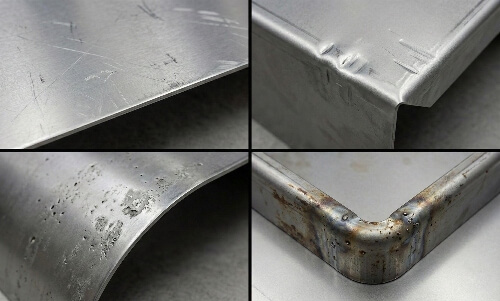
Veel voorkomende boosdoeners zijn "stanssporen" van het inleggereedschap en "slaksporen" veroorzaakt door het ponsproces. Een slakafdruk ontstaat wanneer een klein stukje schroot (een slak) uit het gat wordt getrokken en op de plaat wordt gedrukt.
Waarom dit belangrijk is: In tegenstelling tot een vetvlek is een slakafdruk een fysieke misvorming. Je kunt het er niet afvegen. Het is permanente schade die onmiddellijk schroot oplevert. Om dit te voorkomen is een strikt onderhoudsschema nodig. Stansen scherp houden en matrijzen schoon is niet alleen "goed huishouden" - het is de enige manier om te voorkomen dat uw machines uw materiaal vernietigen.
Het dilemma "vuil vs. beschadigd
In een drukke werkplaats worden onderdelen vuil. Maar er is een enorm financieel verschil tussen een "vuil" onderdeel en een "defect onderdeel".
Industriële richtlijnen maken een strikt onderscheid tussen "verwijderbaar vreemd materiaal" (zoals stof, metaalschilfers of pluisjes) en werkelijke schade aan het oppervlak.
- Verwijderbaar: Olievlekken, vetvlekken of watervlekken zijn vaak aanvaardbaar als ze kunnen worden verwijderd.
- Permanent: Krassen, gutsen of corrosie zijn onmiddellijke afwijzingen in zones met een hoge zichtbaarheid.
De strategie: Voorkom dat een "vuil" onderdeel een "bekrast" onderdeel wordt: metaalkrullen en stof op een werktafel werken als schuurpapier en veroorzaken krassen. Als een blad over een vuil oppervlak glijdt, zorgt dat verwijderbare stof voor een permanente kras.
Creëer duidelijke "schone zones" voor afwerkingswerkzaamheden. Zorg ervoor dat operators de juiste handschoenen dragen, zoals katoen of latex, om te voorkomen dat ze oliën of verontreinigingen overdragen die kunnen reageren met het oppervlak. Door het oppervlak schoon te houden, zorg je ervoor dat een onderdeel dat alleen schoongemaakt hoeft te worden, geen stuk schroot wordt.

Menselijke fouten verwijderen met technologie
Menselijke ogen zijn ongelooflijk, maar ze zijn niet consistent. Na acht uur staren naar plaatmetaal zal het oordeel van een inspecteur afdwalen. Misschien zien ze een defect over het hoofd of, erger nog, keuren ze een goed onderdeel af om het zekere voor het onzekere te nemen.
Slimme camera's en software lossen dit op door onderdelen elke keer op dezelfde manier te inspecteren. Maar let op: niet alle automatisering bespaart geld.
De val van de "valse afwijzing" (2D-camera's)
Een standaard industriële camera kan gemakkelijk een menselijke inspecteur vervangen. Vaak kan dat niet. Standaard "2D" camera's werken zoals je smartphone - ze maken een plat beeld op basis van contrast.
Dit is een belangrijk probleem voor plaatmetaal. Metalen oppervlakken glanzen, reflecteren en hebben vaak nerfrichtingen. Voor een 2D-camera ziet een onschuldige vetvlek of een verandering in de korrelrichting er meestal precies hetzelfde uit als een diepe deuk. Beide verschijnen als "donkere vlekken".
Het bedrijfsrisico: Omdat de camera geen onderscheid kan maken tussen de twee, veroorzaakt het een "False Positive". Perfecte onderdelen worden geweigerd omdat ze een beetje vuil zijn of glanzen. Dit verpest je opbrengst en dwingt je om mensen te betalen om het werk van de robot dubbel te controleren.
Het 3D-voordeel: Diepte meten, niet alleen kleur
Om het verlichtingsprobleem op te lossen, moet je de vorm van het oppervlak, niet alleen de kleur. Geavanceerde inspectiesystemen gebruiken nu 3D-sensoren (vaak laserprofilometrie) om de topografie van het onderdeel in kaart te brengen.
Dit verandert de wiskunde volledig. Een vetvlek heeft geen diepte, dus die negeert de 3D-sensor. Een kras of een deuk heeft wel fysieke diepte, dus de sensor markeert het.
Door 3D-technologie te gebruiken, hoeft u geen goede onderdelen meer af te keuren. Je stopt de productielijn alleen voor fysieke schade die je klant van streek maakt.
Machines onderwijzen met AI
Oude inspectiesoftware vereiste dat je strikte, starre regels schreef (bijvoorbeeld "weiger elke lijn langer dan 2 mm"). Dit mislukt bij complexe afwerkingenzoals geborsteld roestvrij staal, waarbij het oppervlak uit duizenden lijnen bestaat.
Nieuwe systemen gebruiken kunstmatige intelligentie (AI) om het menselijk brein na te bootsen. In plaats van regels te programmeren, "leer" je de AI. Je toont het 100 afbeeldingen van aanvaardbare variaties (korrel, lichte kleurverschuivingen) en 100 afbeeldingen van echte defecten.
De AI leert het verschil te zien. Hij begrijpt dat de natuurlijke korrel van het metaal "ruis" is, maar dat een guts die dwars door die korrel snijdt een "signaal" is. Hierdoor kun je de inspectie van cosmetische onderdelen automatiseren zonder last te hebben van hoge uitvalpercentages door vals alarm.
Balans tussen kosten en perfectie: De commerciële realiteit
Aan kwaliteit hangt een prijskaartje. Als je perfectie eist voor elk onderdeel, zullen je kosten exploderen. Slim produceren gaat over het vinden van de "Goudlokjeszone" - een evenwicht vinden tussen wat er goed uitziet en wat financieel zinvol is.
Vermijd de valkuil "te veel specificeren
Het is verleidelijk om een algemene opmerking als "Vrij van krassen" op je technische tekeningen te zetten. Maar deze eenvoudige opmerking is gevaarlijk. Het dwingt je leverancier om een verborgen structurele beugel met dezelfde extreme zorg te behandelen als een touchscreen aan de voorkant.
Dit vertraagt de productie. Het verhoogt de verwerkingstijd. Uiteindelijk zal de fabrikant je prijs verhogen om deze inefficiënties te dekken.
De oplossing: Wees realistisch. Als een onderdeel zich in een machine bevindt waar het niet zichtbaar is (Zone D), vraag dan niet om een spiegelende afwerking. Door de normen voor niet-kritieke oppervlakken te versoepelen, kan uw leverancier zijn inspanningen - en uw geld - richten op de oppervlakken van Zone A die daadwerkelijk de verkoop stimuleren.
Uw verzekeringspolis: Het "Limietmonster"
PDF-tekeningen en e-mails zijn geweldig, maar ze kunnen geen textuur of diepte weergeven. Een "lichte kras" voor een ontwerper kan eruit zien als een "diepe guts" voor een machinist. Dit verschil in perceptie leidt tot ruzie wanneer de zending arriveert.
Om dit op te lossen, ga je verder dan het digitale dossier en maak je een fysiek contract:
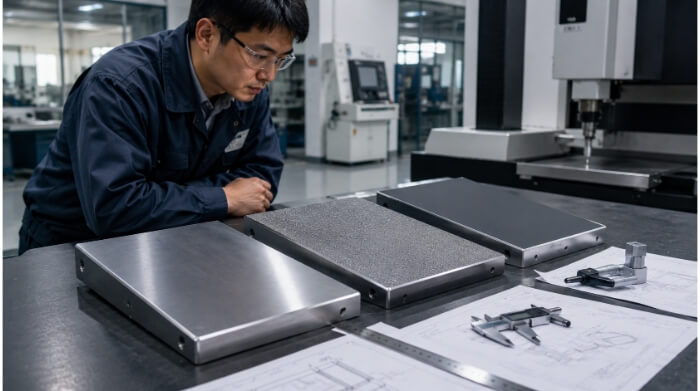
- Maak "Limietmonsters": Werk samen met je leverancier om fysieke onderdelen te selecteren die de "slechtst aanvaardbare" kwaliteit vertegenwoordigen.
- Ondertekenen en verzegelen: Beide partijen ondertekenen deze monsters. Bewaar er een op kantoor en een in de fabriek.
- Het voordeel: Een ondertekend Limietmonster is je beste verzekeringspolis. Het dient als de onbetwistbare waarheid tijdens een geschil en beschermt je tegen vage claims zoals "het ziet er niet goed uit". Als het onderdeel overeenkomt met het monster, wordt het verzonden. Geen argumenten.
Geef voorrang aan functie boven vorm
Onthoud altijd de gouden regel van fabricage: cosmetische defecten mogen nooit verhinderen dat een onderdeel correct functioneert.
Als een oneffenheid geen invloed heeft op de pasvorm, vorm of functie van het product, is deze vaak bespreekbaar. Door dit van tevoren af te spreken, voorkom je productiestilstand over zaken die eigenlijk niets uitmaken voor de prestaties van het product.
Conclusie
Bij het controleren van cosmetische defecten in plaatmetaal gaat het er niet om een onberispelijke spiegelafwerking op elk oppervlak te eisen - dat is een recept voor hoge kosten en trage doorlooptijden. Een goede kwaliteitscontrole gaat over uitlijning. Als je cosmetische kwaliteit behandelt als een technische specificatie in plaats van een esthetische mening, bereik je het ultieme productiedoel: consistente onderdelen tegen de best mogelijke prijs.
Als uw plaatwerkprojecten te lijden hebben onder cosmetische defecten, kan ons engineeringteam u helpen. We beoordelen ontwerpen, evalueren fabricageprocessen en bevelen praktische verbeteringen aan om de oppervlaktekwaliteit vanaf het begin onder controle te houden. Stuur ons uw tekeningen of zorgen over de kwaliteit. We helpen je problemen met het uiterlijk te verminderen, consistentie te verbeteren en productiebeslissingen te versnellen.
Hey, ik ben Kevin Lee
De afgelopen 10 jaar heb ik me verdiept in verschillende vormen van plaatbewerking en ik deel hier de coole inzichten die ik heb opgedaan in verschillende werkplaatsen.
Neem contact op
Kevin Lee
Ik heb meer dan tien jaar professionele ervaring in plaatbewerking, gespecialiseerd in lasersnijden, buigen, lassen en oppervlaktebehandelingstechnieken. Als technisch directeur bij Shengen zet ik me in om complexe productie-uitdagingen op te lossen en innovatie en kwaliteit in elk project te stimuleren.
Verwante bron
Lasertexturering van metalen: voorbereiding, DFM en kostenbeheersing
Elektrolytisch verzinkt staal: handleiding voor verwerking en selectie